
The Intricacies of Domain Arbitration: A Deep Dive into the Compart.com UDRP Case
Domain name disputes are a constant in the digital age, often involving complex legal arguments, intellectual property rights, and the potential for significant commercial implications. The Uniform Domain Name Dispute Resolution Policy (UDRP) serves as a critical mechanism for resolving these conflicts, offering an alternative to lengthy and costly litigation. However, even within this streamlined process, cases can arise that test the boundaries of evidence presentation and ethical conduct. One such case, involving the domain Compart.com, provides a compelling illustration of the challenges panels face and the unexpected turns these arbitrations can take.
At the heart of any UDRP dispute is the core objective: to protect trademark holders from abusive domain name registrations, often referred to as cybersquatting. The policy is administered by organizations like the World Intellectual Property Organization (WIPO) and is designed to provide a fair and efficient resolution process. For a complainant to succeed under the UDRP, they must prove three essential elements:
- The domain name is identical or confusingly similar to a trademark or service mark in which the complainant has rights.
- The registrant (respondent) has no rights or legitimate interests in respect of the domain name.
- The domain name has been registered and is being used in bad faith.
Each of these elements requires robust evidence and careful argumentation. The Compart.com case, which pitted German software company Compart against domain owner Vertical Axis, brought into sharp focus the critical importance of credible evidence and the potential pitfalls of attempting to mislead an arbitration panel.
Unpacking the Compart.com Domain Dispute
The dispute centered on the domain name Compart.com, a seemingly generic term that also happened to be the name of a well-established German software company. The complainant, Compart, alleged that the parked page hosted at Compart.com was actively displaying advertisements directly related to its software business, specifically showcasing competitors like software4students.co.uk and 31touchdownloads.com. Such evidence, if substantiated, would be highly detrimental to Vertical Axis’s position, as it would strongly suggest bad faith registration and use, aiming to divert traffic and capitalize on the complainant’s goodwill and brand recognition.
The claim made by Compart was potent. In UDRP cases, the display of competitor advertisements on a disputed domain’s parked page is often cited as compelling evidence of bad faith. It indicates an intent to exploit the complainant’s trademark and confuse internet users seeking the complainant’s services. Therefore, the complainant’s assertion that direct competitor ads were being shown was intended to be a cornerstone of their argument, painting a clear picture of deliberate commercial exploitation and cybersquatting.
The Revealing Discrepancy: A Closer Look at the Evidence Presented
Intrigued by the complainant’s specific claims, I decided to conduct an independent verification of Compart.com. My expectation was to find the “damning evidence” of competitor software ads as described. However, upon visiting the website, what I encountered was markedly different. The parked page displayed advertisements, but these were exclusively for “car parts.” There was no indication whatsoever of software-related advertising, let alone ads for direct competitors in the software industry.
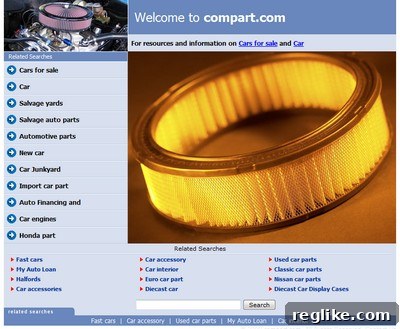
My initial confusion deepened. How could there be such a stark contrast between the complainant’s submission and the live website? To further investigate, I consulted historical thumbnails and data on DomainTools, a reputable resource for domain information. This historical review consistently showed the same pattern: ads pertaining solely to car parts. The evidence presented by the complainant simply did not align with the factual state of the domain’s content, either presently or historically.
The mystery was eventually unraveled during the arbitration process. It transpired that the complainant’s legal representatives had employed a deceptive tactic. Instead of presenting the actual content of the parked page, they had manually typed the word “software” into a search box located at the bottom of the parked page. They then printed out the results page generated by this manual search, passing it off as the standard content displayed on Compart.com. This calculated manipulation of evidence represented a serious breach of professional ethics and a direct attempt to mislead the arbitration panel.
The Panel’s Scrutiny and Other Misstatements
Arbitration panels are comprised of experienced legal professionals who are tasked with impartially reviewing all submitted evidence and arguments. It is a testament to their diligence and expertise that the panel in the Compart.com case did not overlook this egregious misrepresentation. They astutely identified the complainant’s attempt to fabricate evidence and explicitly called out the complainant for their deceptive practices. Such an act can severely undermine a party’s credibility and cast doubt on the entirety of their case.
In a related, albeit less severe, instance, the respondent, Vertical Axis, also made an assertion that was later found to be inaccurate. They claimed that “compart” was a recognized word in both English and German. While it is an English word (referring to a division or section), it is not a German word. This misstatement, as it turned out, originated from an innocent error – an issue with Google Translator’s interpretation, which sometimes renders a word in the same language if it cannot find a direct translation. The panel noted this misstep as well. However, the distinction between an honest, albeit careless, oversight and an intentional fabrication of evidence is vast. The panel correctly recognized that the respondent’s error was a trivial mistake, a far cry from the complainant’s deliberate and unethical attempt to mislead with manipulated evidence.
The Surprising Verdict: A Complainant’s Victory Despite Deception
Given the complainant’s clear attempt to deceive the panel and the seemingly generic nature of the domain name (Compart.com could reasonably refer to “car parts”), the ultimate outcome of the case was astonishing to many observers: the complainant, Compart, actually won the domain name. This outcome naturally raises questions about how such a decision could be reached despite the complainant’s questionable conduct regarding evidence presentation.
To understand this paradoxical result, it’s crucial to remember the three elements of the UDRP. While the complainant’s actions regarding the advertisements were unethical, they might not have directly impacted the panel’s findings on the other two critical elements, or perhaps the other evidence presented was sufficiently compelling. The panel had to assess whether Compart.com was identical or confusingly similar to Compart’s trademark, whether Vertical Axis had legitimate interests, and whether the domain was registered and used in bad faith.
- Identity/Similarity: The domain name Compart.com is undeniably identical to the complainant’s trademark “Compart.” This element is often straightforward to prove.
- Legitimate Interests: The panel would have meticulously reviewed whether Vertical Axis had any legitimate rights or interests in the domain. Simply owning a domain that happens to be a generic term (like “compart” for “car parts”) does not automatically confer legitimate interest if the registration was primarily intended to target a known trademark holder. The panel would look for evidence of active use of the generic term in good faith, or prior rights.
- Bad Faith: This is often the most complex element. While the false advertising claim was discounted, other factors could have led the panel to conclude bad faith. For instance, if Vertical Axis had a history of registering domain names corresponding to third-party trademarks, or if there was evidence that they registered Compart.com primarily to disrupt Compart’s business or to sell the domain to Compart for an exorbitant price, these could still constitute bad faith. The generic nature of the current ads (car parts) does not negate the possibility that the *initial registration* was made in bad faith, intending to leverage the complainant’s trademark. Panels often consider the entirety of the circumstances surrounding both registration and use. Even if the current use appears generic, the original intent behind registration can be decisive.
It is likely that the panel, despite condemning the complainant’s misleading evidence, found sufficient proof for the other UDRP elements based on the totality of the record. Perhaps Vertical Axis failed to adequately demonstrate legitimate interests, or other evidence of bad faith registration (separate from the manipulated advertising claim) was compelling enough to swing the decision in Compart’s favor. This highlights that while misleading the panel is severely frowned upon, it doesn’t automatically mean a loss if the other elements of a UDRP claim are still strongly met through legitimate evidence.
Lessons Learned and Implications for Domain Disputes
The Compart.com case serves as a profound cautionary tale for all parties involved in domain name disputes. For complainants, it underscores the absolute necessity of presenting accurate, verifiable evidence and adhering to the highest ethical standards. Attempts to manipulate or fabricate evidence not only damage credibility but can also risk the entire case, even if the complainant ultimately prevails on other grounds. For respondents, it highlights the importance of due diligence in all submissions and the critical distinction between a genuine mistake and intentional deception.
Ultimately, this case reinforces the role of the UDRP panel as discerning adjudicators, capable of sifting through complex arguments and identifying misrepresentations. The integrity of the UDRP process hinges on the honesty of the parties and the vigilance of the panel. While the outcome of any specific case can be surprising, the underlying principles of trademark protection and fair play remain paramount in the ever-evolving landscape of digital intellectual property.
(Hat tip UDRPsearch)