
Measuring Success: Unveiling Real Traction for New Top-Level Domains
In the expansive and ever-evolving digital landscape, the introduction of hundreds of new generic Top-Level Domains (gTLDs) has revolutionized how businesses and individuals establish their online presence. Beyond the traditional ‘.com’, ‘.org’, and ‘.net’, options like ‘.club’, ‘.guru’, ‘.xyz’, and many more offer fresh branding opportunities and niche appeal. However, the true measure of success for any new TLD extends far beyond mere registration numbers. The critical question for registries, domain investors, and prospective registrants alike is: Which new TLDs are genuinely gaining traction with actual end-users, manifesting as active, visited websites rather than just parked domains or speculative registrations?
Understanding this “usage” is paramount for the long-term viability and perceived value of any domain extension. It signifies genuine adoption, user engagement, and the organic growth of an online ecosystem around a specific TLD. Identifying these trending TLDs can inform investment decisions, marketing strategies, and even the future direction of the domain name industry. While comprehensive, definitive traffic data for all domains remains elusive, a couple of insightful tools, leveraging the widely-known Alexa data, offer valuable directional indicators to help observers track this crucial metric.
Defining “Traction” in the Domain Name Arena
Before diving into the tools, it’s essential to clarify what constitutes “traction” in the context of domain names. It’s more than just a high registration count, which can often be driven by speculative purchases or defensive registrations. True traction implies:
- Active Websites: Domains that host live, functional websites with meaningful content.
- User Engagement: Sites that attract visitors, demonstrate organic traffic, and foster user interaction.
- Brand Building: New TLDs being adopted by businesses and brands to create distinct and memorable online identities.
- Search Engine Visibility: Websites on these TLDs ranking for relevant keywords and appearing in search results.
This distinction is crucial because a TLD with millions of registrations but minimal active use will struggle to build a credible reputation and will eventually lose value. Conversely, a TLD with fewer registrations but a high percentage of active, popular sites demonstrates genuine market acceptance and utility.
Tool Spotlight: DomainPunch by Softnik – Filtering the Alexa Top Million by TLD
One of the most accessible and practical utilities for gauging TLD adoption comes from Softnik, the reputable creator behind the popular ‘Watch My Domains Pro’ software. They’ve developed a free online tool available on DomainPunch.com that elegantly simplifies the process of analyzing the Alexa Top Million list. The Alexa Top Million, despite its known limitations, serves as a common benchmark for estimating website popularity and traffic worldwide.
The DomainPunch tool is refreshingly straightforward to use. Users simply type in a desired TLD (e.g., “club”, “guru”, “xyz”) into the search bar and hit enter. Almost instantly, the tool processes the vast Alexa dataset and presents a filtered list of domains operating under that specific TLD that have managed to secure a spot within the top one million most visited websites globally. This provides a quick, at-a-glance overview of which new extensions are making inroads into the mainstream internet.
For instance, at one point, the tool revealed compelling numbers for some of the earlier new gTLDs: it showed 157 .club domains, 59 .guru domains, and 43 .xyz domains within the Alexa Top Million. These figures, while not absolute indicators of overall TLD success, are powerful directional signals. They suggest that these specific TLDs are not just being registered, but are actively being used to host websites that are attracting significant attention and traffic. For domain investors, this kind of data can highlight TLDs with strong potential for growth and increasing secondary market value. For businesses, it offers insights into which new extensions are already gaining user familiarity and trust, potentially influencing their own domain registration choices.
The screenshot below provides a visual example of how Softnik’s tool presents this valuable data:
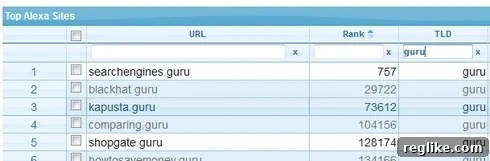
This simple yet effective utility allows anyone to quickly identify the frontrunners among the new gTLD wave, offering a snapshot of their performance in the competitive online arena. It underscores the fact that some new extensions are indeed moving beyond novelty and establishing themselves as legitimate alternatives or complements to traditional domain endings.
Tool Spotlight: DomainIncite Pro – A Curated View of New gTLD Performers
Complementing Softnik’s broader approach, DomainIncite, a respected authority in the domain name industry, offers a more specialized tool within its paid Pro service. While Softnik allows filtering the entire Alexa Top Million by any TLD, DomainIncite’s tool takes a different, highly focused approach: it specifically presents *only* those top million sites that are built on new gTLDs. This targeted view is incredibly valuable for anyone deeply interested in the performance and adoption patterns exclusively within the new TLD ecosystem.
Initially, this tool might have lacked direct TLD-specific sorting capabilities, as indicated by previous observations. However, continuous development and user feedback often lead to enhancements. As of current functionality, clicking the “TLD” column header at the top of the list will indeed sort the entire dataset by top-level domain, making it highly efficient for direct comparisons between new gTLD extensions. This evolution showcases the dynamic nature of these analytical tools, which are continuously refined to provide better insights.
The DomainIncite Pro service’s strength lies in its ability to strip away the noise of established TLDs like .com, .org, and country code TLDs (ccTLDs), allowing users to concentrate solely on the emerging landscape of new gTLDs. This curated list enables a more focused analysis of which specific new extensions are succeeding in attracting high-traffic websites. For registries, this provides direct feedback on their marketing efforts and domain policies. For businesses considering a new gTLD, it offers a data-driven perspective on which options are demonstrating real-world success and user acceptance among significant online entities.
Both DomainPunch and DomainIncite Pro offer distinct yet equally helpful perspectives on new gTLD adoption. One provides a broad filtering capability across the entire Alexa Top Million, while the other offers a dedicated, streamlined view solely of new gTLD successes. Using them in conjunction can provide a more comprehensive understanding of the ongoing shifts in the domain name space.
The Imperfect Mirror: Acknowledging Alexa Data’s Caveats
While these tools provide invaluable directional insights, it’s crucial to approach their findings with a significant caveat: they are fundamentally based on Alexa data. Alexa Internet, Inc., a subsidiary of Amazon, compiles its website rankings primarily from data collected via its browser extension, website owners installing an Alexa widget, and some direct measurements. This methodology, while widely used, is notoriously prone to inaccuracies and should not be treated as a definitive, precise measure of true traffic volume.
The primary limitations of Alexa data include:
- Sampling Bias: Alexa’s data largely relies on users who install its toolbar or browser extension. This user base may not be representative of the general internet population, potentially skewing rankings towards websites popular among tech-savvy individuals or specific demographics.
- Lack of Transparency: The exact algorithms and data sources Alexa uses are not fully disclosed, making it difficult for external parties to independently verify the accuracy of its rankings.
- Directional Correctness Over Precision: As widely acknowledged, Alexa rankings are best considered “directionally correct.” This means they can indicate whether a site is generally more popular than another, but the exact numerical difference in ranks (e.g., 10,000 vs. 100,000) might not accurately reflect the actual difference in traffic volume. It’s entirely possible for two sites separated by tens or even hundreds of thousands of ranks to have very similar, or even reversed, true traffic volumes.
- Inaccuracies for Smaller Sites: The lower down the ranking a site is, the less reliable the Alexa data tends to become, due to sparser data points.
Therefore, while these tools are excellent for getting a *feel* for which TLDs are generating significant activity, they should not be the sole basis for high-stakes decisions. They offer a general barometer of popularity rather than a precise scientific measurement.
Beyond Raw Rankings: The Issue of Data Contamination
Adding another layer of complexity to the interpretation of these rankings is the presence of “data contamination.” The Alexa Top Million list, and subsequently the filtered results from these tools, can include sites that achieve their rankings through means that don’t reflect genuine organic user interest or long-term engagement:
- Paid Traffic: Some websites heavily rely on paid advertising (e.g., pay-per-click campaigns, banner ads) to drive traffic. While this traffic is real, it doesn’t necessarily indicate organic interest or brand loyalty. A site climbing the Alexa ranks due to a large advertising budget might give a misleading impression of inherent popularity or TLD success.
- Domain Forwarding and Redirects: A significant number of domains, particularly in the speculative investment space, might simply forward or redirect users to other, more established websites. If a new gTLD domain in the Alexa list merely redirects to a top .com site, its presence doesn’t genuinely reflect the success or usage of the *new TLD itself* but rather leverages the traffic of the destination site.
- Bot Traffic: While less common for the highest ranks, some sites might also experience significant bot traffic, which inflates visitor numbers without corresponding human engagement.
These factors can distort the perception of genuine “usage” and make it harder to discern which new TLDs are fostering authentic, sustainable online communities and businesses. When reviewing the lists provided by Softnik and DomainIncite, it’s always advisable to click on a few of the listed domains and manually verify the nature of the website and its apparent activity.
Strategic Interpretation: Making Sense of Imperfect Data
Despite the inherent limitations of Alexa data and the potential for data contamination, these tools remain valuable resources for understanding the evolving landscape of new gTLDs. The key lies in strategic interpretation and combining insights:
- Look for Trends, Not Exact Numbers: Focus on consistent patterns. If a particular new TLD consistently shows a growing number of sites in the Alexa Top Million over time, it’s a strong indicator of increasing adoption and successful use, irrespective of the exact rank of individual domains.
- Compare TLDs: Use the tools to compare the relative performance of different new gTLDs. Which ones consistently appear more frequently or at higher ranks? This comparative analysis is often more informative than isolated data points.
- Qualitative Assessment: Supplement quantitative data with qualitative research. Visit some of the high-ranking sites on a given new TLD. Are they legitimate businesses, personal blogs, or something else? Do they appear to be active and well-maintained? This human element is crucial for discerning genuine utility.
- Consider the “Why”: Try to understand *why* certain new gTLDs are performing well. Is it strong marketing by the registry? Specific industry adoption? A particularly catchy or relevant name? Understanding the drivers can help predict future trends.
Ultimately, while no single tool provides a perfect, crystal-clear picture of domain name usage, these Alexa-based utilities offer a valuable starting point. They provide a tangible “feel” for how new TLDs are resonating with end-users and gaining visibility in the vast expanse of the internet. For anyone invested in the future of the domain name system, integrating these tools into their research toolkit can offer crucial competitive intelligence.
The Future of New gTLDs and the Continuous Quest for Adoption Metrics
The journey of new gTLDs is still relatively young, and their long-term impact on the internet’s naming structure continues to unfold. The success of this expansion hinges significantly on genuine end-user adoption and the creation of valuable, high-traffic websites. Tools like those offered by Softnik and DomainIncite are vital for monitoring this progress, providing early indicators of which extensions are capturing the imagination and utility needs of online users.
As the digital ecosystem evolves, so too will the methodologies for measuring website traffic and domain name success. While current tools provide directional guidance, the demand for more precise, transparent, and comprehensive data will undoubtedly grow. For ICANN, the registries managing these extensions, domain investors, and businesses seeking their unique online identity, the continuous monitoring of real-world traction remains an indispensable exercise. It’s through this diligent observation that the true winners and enduring legacies of the new gTLD era will ultimately be revealed, shaping the future of the internet one domain name at a time.