Navigating the Web in Japan: A Unique Search-Centric Approach Before IDNs
In the evolving landscape of the internet, user habits often form in response to technological limitations and linguistic challenges. For years, Japanese web users demonstrated a remarkably distinct approach to navigating the internet, often bypassing the conventional method of typing domain names directly into their browser’s address bar. This unique behavior, deeply rooted in the era before widespread Internationalized Domain Names (IDNs), highlights a fascinating intersection of culture, language, and technology. It showcases an ingenious adaptation to make the web more accessible, even if it meant forging a path less traveled by users in other parts of the world.
The Japanese Web Navigation Phenomenon: Beyond the Address Bar
The phenomenon of Japanese internet users preferring search engines over direct domain entry is well-documented. Instead of instinctively typing a website’s URL, such as “google.com,” into their browser, many users would open a popular search engine, like Yahoo! Japan, and type the brand or website name – for instance, “Google” – into the search bar. This would then lead them to the desired destination via a search result. This practice wasn’t an anomaly; it was a prevalent and ingrained habit that profoundly impacted how websites gained traffic and how brands communicated their online presence.
This unusual routing had significant implications for search engine statistics. As Martyn Williams noted in a Computerworld article, the volume of searches for major websites on competing search engines was astonishing. Take the example of Google:
On the Yahoo site they type in “Google” to get taken to the home page, bypassing the address bar in their browsers and registering another search for Google in Yahoo’s rankings. In 2008 so many surfers used Yahoo to get to the Google home page that it placed as the fourth most searched term of the year — a position it also held in 2007.
This statistic is incredibly telling. A company’s direct competitor becoming one of the most searched terms on its platform, simply because users were employing it as a navigational tool, underscores the depth of this unique user behavior. It illustrates a clear preference for search-driven navigation over direct URL input, creating a distinct digital ecosystem.
Why Search Reigns Supreme: The Challenge of Latin Characters
To understand why this search-centric behavior became so dominant, one must consider the linguistic and technological landscape of the time. The primary hurdle was the reliance on Latin-character domain names. For Japanese speakers, typing Latin characters presents several challenges that are not immediately apparent to those accustomed to Western alphabets.
Japanese input methods typically involve typing phonetic Japanese (Romaji) which is then converted into Kanji, Hiragana, or Katakana characters. To input Latin characters for a domain name, users must often switch keyboard modes, which adds an extra layer of complexity and time to the process. This isn’t just about pressing an extra key; it disrupts the flow of typing in one’s native script. Furthermore, many Japanese users, especially those less familiar with Western languages, might find Latin character strings difficult to spell correctly or remember precisely. Misspellings are common, leading to frustration and failed attempts to reach a website.
Therefore, the search box emerged as a powerful solution. Instead of grappling with the intricacies of Latin characters and specific spellings, users could simply type the name of the brand or company in Japanese characters (Hiragana or Katakana, or even Romaji if they preferred) into a search engine. The search engine, with its sophisticated indexing and fuzzy matching algorithms, would then reliably direct them to the correct website, eliminating the friction of direct URL entry.
Broadcasting and Memorability: A Linguistic Hurdle
The challenge of Latin-character domain names extended beyond typing to spoken communication, particularly in broadcast media like television and radio. Imagine tuning into a radio show or watching a TV commercial that directs you to a website. In English-speaking countries, hearing “Visit ESPN dot com” is simple, clear, and memorable. Now, consider the equivalent for a Japanese audience before the advent of IDNs.
And it’s infinitely easier than typing out the URLs read out of TV and radio broadcasts, which sound like something from mission control. Imagine if you were watching the sports news and instead of hearing “You can get more at ESPN dot com” hearing “You can get more at “eitch-tee-tee-pee-colon-slash-slash-w-w-w-dot-e-s-p-n-dot-com.” It just isn’t easy on the ears.
This humorous yet accurate depiction highlights a significant impediment to traditional advertising. Spelling out a full URL letter by letter, especially one composed of English letters and technical symbols, transforms a simple call to action into a lengthy, awkward, and easily forgettable sequence of sounds. This logistical nightmare for broadcasters and an auditory strain for listeners meant that traditional domain name promotion was highly ineffective. The cognitive load required to process and remember such a string of information was simply too high.
In this context, directing audiences to “search for [brand name] on Yahoo!” became a far more practical and user-friendly instruction. It bypassed the linguistic barrier of Latin characters and leveraged the existing, comfortable search-centric habits of the Japanese internet user base.
Advertisers Embrace the Search Box
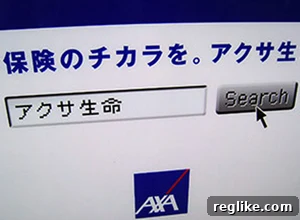
Observing their target audience’s behavior, Japanese advertisers quickly adapted their strategies. Rather than prominently displaying a Latin-character domain name that might be difficult to remember or type, many advertisers began to visually depict the user’s preferred method of access: the search box. It wasn’t uncommon to see advertisements, whether in print, on television, or online, featuring a stylized image of a search bar with the company’s name or a relevant search term already typed in Japanese characters. This visual cue served as an intuitive call to action, signaling to consumers exactly how to find the brand online without explicitly stating a complex URL.
This creative marketing adaptation reinforced the search-first mentality and demonstrated a deep understanding of local user experience. It effectively bridged the gap between traditional advertising and digital presence, turning a potential hurdle into a streamlined path to engagement. For many Japanese companies, investing in strong search engine optimization (SEO) and clear brand recognition became paramount, as these were the primary conduits through which users would find their online properties.
The Promise of Internationalized Domain Names (IDNs)
The underlying reason for these unique navigation patterns was the initial lack of comprehensive support for Internationalized Domain Names (IDNs). IDNs allow domain names to be expressed in native script characters, such as Japanese, Arabic, Chinese, or Cyrillic, rather than being restricted to the Latin alphabet. The development and implementation of IDNs promised to revolutionize internet accessibility for non-Latin script users globally.
With IDNs, websites could finally have domain names like “グーグル.jp” (Google.jp in Japanese) or “会社名.com” (CompanyName.com in Japanese), making them instantly recognizable, easy to remember, and simple to type using standard Japanese input methods. The rollout of IDNs occurred in stages, with second-level IDNs (e.g., within .com or .jp) becoming available first, followed by the eagerly anticipated top-level IDNs (e.g., .भारत for India or .شبكة for web). These developments were poised to dismantle the linguistic barriers that had necessitated the search-centric navigation strategy in Japan and many other non-Latin-speaking regions.
Will IDNs Reshape Deep-Seated Habits?
The advent of IDNs presented a critical question: would this technological advancement fundamentally alter the deeply ingrained web navigation habits of Japanese users? While IDNs undoubtedly offered a more intuitive and linguistically appropriate way to address websites, changing established behaviors is a monumental task. Habits, once formed, are notoriously difficult to break, even when a more efficient alternative emerges.
For years, the search engine had served as a trusted, reliable, and convenient intermediary. Users had developed muscle memory and mental models around this search-first approach. The convenience of typing a familiar brand name in one’s native script into a search engine, rather than carefully constructing a full IDN in the address bar (which might still require switching input modes depending on the browser and OS), might still hold sway. Furthermore, the sheer ubiquity and effectiveness of search engines in surfacing relevant results means that many users may continue to see little reason to change their default behavior.
While IDNs offer a valuable alternative and empower businesses to create more localized and accessible online identities, it is a gradual process to shift an entire nation’s internet usage patterns. The interplay between new technology and persistent user behavior remains a dynamic area of study, with the Japanese experience offering a compelling case study on adaptation and the evolution of digital habits.
Implications for Global Businesses and SEO
The unique web navigation habits in Japan, both historically and in contemporary terms, offer crucial lessons for global businesses and digital marketers. Firstly, it underscores the paramount importance of search engine optimization (SEO) in markets where direct navigation might be less common. Simply having a website is not enough; being easily discoverable through relevant search terms, including brand names, is critical. This means investing in local SEO strategies, understanding keyword usage in native languages, and ensuring strong organic search presence.
Secondly, it highlights the need for cultural and linguistic sensitivity in digital strategy. What works in one market (e.g., prominently displaying a .com URL) may not be effective in another. Advertisers in Japan demonstrated this by adapting their creative to feature search boxes rather than complex URLs. This localized approach is key to effective communication and user engagement. For businesses expanding into new territories, understanding these nuanced user behaviors can be the difference between success and obscurity.
Finally, the Japanese experience emphasizes the role of user experience (UX) design and accessibility. When technology presents barriers, users will find workarounds. The lesson is to anticipate and address these barriers proactively, whether through language support, intuitive interfaces, or the adoption of enabling technologies like IDNs. By making the digital world more comfortable and natural for users in their native contexts, we foster greater adoption and engagement.
Conclusion: An Enduring Legacy of Adaptability
The story of Japanese web navigation before the widespread adoption of IDNs is a testament to human ingenuity and adaptability in the face of technological and linguistic constraints. It illustrates how an entire nation developed a unique and highly effective method of interacting with the internet, driven by practical necessity and convenience. While the landscape has evolved with IDNs offering a more direct path, the legacy of search-centric navigation continues to influence how Japanese users discover and engage with online content. This historical perspective offers invaluable insights into the complex interplay of language, culture, technology, and user behavior, reminding us that the internet’s global adoption is not a monolithic experience, but a rich tapestry of localized adaptations.