
Exploring the Nexus of DNS and IoT: Verisign’s Patent and the Future of Connected Device Management
The rapidly expanding world of the Internet of Things (IoT) presents both incredible opportunities and significant challenges, particularly concerning device identity, management, and secure access. As billions of connected devices populate our homes, cities, and industries, the question of how to efficiently organize and interact with them becomes paramount. One intriguing approach involves leveraging the venerable Domain Name System (DNS), a foundational technology of the internet. While its direct impact on boosting second-level domain registrations for individual devices is debatable, a recent patent granted to Verisign suggests a more nuanced and impactful role for DNS in IoT.
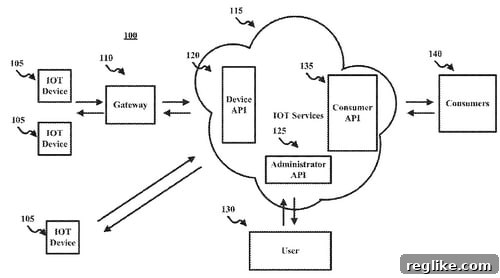
The U.S. Patent and Trademark Office has officially granted patent number 9,935,950 (pdf) to Verisign (NASDAQ: VRSN), a global leader in domain names and internet security. This patent, titled “Systems and methods for establishing ownership and delegation ownership of IOT devices using domain name system services,” outlines a sophisticated framework for integrating DNS functionalities into IoT device management. This development reignites discussions about the potential—and limitations—of applying traditional internet infrastructure to the burgeoning IoT ecosystem.
The Quest for Effective IoT Device Addressing and Management
For many years, industry experts and innovators have sought compelling ways to utilize domain names for connected devices. The vision is often to provide human-readable identifiers for IoT gadgets, making them as accessible and manageable as websites. However, a significant hurdle has been the lack of clear advantages over existing or alternative technologies for accessing these devices. Our personal experiences often reflect this reality; interacting with IoT devices typically involves proprietary mobile applications, voice commands through smart assistants, or automated routines, rather than typing in a specific domain name.
Nevertheless, certain inherent characteristics of the Domain Name System, such as its distributed nature, hierarchical structure, and robust security extensions (like DNSSEC), hold promise for addressing some of the core challenges within the IoT landscape, particularly concerning identity, ownership, and secure communication. Verisign’s patent delves into precisely these areas, proposing a novel application that could bolster the security and manageability of IoT devices behind the scenes.
Verisign’s Patented Approach: DNS for IoT Ownership and Delegation
Verisign’s patent outlines an innovative method for integrating DNS into the IoT ecosystem, primarily focusing on establishing and verifying ownership and enabling the delegation of control over IoT device components. The abstract provides a concise overview of this process:
Provided is a method for establishing ownership of a component of an internet of things (“IoT”) device. The method comprises receiving, at a registration service, a request to register the component of the IoT device, the request comprising a public key of the component of the IoT device, an identifier of the component of the IoT device, and a public key of an owner of the component of the IoT device; determining a qualified name for the component of the IoT device based on a name associated with the owner of the component of the IoT device; generating one or more domain name system (“DNS”) records for the component of the IoT device, the one or more DNS records comprising an authentication file that identifies a chain of ownership of the component of the IoT device; and storing the one or more DNS records in a registry.
Let’s unpack this. At its core, the patent describes a system where an IoT device component, or even the entire device, can be registered within a specialized service. This registration request isn’t just a simple identifier; it includes critical security elements: a public key unique to the device component and a public key belonging to its owner. This use of public-key cryptography is fundamental for establishing verifiable digital identities. The system then determines a “qualified name” for the device, likely a subdomain or a specific DNS record entry, based on the owner’s identity. Crucially, it generates DNS records for the device that incorporate an “authentication file.” This file is designed to clearly identify and verify a “chain of ownership,” providing an immutable and auditable record of who owns the device and who has delegated access to it. Finally, these records are stored in a DNS registry, making this ownership information discoverable and verifiable through the global DNS infrastructure.
Practical Application: Hierarchical Naming with Subdomains
The patent includes a practical example that illuminates how domain names could be structured for IoT devices within this framework:
For example, the IOT service 115 can establish a domain for IOT devices such as “.iotservice.com.” As the devices are registered with the IOT service 115, the IOT service assigns the domain name and creates the DNS records for the IOT devices. For example, if the IOT devices 105 are owned by “Company A,” the IOT service can create a domain “companyA.iotservice.com.” The IOT service 115 can assign a unique domain name to each of the IOT devices, for example, “iotdevice1.companyA.iotservice.com.” The domain and the domain names for each of the IOT devices allow consumers 140 to locate and communicate with the IOT devices 105.
This example highlights a key architectural choice: using subdomains rather than requiring new second-level domain (SLD) registrations for each individual device. An “IoT service” (which could be Verisign itself or a partner) would establish a dedicated SLD, such as “.iotservice.com.” Within this domain, individual companies or organizations would be assigned subdomains, like “companyA.iotservice.com,” to represent their fleet of devices. Each specific IoT device would then receive a unique subdomain under its owner’s subdomain, for instance, “iotdevice1.companyA.iotservice.com.” This hierarchical structure offers a scalable and organized way to name and manage countless devices.
Why Subdomains are Key: Avoiding the Pitfalls of Second-Level Domain Registrations
The strategic use of subdomains in Verisign’s patent example is critical and addresses a fundamental objection to widespread DNS adoption for IoT devices: the impracticality of second-level domain registrations. As the initial article correctly points out, a new second-level domain registration for every single connected device would be ill-advised for numerous reasons:
- ICANN Regulations and Fees: Second-level domains fall under the purview of ICANN (Internet Corporation for Assigned Names and Numbers), entailing annual renewal fees and complex registration processes. With billions of IoT devices, such a model would be economically unsustainable and administratively unwieldy.
- Cybersquatting and Trademark Issues: Opening up SLD registrations for every device would create an immense new frontier for cybersquatting, trademark disputes, and domain name speculation, adding unnecessary legal and financial burdens.
- Complexity for End-Users: Most consumers are not accustomed to registering or managing domain names, nor would they want to for their smart home appliances or wearable tech. The current user experience for IoT prioritizes simplicity and abstraction from such underlying technical details.
- Scalability Challenges: While the DNS system itself is highly scalable, the human-centric process of managing billions of individual SLDs would be a logistical nightmare.
By opting for a subdomain model, Verisign’s patent sidesteps these issues. The primary SLD (e.g., “.iotservice.com”) would be managed by a dedicated service provider, which would then issue and manage subdomains for devices. This approach shifts the administrative burden from individual device owners to specialized services, making the system far more scalable and practical for a mass market.
Current IoT Access Methods: A Domain-Free Reality for Consumers
The prevailing reality in the consumer IoT space further illustrates why a direct reliance on domain names for device access has not taken hold. In a typical smart home, where there might be dozens of connected devices—from smart lights and thermostats to security cameras and voice assistants—interaction rarely involves navigating to a specific domain. Instead, users primarily engage with their IoT ecosystem through:
- Voice Assistants: Platforms like Amazon Alexa, Google Assistant, and Apple Siri allow intuitive, natural language control over devices. Users say “turn on the living room lights” rather than “go to light.livingroom.home.com.”
- Mobile Applications: Manufacturers provide dedicated apps (e.g., Philips Hue app, Nest app) that offer graphical interfaces for device control, monitoring, and automation. These apps abstract away the underlying network addresses.
- Routines and Recipes: Automation platforms like IFTTT (If This Then That) or built-in smart home routines (e.g., “Good Morning” routine) allow devices to react to triggers or schedules without direct user intervention or domain name input.
- Hubs and Gateways: Many smart home systems rely on a central hub or gateway that manages local device communication and connectivity to the internet, further simplifying user interaction.
This hands-on experience reinforces the notion that while DNS might play a crucial backend role, it is unlikely to become the primary method by which end-users directly interact with their IoT devices. The goal for consumer IoT is seamless, intuitive interaction, which domain names, especially complex ones, do not inherently provide at the user interface level.
The True Potential: DNS as an Invisible Backbone for IoT Security and Management
While direct user interaction with domain names for IoT devices may remain limited, Verisign’s patent suggests a powerful, albeit often invisible, role for DNS in the backend. Its strengths lie not in human-readable access, but in providing a robust, distributed, and verifiable system for:
- Device Identity and Authentication: By linking device public keys and ownership chains to DNS records, a globally verifiable identity for each device can be established. This is critical for secure machine-to-machine communication, ensuring that only trusted devices can interact.
- Ownership Verification and Delegation: The patent’s focus on the “chain of ownership” is revolutionary. It offers a standardized way to prove who owns a device and who has the authority to control it, which is vital for enterprise IoT, asset tracking, and scenarios involving device transfer or shared access.
- Enhanced Security: Leveraging DNSSEC (DNS Security Extensions) could further secure the ownership records, protecting them from tampering and spoofing. This could be particularly valuable for preventing unauthorized access or hijacking of IoT devices.
- Firmware Update Management: Devices could securely locate trusted firmware update servers by querying DNS records containing cryptographic signatures or specific service records (SRV records).
- Scalable Device Management: For large-scale enterprise IoT deployments, manufacturing, or supply chain management, using DNS to organize and identify devices could provide a more efficient and standardized approach than proprietary databases.
- Revocation and Lifecycle Management: DNS records could potentially be used to indicate device status, such as whether a device has been decommissioned, recalled, or had its ownership revoked, improving the overall security posture of an IoT ecosystem.
The Future Landscape: Integration, Standardization, and Niche Applications
The journey to fully integrate DNS into the IoT fabric is complex and requires industry-wide collaboration and standardization. Verisign’s patent represents a significant step forward in conceptualizing how DNS can address some of IoT’s most pressing challenges, particularly around identity and trust. However, it’s essential to recognize that this application is likely to serve as a foundational layer rather than a direct user interface.
The core argument remains: DNS, in this context, is designed to be a powerful tool for service providers, manufacturers, and enterprise managers, not necessarily for individual consumers typing device names into a browser. Its value will be in enabling more secure, verifiable, and manageable IoT ecosystems, working seamlessly behind the scenes to authenticate devices, prove ownership, and facilitate secure operations.
In conclusion, while Verisign’s innovative patent demonstrates the profound applicability of DNS to the complex world of the Internet of Things, it is unlikely to trigger a surge in second-level domain registrations for every smart toaster or light bulb. Instead, its true impact lies in strengthening the foundational infrastructure of IoT, providing a robust and scalable framework for device identity, ownership, and security—a critical, albeit often invisible, backbone that underpins the reliability and trustworthiness of our ever-expanding network of connected devices.