
Verisign’s Proactive Stance: Patented Systems for GDPR-Compliant Whois Data Management
In the rapidly evolving digital landscape, data privacy regulations have become a paramount concern for organizations operating globally. Few pieces of legislation have had as profound an impact as the European Union’s General Data Protection Regulation (GDPR). This transformative regulation has spurred a critical re-evaluation of data handling practices across industries, particularly within the domain name system, where transparency and privacy often present a complex dichotomy.
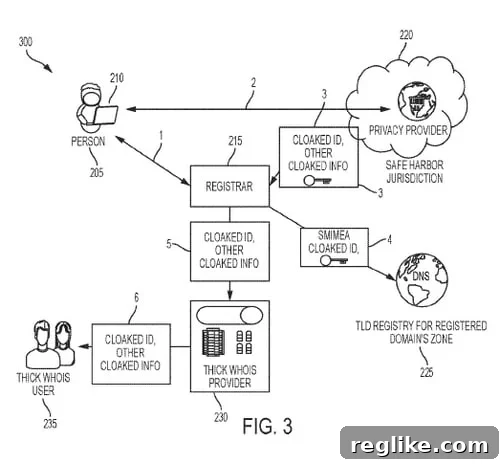
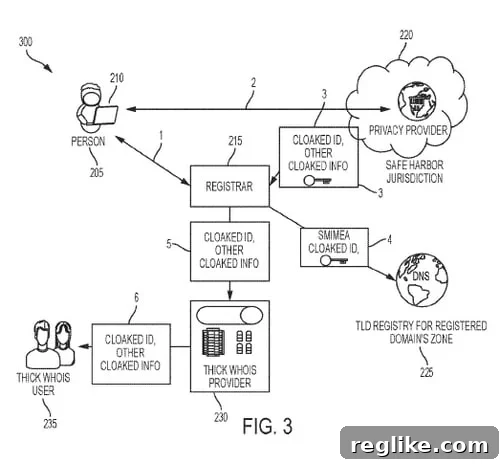
Verisign, the foundational registry for the ubiquitous .com and .net top-level domains, has demonstrated remarkable foresight in anticipating and addressing these compliance challenges. Their proactive approach is exemplified by a patent application, titled “Systems and Methods for Preserving Privacy of a Registrant in a Domain Name System,” filed in March 2016. Published by the U.S. Patent and Trademark Office, this application outlines an innovative framework designed to manage domain registrant data in strict adherence to rigorous privacy requirements, especially those mandated by GDPR. This strategic move highlights Verisign’s dedication not only to securing core internet infrastructure but also to adapting it to global regulatory shifts and evolving user expectations for data privacy.
The Imperative of GDPR: Reshaping Data Privacy Standards
The General Data Protection Regulation (GDPR), which became enforceable in May 2018, is a landmark legislation that fundamentally altered the landscape of personal data processing. It establishes a comprehensive set of rules for organizations worldwide that collect, store, or process personal data of individuals residing within the European Union. Its overarching objectives are to empower individuals with greater control over their personal data and to create a unified, simplified regulatory environment across the EU.
For the domain name industry, GDPR introduced significant complexities, particularly concerning the long-standing Whois protocol. Historically, Whois records were designed to provide public access to contact information of domain registrants, including names, postal addresses, phone numbers, and email addresses. This transparency served various critical functions: enabling contact for technical issues, facilitating law enforcement investigations, and aiding intellectual property rights holders in combating cybersquatting. However, this traditional openness directly conflicted with GDPR’s core tenets.
Key GDPR principles, such as data minimization (collecting only necessary data), purpose limitation (using data only for specified, explicit purposes), and the fundamental right to privacy, challenged the indiscriminate public display of personal data via Whois. The regulation also grants data subjects robust rights, including the right to access, rectify, erase, and restrict the processing of their personal data. Consequently, the domain industry faced the urgent task of reconciling the historical transparency of Whois with the imperative of personal data privacy.
Unpacking Whois: Thin vs. Thick Models and Their Implications
To fully appreciate the scope of Verisign’s patent application and the compliance hurdles it seeks to overcome, it’s crucial to understand the two primary models for Whois data management and how they distribute the responsibility for registrant information:
The Thin Whois Model: Registrar-Centric Data Management
Under the Thin Whois model, prevalent in older, established Top-Level Domains (TLDs) such as .com and .net, the central registry (e.g., Verisign for .com) maintains only a minimal set of technical data about a domain name. This typically includes its name servers and the identity of the accredited registrar through which the domain was registered. Crucially, the sensitive personal contact information of the domain registrant—such as their name, physical address, email, and phone number—is not stored by the registry. Instead, this personal data is held and managed exclusively by the individual domain name registrar (e.g., GoDaddy, Namecheap). Therefore, to retrieve registrant details in a Thin Whois system, one must typically query the specific registrar’s Whois server.
The Thick Whois Model: Centralized Registry Data Storage
In contrast, the Thick Whois model, which is standard for most newer generic TLDs (gTLDs) launched under ICANN’s new gTLD program (e.g., .online, .blog, .app), centralizes all domain registration data. In this model, the registry operator stores both the technical information about the domain and all personal contact details of the registrant. This centralization means that a single Whois query directed to the registry’s server will yield all available registration information. While this approach streamlines data access from a technical perspective, it places a much greater responsibility on the registry for the secure storage and privacy-compliant display of vast amounts of personal data.
The Critical .Com Transition and Verisign’s Evolving Role
Historically, .com, the internet’s most widely used domain, operated under the Thin Whois model. This arrangement meant that the primary burden of collecting, managing, and ensuring GDPR compliance for registrant data fell upon the numerous individual domain registrars. However, a significant policy mandate from ICANN stipulated that .com, alongside .net, would transition from a Thin Whois system to a Thick Whois system. This pivotal transition was initially scheduled for 2018.
This shift represents a monumental change for Verisign. Once the .com registry fully adopts the Thick Whois model, Verisign will become the central repository for the registrant data of millions upon millions of .com domain names. Consequently, the immense responsibility for ensuring GDPR compliance—spanning data collection, storage, security, and disclosure—for this colossal dataset will transfer directly from hundreds of distinct registrars to Verisign. The sheer scale and sensitivity of this data necessitate the implementation of exceptionally robust systems for data protection, stringent access control, and unwavering legal adherence.
While the full implementation of this transition encountered various complexities, leading to potential delays as the industry grappled with aligning it with global privacy regulations and establishing a consensus on the future of Whois, the impending shift undeniably highlighted the critical need for Verisign to act proactively. Their patent application serves as concrete evidence of this forward-thinking strategy, showcasing their earnest efforts to prepare for the profound implications of this impending data consolidation and the evolving global regulatory environment.
Verisign’s Patented Framework for Privacy-Compliant Whois
The patent application, credited to Verisign engineer Andrew Fregly, provides a detailed conceptual blueprint for a system capable of harmonizing the essential operational functions of Whois with the rigorous demands of modern data privacy regulations like GDPR. At its core, the invention describes a multi-faceted system engineered to achieve two critical objectives:
- Securely Storing Customer Information in Legally-Permitted Locations: This objective directly addresses one of GDPR’s most sensitive aspects: international data transfers and storage location restrictions. The proposed system likely incorporates advanced mechanisms to identify the geographic origin of data subjects and intelligently route their information to data centers situated within jurisdictions that either adhere to EU data protection standards or operate under specific legal frameworks (such as standard contractual clauses or adequacy decisions) that permit lawful cross-border data flows. This ensures compliance with regional data residency and protection laws.
- Dynamically Displaying Only Publicly Available Information: This is arguably the most direct and impactful response to GDPR’s data minimization and purpose limitation principles. The patented system envisions sophisticated dynamic redaction and filtering capabilities. Upon receiving a Whois query, the system would intelligently analyze and determine precisely which pieces of information can be legitimately displayed. This determination would be based on a combination of factors: the inquirer’s recognized rights, the explicit purpose of their query, the registrant’s privacy settings (where applicable), and established legal frameworks. The aim is to ensure that protected personal data remains entirely private unless a legitimate, authorized, and auditable access request is made. This could involve displaying masked email addresses (e.g., using reCAPTCHA protected forms), anonymized names, or simply stating “private” for sensitive fields, while reserving full, unredacted data access for authenticated parties—such as law enforcement agencies or intellectual property rights holders—under strict, legally compliant protocols.
The architecture described in the patent application likely comprises several sophisticated and interconnected components:
- Advanced Data Segregation and Encryption: Implementing robust measures to store personal registrant data separately from publicly displayable technical information. All sensitive data would be encrypted both at rest (when stored on servers) and in transit (when being transmitted across networks), providing multiple layers of security.
- Granular Access Control Mechanisms: Developing stringent authentication and authorization layers that precisely control who can access what level of detail. This would involve strong identity verification, multi-factor authentication, and role-based access control, ensuring that only authorized personnel with a legitimate need can view specific data. Comprehensive auditing of all access requests would also be a critical feature.
- Adaptive Policy Enforcement Engine: Creating a sophisticated, rules-based engine capable of dynamically applying privacy policies and regulatory requirements to each Whois query. This engine would be designed to adapt to evolving legal landscapes and new policy directives without necessitating constant, large-scale system re-engineering.
- Secure Legal Gateway for Legitimate Access: Establishing a highly controlled and auditable interface through which accredited parties (e.g., law enforcement bodies, cybersecurity researchers, intellectual property attorneys) can submit formal requests for non-public registrant data. This gateway would require clear legal justifications for each request, ensuring accountability, transparency, and strict adherence to due process.
Wider Implications for the Global Domain Ecosystem
Verisign’s patent application is far more than a mere technical innovation; it represents a significant strategic maneuver with profound, cascading implications for the entire domain name ecosystem:
- For Domain Registrars: While the .com Thin to Thick Whois transition will transfer substantial responsibility to Verisign, registrars will continue to bear the onus of ensuring their own internal systems and practices are GDPR compliant for other TLDs they manage and for their direct interactions and contractual agreements with registrants. Nevertheless, a robust, registry-level solution like Verisign’s could establish a vital precedent and offer a standardized model for privacy-centric practices across the industry.
- For Domain Registrants: This initiative promises significantly enhanced privacy protections, instilling greater confidence in individuals that their personal information associated with domain registrations is being handled responsibly, securely, and in full compliance with international privacy laws.
- For Law Enforcement and Intellectual Property Holders: A persistent challenge lies in balancing enhanced privacy with the legitimate needs of fighting cybercrime, preventing abuse, and protecting intellectual property rights. Verisign’s proposed system explicitly aims to provide controlled, auditable access mechanisms for these critical stakeholders, striving to ensure that the internet remains a safe and secure environment while meticulously respecting individual privacy rights.
- For ICANN and the Broader Industry: This patent directly contributes to the ongoing, global discourse surrounding the future of Whois and the development of next-generation directory services, such as RDAP (Registration Data Access Protocol). Solutions pioneered by major registries like Verisign could significantly inform and influence the development of broader industry standards and best practices for achieving the delicate balance between transparency and individual privacy in the domain name system.
Conclusion: Leading the Way in Data Privacy and Compliance
Verisign’s proactive development and patenting of systems for GDPR-compliant Whois data management exemplify a responsible and forward-thinking approach to navigating the intricate landscape of modern data privacy regulations. As the trusted steward of the indispensable .com and .net top-level domains, Verisign’s commitment to implementing sophisticated data management and rigorous access control systems is paramount. These efforts are not merely about regulatory adherence; they are vital for maintaining user trust, ensuring operational continuity, and fostering a secure, resilient, and privacy-respecting internet environment for all users.
This groundbreaking patent not only addresses the immediate and complex challenges posed by GDPR and the imminent .com Thick Whois transition but also firmly establishes Verisign as a leader in shaping the future of privacy within the domain name system. It sets a crucial precedent for developing robust, adaptable, and privacy-preserving solutions in an ever-evolving digital world, where the protection of personal data is increasingly central to internet governance and user confidence.