
Verisign’s Game-Changing Patent: Reshaping the Expired Domain Landscape
In the dynamic world of digital real estate, where domain names are coveted assets, Verisign (NASDAQ: VRSN) stands as a pivotal guardian. As the operator of the prestigious .com and .net namespaces, the company wields significant influence over the internet’s core infrastructure. Last year, the domain industry buzzed with anticipation following an intriguing patent application filed by Verisign. This speculation has now materialized into reality, with the U.S. Patent and Trademark Office officially issuing patent #10404650 (pdf). This landmark patent is poised to fundamentally alter the established mechanisms for acquiring expired domain names, potentially ushering in a new era for domain investors, businesses, and the entire ecosystem.
The granted patent isn’t just a technical document; it’s a blueprint for a paradigm shift in how domain names, once relinquished, can be reclaimed. Traditionally, the process of securing an expired domain has been likened to a high-stakes race, often involving specialized “drop catching” services that employ sophisticated technology to snatch domains the millisecond they become available. Verisign’s patent introduces several innovative approaches designed to bring more structure and perhaps, predictability, to this often-chaotic arena. These methods could dramatically impact the competitive landscape, creating new opportunities while simultaneously challenging existing business models in the domain backordering industry.
Understanding the Core Innovation: Encoding Domain Names
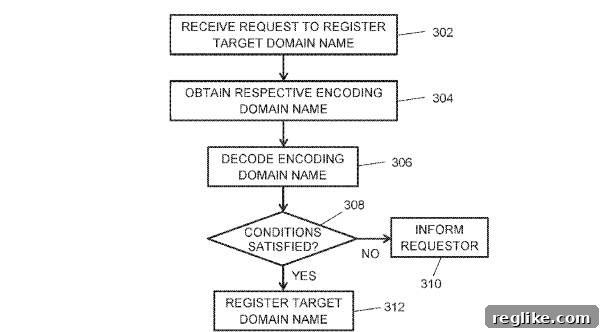
At the heart of Verisign’s patent lies a novel concept: the introduction of “encoding domain names.” This mechanism grants individuals or entities a definitive right to acquire a specific domain name upon its expiration. Imagine a scenario where you’ve identified a valuable domain, say “example.com,” whose current registration is set to expire on March 28, 2020. Under the proposed system, instead of waiting for the unpredictable drop and competing in a furious bidding war, you could proactively register an encoding domain like dn–example-20200328.com. This seemingly innocuous domain name serves as a cryptographic key, explicitly linking you to the future availability of “example.com.”
This approach offers several significant advantages. Firstly, it moves the acquisition process from a reactive, real-time scramble to a proactive, forward-looking reservation system. This could eliminate much of the technical arms race currently dominating the drop-catching market. Secondly, the encoding domain itself becomes a transferable digital asset. If your plans change, or if another party expresses interest in “example.com,” you could simply transfer ownership of dn–example-20200328.com. This creates a secondary market for these “rights-to-acquire,” adding a new layer of financial instrument to the domain ecosystem. The ability to transfer these rights adds liquidity and flexibility, allowing market forces to determine the value of a future domain acquisition long before its actual expiration date. This could make domain investing more strategic and less dependent on raw technical speed.
Expanding the Scope: Priority Pools and Domain Acquisition
Beyond individual encoding domains, the patent outlines additional embodiments that further expand Verisign’s influence over the expired domain market. One notable aspect includes provisions for allowing priority to register domains from a pre-defined “pool” of domain names. This could manifest in various ways, such as premium access for certain registrars, specific criteria for early registration, or even auction-like scenarios for batches of high-value expired domains. The implications of such a system are far-reaching. It could enable Verisign, or entities operating under its license, to curate and manage the re-release of valuable domains more systematically, potentially optimizing their value and ensuring they land in appropriate hands, or at least in the hands of those willing to pay a premium for priority access.
Currently, when a domain expires, it goes through a redemption period, then a pending delete phase, and finally “drops” back into the general pool, available for anyone to register. The existing “drop catching” industry has built sophisticated infrastructure around this process, utilizing high-speed connections and automated bidding systems to register domains milliseconds after they become available. Verisign’s patent could disrupt this entire established industry. By allowing for pre-emptive reservations or priority access, the chaotic free-for-all could be replaced by a more controlled and potentially more profitable system for the registry operator or its authorized partners. This raises critical questions about fairness, access, and the potential for increased costs for those seeking to acquire valuable expired domains.
Verisign’s Broader Strategic Vision: Monetizing Intellectual Property
This patent isn’t an isolated incident; it appears to be a crucial piece in a larger, evolving strategy from Verisign concerning its intellectual property portfolio. As far back as 2013, Verisign publicly discussed monetizing its extensive patent portfolio. While those public discussions eventually subsided, the underlying strategic intent likely remained. The company’s unique position as the registry for .com — the internet’s most critical top-level domain — presents both immense power and significant regulatory constraints.
One primary reason for the public shelving of patent monetization discussions was the inherent risk. Actively asserting patents against other registries or domain service providers while simultaneously negotiating its critical .com contract with governmental bodies like the NTIA (National Telecommunications and Information Administration) would invite intense scrutiny. Such actions could be perceived as anticompetitive, potentially jeopardizing Verisign’s long-standing stewardship of the .com namespace. The company understood the delicate balance required to maintain its operational privileges while exploring new revenue streams.
However, the patent grant reopens the conversation about Verisign’s long-term intentions. A highly strategic option that has been previously considered involves selling its patent portfolio to a third-party entity, which then grants a license back to Verisign. This “sell and license back” model offers a sophisticated way for Verisign to achieve several objectives simultaneously. Firstly, it generates a substantial profit from the sale of valuable intellectual property. Secondly, it allows Verisign to continue operating under the terms of the license, ensuring continuity of service without direct infringement concerns. Crucially, it creates an arm’s-length distance between Verisign and any aggressive actions the patent buyer might take against competitors. The buyer, now the owner of the patents, would be free to pursue licensing agreements or infringement claims against other entities in the domain space, with Verisign insulated from the direct reputational or regulatory fallout.
Navigating Regulatory Waters and Future Ambitions
Verisign’s strategic maneuvering doesn’t occur in a vacuum; it’s intricately linked to ongoing regulatory developments. The company has recently amended its Cooperative Agreement with the NTIA, a significant step in securing its long-term operational framework. However, a major hurdle remains: Verisign is actively engaged with ICANN (Internet Corporation for Assigned Names and Numbers) to incorporate much-desired price increases for .com domain registrations. It is highly improbable that Verisign would initiate any drastic or controversial moves, such as aggressively implementing these patented expired domain mechanisms or asserting its patent rights, until these critical price increase negotiations are successfully concluded.
Once Verisign achieves its objectives regarding price increases, the company will face a crucial decision point: how bold does it wish to be? The successful negotiation of higher .com registration fees would provide significant financial stability and reinforce its market dominance. At that juncture, Verisign might feel empowered to more aggressively pursue its patent monetization strategies. The ultimate goal, as many observers believe, is for Verisign to eventually eliminate price caps entirely on .com domains, granting it complete pricing freedom. In this context, a patent that creates new revenue streams or strengthens Verisign’s control over the aftermarket for valuable expired domains could serve as another powerful lever in its long-term strategic playbook. It could be seen as a move to diversify revenue beyond registration fees, or to reinforce its position as the ultimate arbiter of value within the .com space.
The Evolving Landscape of Digital Assets
The granting of Verisign’s patent #10404650 represents more than just a legal formality; it signifies a potential tectonic shift in the domain name industry. From the way expired domains are managed and acquired to the broader strategies of one of the internet’s foundational companies, the implications are vast. While the full impact remains to be seen, this patent certainly sets the stage for exciting, and potentially contentious, developments in the world of digital assets. The interplay between technological innovation, market forces, and regulatory oversight will shape how these new mechanisms are ultimately implemented and perceived by the global internet community. The domain name space is constantly evolving, and Verisign’s latest patent ensures that this evolution will be particularly interesting to watch in the coming years.