
The Critical Role of Domain Name Typeability in the Digital Age: Understanding Verisign’s Innovative Patent
In the vast and ever-expanding digital landscape, a domain name serves as the cornerstone of any online presence. It’s not merely an address; it’s a brand identifier, a first impression, and a critical gateway to information and services. While factors like memorability, relevance, and length have long been paramount in domain name selection, a newly emphasized metric is gaining significant traction: domain name typeability. This crucial yet often overlooked aspect directly impacts user experience and digital accessibility, profoundly shaping how individuals interact with the web.
The U.S. Patent and Trademark Office has recognized this evolving need by granting patent number 9,195,316 to Verisign, a global leader in domain name infrastructure, for “Evaluating typeability of domain names.” This patent introduces a sophisticated method to quantify how easily a specific domain name can be typed across a spectrum of different keyboard layouts and input devices. This innovative concept has profound implications for businesses, domain name registrants, and the internet at large, guiding the selection of domain names that are not only memorable but also effortlessly accessible in our mobile-first world.
What is Domain Name Typeability and Why Does It Matter So Much?
At its core, domain name typeability refers to the ease, speed, and accuracy with which a user can enter a domain name into an address bar or search field. It’s a precise measure of the friction involved in the initial point of contact with a website. While seemingly a simple concept, this metric encapsulates a complex interplay of cognitive and motor skills, heavily influenced by the specific input device being used. The digital world is no longer confined to desktop computers equipped with standard QWERTY keyboards. The ubiquitous shift towards mobile phones, tablets, and even smartwatches means that users are constantly interacting with virtual keyboards, predictive text features, and varying screen sizes, each presenting unique typing challenges that impact the user journey.
The Evolving Landscape of Digital Interaction and Input Methods
The fundamental transition from physical keyboards to virtual touchscreens has profoundly altered how we input text and interact with digital content. A domain name that might be effortlessly typed on a traditional QWERTY desktop keyboard could prove cumbersome, error-prone, or even frustrating on a compact smartphone screen utilizing a virtual keyboard. This divergence in user experience underscores the critical importance of evaluating typeability across diverse computing environments. Understanding these nuances allows domain owners and marketers to select names that are not only memorable but also digitally accessible, ensuring a smoother journey for their visitors from the very first character typed.
Consider these key factors that significantly influence a domain name’s typeability:
- Keyboard Layouts: The specific arrangement of keys (e.g., standard QWERTY, AZERTY in France, QWERTZ in Germany, or various mobile virtual layouts) directly impacts finger travel distance and the ease of reaching consecutive characters.
- Character Sequence: Specific sequences of letters that require awkward finger stretches, excessive single-finger repetitions, or rapid alternation between the same finger can significantly reduce typeability and increase the likelihood of errors.
- Special Characters and Numbers: The necessity of switching between alphanumeric and symbolic input modes, especially challenging on virtual mobile keyboards, adds friction and slows down the typing process.
- Common Typing Patterns: Domain names that naturally align with common linguistic patterns or established touch-typing techniques tend to be more typeable, allowing for fluid and rapid input.
- Language and Locale: Different languages exhibit unique letter frequencies and common character combinations, which can affect the perceived typeability of a domain name on region-specific or language-optimized keyboards.
Verisign’s Groundbreaking Patent: A Deeper Look into Typeability Evaluation (Patent No. 9,195,316)
Verisign’s patent, officially titled “Evaluating Typeability of Domain Names” (Patent No. 9,195,316), represents a significant stride in standardizing and quantifying this abstract concept. It moves beyond subjective assessments and anecdotal evidence to provide a data-driven, objective approach for scoring domain names. This innovative system is meticulously designed to process various inputs related to keyboard types and layouts, subsequently calculating a quantifiable measure of how simple or difficult it is to accurately type a particular domain name, providing a crucial advantage in the competitive online arena.
The Sophisticated Mechanism Behind the Typeability Score
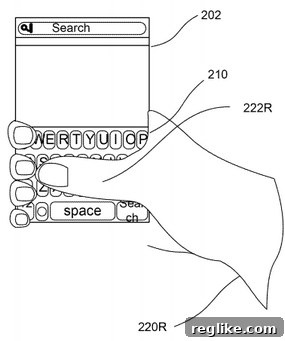
The core of Verisign’s patented method lies in its ability to simulate and meticulously analyze the typing process across a multitude of distinct input environments. Imagine an advanced computational system that takes a domain name, for instance, “exampledomain.com,” and then virtually types it on an array of devices: a standard QWERTY desktop keyboard, an iPhone’s virtual keyboard, a legacy Blackberry’s physical mini-keyboard, or even specialized input methods designed for different languages or accessibility needs. For each simulated scenario, the system rigorously assesses various critical parameters:
- Key Proximity and Finger Movement Efficiency: It precisely evaluates the distance fingers need to travel between consecutive characters. Shorter, more natural, and ergonomically efficient movements contribute to significantly higher typeability scores.
- Hand and Finger Alternation: Optimal typeability often involves efficient alternation between hands (for two-handed typing) or strategic finger usage (for single-hand/mobile typing) to maintain rhythm, speed, and reduce strain.
- Shift Key and Modifier Usage: The frequency and context of needing to press a shift key for capitalization, special characters, or symbols, particularly challenging and time-consuming on mobile virtual keyboards.
- Mode Switching Complexity: For virtual keyboards, the act of switching between letter, number, and symbol input modes significantly impacts typing efficiency and can introduce errors.
- Error Likelihood and Prediction: The system analyzes character patterns that are historically prone to typos on specific keyboard layouts (e.g., adjacent keys on a small touchscreen), contributing to a more accurate typeability assessment.
By intelligently aggregating and weighting these intricate factors across a predefined set of diverse keyboard layouts, the system generates a comprehensive “typeability score.” This score provides a quantifiable snapshot of a domain name’s ease of entry, transforming it into an invaluable tool for strategic decision-making in the dynamic digital realm.
Beyond Simple Length: A New Dimension in Domain Evaluation
Traditionally, domain name selection has heavily emphasized factors such as brevity, memorability, and the strategic inclusion of relevant keywords for search engine optimization. While these metrics undoubtedly remain vital, typeability introduces a crucial and often overlooked functional dimension. A short, keyword-rich domain might still exhibit poor typeability if its character sequence is awkward or unnatural on commonly used devices. Conversely, a slightly longer domain with a fluid, easy-to-type sequence could potentially offer superior user engagement and fewer access barriers. The Verisign patent allows for a more holistic evaluation, moving beyond surface-level characteristics to meticulously assess a domain name’s practical usability in our increasingly mobile-first world. It acknowledges that the most effective domain isn’t just one that’s easy to remember, but critically, one that is also easy to access.
The Far-Reaching Benefits of Typeability Scores Across the Digital Ecosystem
The introduction of a standardized and objective typeability score carries widespread implications, offering tangible advantages to various stakeholders across the entire internet ecosystem.
Enhancing User Experience (UX) and Digital Accessibility
For the end-user, an easily typeable domain name translates directly into a smoother, more pleasant, and less frustrating online experience. Reduced typing effort means less frustration, fewer errors, and quicker access to desired content and services. This is particularly critical for users with motor impairments, those using assistive technologies, or individuals who frequently rely on smaller screens and virtual keyboards. By prioritizing typeability, businesses can significantly improve their website’s digital accessibility, ensuring a broader and more inclusive audience can effortlessly reach their online presence. A high typeability score contributes positively to the overall impression of professionalism and user-friendliness of a brand.
Boosting Marketing, Branding, and Online Presence
From a marketing and branding perspective, a domain name that is easy to type is inherently more powerful and effective. It simplifies verbal communication (e.g., effortlessly telling someone your website address), significantly reduces the chances of miscommunication in advertisements, and makes it considerably easier for customers to return to your site without fumbling. When a domain is effortlessly typed, it creates a seamless journey from initial recall to immediate access, thereby reinforcing brand recognition, fostering customer loyalty, and solidifying your online presence. It actively minimizes the risk of potential customers being directed to competitors or landing on non-existent pages due to a simple typo, safeguarding valuable organic traffic and maintaining brand integrity.
Optimizing Domain Name Registration and Strategic Selection
For domain registrants, entrepreneurs, and businesses embarking on their digital journey, typeability scores offer a powerful new metric for making profoundly informed decisions. Instead of solely relying on intuition, personal preference, or common sense, they can now utilize objective data to compare and contrast potential domain names. This can lead to smarter investments in domain assets, enabling the selection of names that are not just catchy but also functionally superior for modern internet usage. Domain registrars could strategically integrate this scoring system into their domain search tools, offering users a vital piece of information alongside availability and pricing, thereby significantly enhancing the value proposition of their services. This crucial insight helps registrants avoid “typeability traps” – names that may look appealing on paper but perform poorly in real-world, diverse typing scenarios.
Reducing Typographical Errors and Preventing Misdirected Traffic
Typographical errors, or “typosquatting,” represent a persistent and costly problem online. When a domain name is inherently difficult or awkward to type, the likelihood of users making mistakes dramatically increases, potentially leading them to competitor sites, malicious phishing attempts, or simply frustrating dead ends. Each typo represents a lost visitor, a missed business opportunity, and a potential erosion of trust. By consciously prioritizing typeability during domain selection, businesses can actively minimize these significant risks, ensuring that their online presence remains robust and that valuable traffic consistently reaches its intended, legitimate destination. This not only protects potential revenue but also reinforces trust and professionalism with the user base, enhancing overall website usability.
The Future of Domain Name Metrics and Digital Accessibility
Verisign’s patent for evaluating domain name typeability signifies a maturation in the science of domain name management. It pushes the industry beyond simple availability and basic characteristics, prompting a deeper and more nuanced consideration of user interaction at the most fundamental level. This innovation paves the way for a new generation of sophisticated domain search tools, which could seamlessly integrate typeability scores into their core functionality, intelligently guiding users toward optimal choices. Imagine web browsers providing immediate feedback on a domain’s typeability before you even commit to registering it, or predictive text algorithms intelligently prioritizing more typeable domain structures in their suggestions.
As the internet continues its dynamic evolution, with new devices, innovative interfaces, and diverse user demographics constantly emerging, the importance of universal digital accessibility will only grow. Metrics like typeability are absolutely crucial for ensuring that the web remains a universally usable and equitable resource for everyone. This patent underscores the industry’s unwavering commitment to creating a more frictionless, inclusive, and highly efficient online experience for all, regardless of their preferred input method or device, truly enhancing website usability across the globe.
Verisign’s Ongoing Commitment to the Internet’s Core Infrastructure
Verisign’s role as a critical operator for key components of the internet’s naming and addressing infrastructure positions it uniquely to innovate in areas that inherently enhance overall internet stability and usability. Their guardianship of foundational top-level domains like .com and .net means they have a profound vested interest in the long-term health, efficiency, and accessibility of the global domain name system. This patent on typeability evaluation is a powerful testament to their continuous efforts to not only maintain the vital backbone of the internet but also to proactively develop cutting-edge tools and insights that empower users and businesses to navigate the complex digital world more effectively and seamlessly. It demonstrates a forward-thinking, user-centric approach to enhancing the overall user experience at the foundational level of domain name resolution, reinforcing their commitment to a robust online presence for all.
Conclusion: Typing Towards a More Accessible Digital Future
The granting of Verisign’s patent for “Evaluating typeability of domain names” marks a pivotal moment in the ongoing quest to optimize our digital interactions and improve digital accessibility. By offering a standardized, objective metric for how easily a domain name can be typed across various keyboard layouts, this groundbreaking innovation empowers domain registrants, businesses, and web developers to make profoundly more informed and strategic decisions. It vividly highlights the critical link between a domain’s intrinsic structure, the diverse array of modern input devices, and the ultimate user experience, which is paramount for a successful online presence.
As the web continues its inevitable march towards greater mobility, diverse access points, and evolving user expectations, the emphasis on practical usability, digital accessibility, and a seamless online journey will only intensify. Domain name typeability is not merely a technical curiosity; it is a fundamental aspect of an effective and successful online presence, and a key determinant of overall user satisfaction and engagement. Verisign’s patent represents a significant and forward-thinking step towards a more thoughtful, user-centric approach to domain name selection, ensuring that the internet remains as accessible, efficient, and user-friendly as possible for all its inhabitants, thereby bolstering global website usability.