
Vox Populi’s Persistent Pursuit: The Unwinnable Battle to Trademark “.Sucks”
In the dynamic and often contentious world of domain names, disputes over intellectual property are not uncommon. However, some cases stand out for their sheer audacity and the fundamental legal principles they challenge. One such saga involves Vox Populi, the registry operator behind the controversial .Sucks top-level domain (TLD), and their relentless, albeit arguably misguided, attempt to secure a trademark for the very domain extension they manage. This article delves into the intricacies of this ongoing battle, examining why trademarking a TLD presents a significant hurdle and what this particular case reveals about the interplay between domain infrastructure and intellectual property law.
The story began when Vox Populi filed an application to register a trademark for “.Sucks.” Many in the domain industry, including experts and commentators, quickly pointed out the inherent challenges of such a registration. The general consensus was clear: a top-level domain name functions as a part of the internet’s addressing system, a functional identifier rather than a unique source identifier for specific goods or services in the traditional trademark sense.
Predictably, the U.S. Patent and Trademark Office (USPTO), the arbiter of trademark rights in the United States, concurred with this widely held view. The USPTO issued a refusal, stating that “.Sucks” primarily functions as a TLD and therefore fails to serve as a service mark, which is designed to identify and distinguish the services of one provider from those of others. This refusal was not a surprise to those familiar with trademark jurisprudence concerning generic terms and functional elements.
However, Vox Populi, seemingly undeterred by the USPTO’s initial rejection, chose to challenge the decision. They responded with a detailed, albeit rather unconventional, set of explanations arguing why their application should be reconsidered. This determination to pursue the trademark highlights a fundamental disagreement over the nature of TLDs and their role in branding. Let’s examine their core arguments and why they fall short of convincing the legal body responsible for protecting unique brand identities.
The Genesis of a Controversial Domain: Understanding .Sucks
To fully appreciate the trademark debate, it’s essential to understand the context of the .Sucks TLD itself. Launched amidst the expansive rollout of new generic top-level domains by ICANN (Internet Corporation for Assigned Names and Numbers), .Sucks quickly became synonymous with controversy. Marketed as a space for constructive criticism, feedback, and dissent, it was positioned as a platform where consumers, competitors, or anyone with an opinion could air grievances about companies, products, or public figures by registering domains like “companyname.sucks.”
While Vox Populi argued that .Sucks provided a valuable outlet for free speech and brand engagement, many corporations and intellectual property rights holders viewed it as a predatory extension designed to extort money. They feared having to defensively register their brands under .Sucks simply to prevent negative publicity or cybersquatting, often at premium prices. This contentious launch set the stage for a registry operator that was not afraid to challenge norms, a characteristic that extended to its trademark strategy.
The Bold Move: Vox Populi’s Trademark Application and the USPTO’s Resolute “No”
When Vox Populi applied for the trademark for “.Sucks,” the primary reason for the USPTO’s refusal hinged on a core tenet of trademark law: a mark must function as a source identifier. In essence, it must tell consumers who provides the goods or services. The USPTO argued that a TLD, by its very nature, functions as a geographical or functional designator within the internet’s addressing system rather than a distinct brand name for a registry service.
Trademark law generally prohibits the registration of terms that are generic for the goods or services they purport to identify. For example, you cannot trademark “Apple” for apples or “Car” for automobiles. While “.Sucks” isn’t generic for “registry services” in the same way, the USPTO viewed it as a functional component of the internet’s addressing infrastructure. Allowing a registry operator to exclusively trademark the very TLD they administer for registry services could grant them an undue monopoly over a functional element of the internet, creating unfair competitive advantages and confusing the public.
Vox Populi’s Undeterred Rebuttal: Examining Their Arguments
Despite the USPTO’s clear refusal, Vox Populi responded with a robust defense of their trademark application, as detailed in their official filing. Their arguments, while creative, reveal a fundamental misinterpretation of trademark principles and the nature of TLDs. Let’s dissect their key points:
Argument 1: “Applicant’s Mark was a Service Mark Before it was a gTLD”
Vox Populi’s first major contention, found in their response to the USPTO, asserts that they were using “.Sucks” as a service mark and accruing goodwill even before the gTLD officially went live. Their submission stated:
The Examining Attorney has refused registration on the grounds that Applicant’s mark is merely a top level domain and thus fails to function as a service mark. Applicant respectfully submits that this refusal should be withdrawn for the following reasons.
A. Applicant’s Mark was a Service Mark Before it was a gTLD
Central to the Examining Attorney’s arguments that .SUCKS does not function as a service mark is the contention that “the applied-for mark consists solely of a top-level domain name.” While it is true that “.sucks” is now operational as a top-level-domain, Applicant was using the term as a service mark, and accruing goodwill therein, prior to the roll-out of the corresponding gTLD.
Specifically, the “.sucks” top-level domain (“TLD”) first went live as an element of a domain name on June 21, 2015. However, the Applicant had been using its service mark, .SUCKS, in connection with its domain registry operator services since at least as early as March 30, 2015. This means that the Applicant’s use of .SUCKS in connection with its services pre-dates the active use of the top-level-domain by almost three (3) full months; this also means that it is impossible to state that “the applied-for mark consists solely of a top-level domain name” because it was used by Applicant in the offering of its services before ever it was a top-level-domain.
This argument posits that since they promoted and marketed the “.Sucks” concept for their registry operator services prior to its official activation as a functional TLD, it should qualify for trademark protection. However, this line of reasoning overlooks a crucial aspect of TLD launches. It is common, indeed essential, for *every* new TLD operator to engage in pre-launch marketing, branding, and establishing their “registry operator services” before the TLD becomes live and available for public registration. This promotional period is standard industry practice, designed to build anticipation and generate interest. It does not, by itself, transform a functional internet component into a legally protectable service mark for the very services that revolve around making that component available.
The act of promoting the upcoming availability of a TLD, even if it builds “goodwill” for the registry operator’s services, does not automatically confer trademark rights over the TLD string itself. The USPTO’s stance remains that the term “.Sucks” still functions as a top-level domain, irrespective of the promotional timeline. Consumers would view “register a .sucks domain” as acquiring an address under that TLD, not necessarily as purchasing a uniquely branded “registry service” identified solely by “.Sucks.”
Argument 2: “The Mark is Clearly Used as a Mark in Addition to being a gTLD”
Vox Populi’s second argument delves into the visual presentation of their mark, attempting to leverage its stylized appearance as proof of its trademark function. They argued:
B. The Mark is Clearly Used as a Mark in Addition to being a gTLD
Applicant does not dispute that “.sucks” is a TLD, and does not challenge that the Examining Attorney was able to find articles that discuss “.sucks” as a TLD. The evidence cited by the Examiner, however, does not establish that the Applicant’s Mark does not also function as a service mark. Moreover, the mark does not appear in a form in which consumers would view a TLD. Instead, the specimen shows that the mark appears in white letters, within stylized, overlapping conversation bubbles. In addition to its stylization, the specimen shows that the mark is prominently displayed in the upper-left hand corner of a webpage, which is the exact location that consumers have been conditioned to look and expect trademarks. There is no reason that a consumer viewing the mark, as it is used on the specimen, would assume that it is merely a TLD, but instead it is immediately understood as a source identifier.
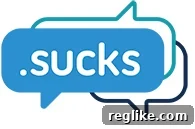
Here, Vox Populi attempts to shift the focus from the generic nature of the TLD to the visual distinctiveness of their logo. They highlight that the mark appears in white letters within stylized, overlapping conversation bubbles, prominently displayed on their webpage—a common placement for brand logos. While their logo may indeed be visually distinctive and potentially registrable as a *design mark* (a trademark for a specific image), the application in question is for the *word mark* “.Sucks.”
This distinction is crucial in trademark law. A company can trademark a unique logo or design (e.g., the Apple bitten apple logo) even if the underlying word (e.g., “apple”) is generic for certain goods. Vox Populi’s argument about stylization is misplaced because the application seeks protection for the literal string of characters “.Sucks,” not its graphical representation. The USPTO is evaluating whether the *word itself*, when applied to registry operator services, functions as a source identifier. The fact that Vox Populi has a well-designed logo for their brand doesn’t suddenly make the functional TLD string “.Sucks” eligible for word mark registration for those same services.
The Broader Implications: Why Trademarking a TLD Sucks for Everyone (Except One)
The USPTO’s consistent refusal to trademark TLDs like “.Sucks” is not arbitrary; it’s rooted in a vital principle designed to maintain fairness and functionality across the internet. If Vox Populi were to succeed in trademarking “.Sucks” for its registry operator services, it would set a dangerous precedent with far-reaching implications. By Vox Populi’s reasoning, virtually every new TLD operator, and even legacy TLD operators, could theoretically seek to trademark their respective TLDs (e.g., .com, .net, .org, .cloud, .app, .xyz) for their registry services. This would lead to:
- Monopolization of Functional Elements: TLDs are fundamental, functional components of the internet’s addressing system. Allowing exclusive trademark rights over these elements for the services of operating a registry would essentially grant a monopoly over a piece of core internet infrastructure.
- Confusion and Inconsistency: It would create massive confusion within the intellectual property landscape. Consumers understand “example.com” as a website address using the .com TLD. They don’t typically associate the “.com” part itself as a separate brand identifier for the company that *operates* the .com registry.
- Erosion of Trademark Principles: Trademark law is designed to protect distinctiveness and prevent consumer confusion regarding the *source* of goods or services. Granting trademark rights to generic or functional terms undermines this core principle.
The USPTO’s position safeguards the public interest by ensuring that fundamental internet components remain available for general use, even while allowing distinct brands *using* those components to be protected (e.g., “Google” is trademarked, but “.Google” as a TLD for registry services is a different matter). The distinction between a brand name and a TLD as a functional address is paramount.
Conclusion: A Matter of Principle and Precedent
Vox Populi’s persistent efforts to trademark “.Sucks” for their registry services, while a testament to their determination, ultimately seem destined to fail. Their arguments, however creatively presented, fail to address the fundamental legal principles that govern trademark registration for functional elements like top-level domains. The USPTO’s refusal is not an oversight; it’s a careful application of established trademark law designed to prevent the monopolization of generic and functional terms essential for common use.
This ongoing saga serves as a crucial reminder of the boundaries of intellectual property within the digital realm. While innovation in domain names is encouraged, it must operate within the framework of existing legal principles. The core function of a TLD is to serve as an address, not an exclusive brand identifier for the services of operating that address space. In the end, it appears the USPTO remains firm: a top-level domain simply cannot be trademarked as a service mark for registry operations, no matter how much the operator wishes it didn’t suck for their branding strategy.