
Domain Name Owner’s Preemptive Defense Against UDRP: The WWE.org Saga Unfolds
In the often-complex landscape of domain name disputes, one particular case involving the highly recognized trademark of World Wrestling Entertainment (WWE) presented a fascinating, if ultimately unsuccessful, strategy: a domain owner attempting a preemptive defense against an impending Uniform Domain-Name Dispute-Resolution Policy (UDRP) complaint. The contentious dispute centered around the domain name WWE.org, which became the subject of a UDRP filing with the National Arbitration Forum. What made this case particularly intriguing was the highly visible disclaimer prominently displayed on the website, a clear attempt by the domain registrant to ward off an impending legal challenge even before official notification.
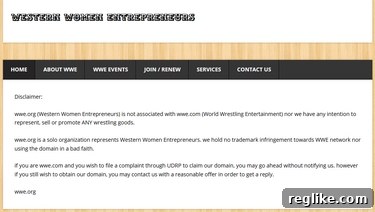
Visitors to WWE.org were immediately met with a curious and rather confrontational message, which overtly anticipated a UDRP complaint from the global entertainment giant. This remarkable disclaimer stated:
Disclaimer:
wwe.org (Western Women Entrepreneurs) is not associated with wwe.com (World Wrestling Entertainment) nor we have any intention to represent, sell or promote ANY wrestling goods.
wwe.org is a solo organization represents Western Women Entrepreneurs. we hold no trademark infringement towards WWE network nor using the domain in a bad faith.
if you are wwe.com and you wish to file a complaint through UDRP to claim our domain, you may go ahead without notifying us. however if you still wish to obtain our domain, you may contact us with a reasonable offer in order to get a reply.
This bold and somewhat defiant statement unmistakably set the stage for a significant battle over online identity, brand protection, and intellectual property rights. As anticipated by the domain registrant, World Wrestling Entertainment, a company renowned for its robust protection of its valuable brand and extensive trademark portfolio, accepted the implicit challenge, swiftly proceeding with a formal UDRP complaint to reclaim the domain.
Deciphering the Uniform Domain-Name Dispute-Resolution Policy (UDRP)
To fully appreciate the intricacies and ultimate resolution of the WWE.org case, it’s crucial to understand the foundational principles of the UDRP. The Uniform Domain-Name Dispute-Resolution Policy is an international arbitration system established by the Internet Corporation for Assigned Names and Numbers (ICANN). Its primary objective is to offer an efficient and relatively inexpensive mechanism for resolving disputes that arise from the abusive registration of domain names, a practice commonly referred to as cybersquatting. In contrast to traditional court litigation, UDRP proceedings are typically expedited and highly streamlined, often conducted entirely online by a panel of independent legal experts.
For a complainant to succeed in a UDRP action and secure the transfer or cancellation of a domain name, they must successfully demonstrate three cumulative criteria, as meticulously outlined in paragraph 4(a) of the UDRP policy:
- The domain name in question is identical or confusingly similar to a trademark or service mark in which the complainant holds legitimate rights.
- The registrant (the current holder of the domain name) possesses no rights or legitimate interests in respect of the domain name.
- The domain name has been registered and is actively being used in bad faith by the registrant.
Each of these three elements must be substantiated by the complainant, typically through compelling evidence and well-articulated legal arguments presented to a UDRP panelist or a panel of experts. The WWE.org dispute would ultimately hinge on how the domain registrant’s actions and stated intentions were assessed against these three critical requirements.
Analyzing the Registrant’s Preemptive Defense Strategy and Its Critical Flaws
The highly visible disclaimer on WWE.org represented a direct, albeit ultimately unsuccessful, attempt by the registrant to preemptively counter the three core UDRP elements. Let’s delve into each aspect of the registrant’s argument and identify its weaknesses:
The Claim of “Western Women Entrepreneurs” and Establishing Legitimate Interest
The registrant asserted that “wwe.org” was an acronym for “Western Women Entrepreneurs” and claimed to be a “solo organization” representing this group. This was an obvious attempt to establish a legitimate interest in the domain name, arguing that the acronym was genuinely used for a distinct purpose, thereby seeking to differentiate itself from World Wrestling Entertainment. However, the credibility of this claim was significantly undermined by several factors. Most notably, the website’s sections ostensibly dedicated to enabling individuals to join the “Western Women Entrepreneurs” group or attend its events were conspicuously labeled as “under construction.” The conspicuous absence of a fully functional website or a demonstrable, established online presence for the stated purpose substantially weakened the argument for a genuine and active legitimate interest, often suggesting a pretext rather than a bona fide and operational use.
The Disavowal of Association and Denial of Trademark Infringement
The disclaimer explicitly stated that “wwe.org is not associated with wwe.com” and that the registrant harbored “no intention to represent, sell or promote ANY wrestling goods.” Furthermore, it boldly declared, “we hold no trademark infringement towards WWE network nor using the domain in a bad faith.” These statements were direct and transparent attempts to negate the first and third UDRP criteria, respectively. By emphatically denying any association, the registrant aimed to counter the argument that the domain name was “confusingly similar” to the WWE trademark. By denying bad faith or trademark infringement, they were directly addressing the critical “bad faith registration and use” element. However, such disclaimers, while seemingly proactive, are frequently deemed insufficient if other compelling evidence points towards a high likelihood of consumer confusion or an underlying intent to profit from the trademark.
The Fatal “Reasonable Offer” Clause: A Self-Incriminating Statement
Perhaps the most critically detrimental component of the registrant’s preemptive defense was its concluding sentence: “if you are wwe.com and you wish to file a complaint through UDRP to claim our domain, you may go ahead without notifying us. however if you still wish to obtain our domain, you may contact us with a reasonable offer in order to get a reply.” This statement, while perhaps intended to convey an air of reasonableness or even defiance, inadvertently served as powerful, self-incriminating evidence of bad faith. Under UDRP policy, explicitly offering to sell a domain name to the trademark holder for valuable consideration significantly exceeding documented out-of-pocket costs is a classic and definitive example of bad faith registration and use. It unequivocally indicates an intent to unlawfully profit from another’s trademark rather than a genuine desire to use the domain for a legitimate, non-infringing purpose. This specific clause alone is often sufficient for a UDRP panel to rule decisively in favor of the complainant, as it directly fulfills a key condition for proving bad faith.
Unraveling the Domain’s History and Registrant Details
Further undermining the registrant’s precarious position were the historical details surrounding the domain name. The domain WWE.org was previously registered to an entity known as “Wisconsin Women Entrepreneurs,” an organization that might have possessed a more defensible claim given the geographical modifier and the descriptive nature of its name. However, this registration ultimately lapsed, and the domain expired earlier in the year.
The subsequent registration presented a stark and problematic contrast. The domain was then registered to an entity overtly named “this domain is for sale !!” with an address, city, and state conspicuously listed as Kuala Lumpur. This dramatic change in ownership, coupled with the explicit “for sale” designation, immediately raised significant red flags regarding the current registrant’s intentions. Furthermore, prior to the “Western Women Entrepreneurs” page with its elaborate disclaimer being put online, the domain was reportedly parked at Sedo, a widely used domain parking and monetization platform. Domain parking often involves displaying advertisements, and if these advertisements were in any way related to wrestling or similar entertainment, it could have further strengthened the argument of likely confusion and bad faith intent, potentially being the very origin point where the alleged trademark infringement issue first arose.
The cumulative evidence—a generic “for sale” registrant name, an international registration address, prior parking at a monetization platform, and the perennial “under construction” status of the claimed legitimate website—all painted a picture inconsistent with genuine, good-faith use. Instead, it strongly suggested an opportunistic registration explicitly aimed at capturing the attention (and a lucrative offer) from the prominent trademark holder.
The Final Outcome and Indispensable Lessons Learned
Ultimately, the ambitious preemptive defense and the registrant’s various arguments failed to persuade the UDRP panel. The official update confirmed that World Wrestling Entertainment won the case decisively, leading to the successful transfer of the WWE.org domain name back to its rightful trademark owner. (Note: The WIPO link is illustrative; actual case numbers and decisions would be linked if available).
This high-profile case serves as a powerful and practical reminder of several critical points within domain name disputes and the broader realm of intellectual property law:
- Trademark Diligence is Paramount: Before registering any domain name, individuals and organizations must conduct comprehensive research to ensure it does not infringe upon existing trademarks. Ignorance of a trademark is rarely accepted as a valid defense in UDRP proceedings.
- Bad Faith is Readily Established: Actions such as explicitly offering to sell a domain name to the trademark holder for profit, registering multiple domain names that incorporate well-known trademarks, or providing intentionally false contact information are unequivocal indicators of bad faith. Even seemingly innocuous “disclaimers” can be undermined by other compelling evidence.
- Genuine Use is Non-Negotiable: To successfully claim a legitimate interest, a registrant must demonstrably prove a genuine and active use of the domain name for its stated purpose, or at least a demonstrable preparation to use it in good faith. A website that remains “under construction” for an extended period, particularly when under scrutiny, is highly likely to fail this critical test.
- UDRP as a Potent Tool: The UDRP stands as a robust and highly efficient mechanism for trademark holders to protect their valuable brands online against abusive registrations and cybersquatting. Prominent companies like WWE are consistently vigilant and prepared to leverage this powerful tool to safeguard their intellectual property.
- Preemptive Defenses Can Backfire Severely: While attempting to proactively state one’s case before an official complaint might initially seem strategic, the specific wording and underlying intent of such a defense can inadvertently provide crucial evidence of bad faith, as vividly demonstrated by the “reasonable offer” clause in this particular case.
The WWE.org dispute vividly underscores the paramount importance of respecting intellectual property rights in the interconnected digital age. Domain names are far more than mere web addresses; they are often direct extensions and integral components of valuable brands. Registrants must ensure their intentions are unequivocally legitimate and transparent, or they risk losing their domain and facing the significant consequences associated with cybersquatting and trademark infringement.