
Yahoo’s Landmark Patent: Revolutionizing Targeted Advertising with User Profile and Behavioral Data
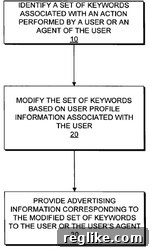
In a significant stride for the digital advertising landscape, the U.S. Patent and Trademark Office formally issued U.S. Patent 7,680,786 to Yahoo! for its groundbreaking invention titled “Optimization of targeted advertisements based on user profile information.” This patent, originally filed on October 30, 2006, marked a pivotal moment, laying foundational groundwork for the sophisticated, personalized ad experiences we encounter daily across the internet.
At its core, this Yahoo patent wasn’t merely an incremental update; it represented a paradigm shift in how online advertisements were conceptualized and delivered. Before this innovation, ad targeting predominantly relied on immediate, explicit signals like keywords in a search query or the content of a webpage. While effective to a degree, this approach often overlooked a richer, more nuanced understanding of the user—their inherent interests, past behaviors, and demographic profile. Yahoo’s patent sought to bridge this gap, proposing a system that integrates a comprehensive array of user data to enhance ad relevance and effectiveness.
The Core Innovation: Beyond Traditional Keyword Targeting
The essence of U.S. Patent 7,680,786 lies in its ability to synergize multiple data streams to create a more intelligent and personalized advertising experience. Traditionally, if a user searched for “Madonna tickets” on an engine like Yahoo, the system would primarily display ads directly related to those keywords, such as concert tickets, fan merchandise, or tour dates. While seemingly logical, this method missed critical opportunities to tailor the ad further based on who the user truly was.
Integrating User Profile Information
The patent introduces a crucial layer: user profile information. This data encompasses explicit and implicit details about a user that are relatively static or evolve slowly over time. Examples include:
- Demographic Data: Age, gender, location, income level, marital status.
- Declared Interests: Information a user might have provided in a profile on a social media site, email service, or any registered account (e.g., favorite music genres, hobbies, preferred brands).
- Socio-economic Indicators: Education level, profession, and other data points inferred from their online activity or provided information.
By leveraging this profile data, the ad delivery system gains a deeper understanding of the user’s potential interests, even before they perform a specific search or visit a particular page. For instance, knowing a user’s age group or their declared affinity for pop music could refine the type of “Madonna tickets” ad they receive, perhaps prioritizing premium experiences for an older, more affluent demographic versus general admission for a younger audience.
Leveraging Behavioral Data
Equally critical to the patent’s innovation is the incorporation of behavioral information. This refers to the dynamic data generated by a user’s interactions across the web over time. Behavioral data paints a picture of a user’s recent and historical online activity, including:
- Past Search Queries: Beyond the current search, what has the user searched for previously?
- Browsing History: Which websites have they visited? How long did they stay? Which articles did they read?
- Click-Through Rates (CTRs): Which ads or links have they clicked on in the past? This indicates what catches their attention.
- Purchase History: For e-commerce platforms, what items have been bought or abandoned in a shopping cart?
- Interaction Patterns: How often do they engage with specific types of content or advertisements?
Returning to the “Madonna tickets” example, if a user has recently searched for “best concert venues in my city,” “pop music news,” or “travel deals to concert destinations,” these behavioral signals would further inform the ad selection process, potentially suggesting ads for flight and hotel packages alongside concert tickets, or promoting VIP experiences based on past luxury-related searches.
Enhanced Targeting Across Digital Touchpoints
A key aspect emphasized by the Yahoo patent is that this sophisticated targeting mechanism is not confined solely to search engine results pages (SERPs). The invention explicitly states its applicability extends to various online environments where advertisements can be displayed.
Beyond Search Queries
While search queries provide strong, immediate intent signals, the patent recognizes that users spend a significant portion of their online time browsing content. Therefore, the keywords present in the domain name of a website being viewed, or the actual textual content of the page itself, are also considered when delivering ads. This means that if a user is reading an article about music festivals on a specific entertainment website, the ad system can combine the contextual relevance of that page with the user’s profile and behavioral data to serve a highly pertinent advertisement—perhaps for upcoming festivals, music streaming services, or related merchandise. This allows for a much broader and more pervasive application of personalized advertising across the entire web ecosystem.
Benefits of Advanced Ad Targeting
The implementation of such advanced targeting methods, as outlined in Yahoo’s patent, brings a multitude of benefits to all stakeholders in the digital advertising ecosystem:
For Users: Enhanced Relevance and Reduced Clutter
From a user’s perspective, the primary benefit is the reception of more relevant advertisements. Instead of being bombarded with generic or completely unrelated ads, users are presented with offers and products that genuinely align with their interests, needs, or recent activities. This can transform ads from an intrusive nuisance into a helpful discovery tool, potentially leading to a more positive user experience and a reduction in ad fatigue.
For Advertisers: Higher ROI and Improved Conversion Rates
For advertisers, the ability to target audiences with such precision is invaluable. It means their ad spend is directed towards individuals who are genuinely more likely to be interested in their product or service. This translates directly into higher click-through rates (CTR), better conversion rates, and ultimately, a superior return on investment (ROI). Rather than casting a wide net, advertisers can efficiently reach their ideal customer segments, maximizing the impact of their marketing campaigns.
For Publishers and Platforms: Increased Revenue and Engagement
Publishers (website owners) and advertising platforms (like Yahoo) also reap significant rewards. More relevant ads tend to perform better, which typically leads to higher revenues through increased clicks, impressions, or conversions. Furthermore, a positive user experience with advertising can contribute to greater overall engagement with the platform, encouraging users to spend more time on the site and foster loyalty.
The Historical Context and Evolution of Ad Tech
When Yahoo filed this patent application in 2006, the landscape of online advertising, while growing rapidly, was still relatively nascent compared to today’s sophisticated ecosystem. Keyword-based targeting was dominant, and the concept of building complex user profiles for ad delivery was cutting-edge. Google’s AdWords (launched in 2000) was already a major player, but the industry was hungry for more intelligent ways to connect advertisers with consumers.
Yahoo, a pioneering internet company, was at the forefront of many early web innovations. This patent underscored its commitment to pushing the boundaries of ad technology. It signaled a shift from purely contextual or keyword-driven advertising to a more data-centric approach, where understanding the user became paramount. This patent, alongside others from major tech companies, laid much of the groundwork for what would become the ad tech industry of the 2010s and beyond, paving the way for real-time bidding, programmatic advertising, and advanced audience segmentation.
Privacy and Ethical Considerations in Data-Driven Advertising
While the benefits of highly targeted advertising are clear, the methods employed, particularly the collection and utilization of user profile and behavioral data, inevitably raise important questions regarding user privacy and ethical data handling. This patent, by explicitly outlining the use of such data, implicitly highlights the need for robust privacy frameworks.
The discussion around data collection, user consent, and data security has only intensified since 2006. Modern regulations like GDPR and CCPA emphasize transparency and user control over personal data. While the patent itself focuses on the technical mechanism of ad optimization, its real-world application necessitates a delicate balance between personalization and respecting individual privacy. Advertisers and platforms today are under increasing pressure to be transparent about what data they collect, how it’s used, and to provide users with clear options to manage their preferences.
The Lasting Impact and Future of Targeted Advertising
Yahoo’s U.S. Patent 7,680,786 remains a testament to the foresight of its inventors and the strategic direction of the company at the time. The core principles elucidated in this patent—combining explicit user input with inferred behavioral patterns to enhance ad relevance—continue to be fundamental to almost all forms of modern digital advertising. From social media feeds to streaming platforms, the concept of understanding the user beyond their immediate query is central to effective ad delivery.
Looking ahead, targeted advertising is evolving further with advancements in artificial intelligence and machine learning, allowing for even more granular segmentation and predictive analytics. The shift towards a “cookie-less” future is pushing the industry to explore new ways of identifying and understanding audiences, often focusing on first-party data and privacy-enhancing technologies. However, the foundational idea that a deeper understanding of the user, derived from various data points, leads to better ad experiences, remains an enduring truth established by patents such as Yahoo’s groundbreaking contribution.
In conclusion, Yahoo’s patent for optimizing targeted advertisements based on user profile and behavioral information was more than just a legal document; it was a blueprint for the future of digital marketing. It paved the way for more intelligent, effective, and personalized advertising, forever changing how brands connect with consumers online and solidifying a new standard for ad tech innovation.