
The Unprecedented Return of Kozmo.com: A Brand Resurrected from the Dot-Com Ashes
The name Kozmo.com resonates with a distinct era: the electrifying, often speculative days of the dot-com boom, followed by its inevitable and dramatic bust. Once hailed as a poster child for both rapid ascent and spectacular collapse, Kozmo.com encapsulated the immense promise and inherent perils of internet-era innovation. Now, in a fascinating twist that blurs the lines between historical nostalgia and modern entrepreneurial ambition, the brand is making an unexpected comeback. Yet, its return is far from a simple reboot; it’s a captivating narrative woven with extraordinary measures, complex domain negotiations, and a deep dive into the labyrinthine world of internet property rights.
Securing the very essence of its online identity – the Kozmo.com domain name – proved to be a formidable challenge. Unlike many brands that change hands in straightforward bankruptcy sales, Kozmo.com’s domain never truly expired in the conventional sense. This unique circumstance forced the group attempting its relaunch to undertake an elaborate and unconventional journey to reclaim the digital cornerstone of their ambitious revival.
Kozmo.com’s Enduring Legacy: From Dot-Com Darling to Cautionary Tale
For those who experienced the internet landscape of the late 1990s and early 2000s, Kozmo.com was synonymous with a groundbreaking vision of instant gratification. Founded in 1998, the company pledged to deliver a diverse array of goods—ranging from movies and magazines to gourmet snacks and even everyday toiletries—directly to urban consumers’ doorsteps, all within a promised hour. This audacious business model, lavishly funded by venture capitalists, captured the imaginations of both investors and consumers. Kozmo.com expanded at a blistering pace, establishing a significant presence in major U.S. cities and raising hundreds of millions of dollars. Its distinctive orange-clad couriers became a familiar sight, symbolizing a new frontier of ultimate convenience and efficiency.
However, the underlying economics of such rapid, instant delivery proved unsustainable. The prohibitively high costs associated with intricate inventory management, complex last-mile logistics, and maintaining a vast workforce, coupled with a lack of a clear path to profitability, rendered Kozmo.com inherently vulnerable. When the dot-com bubble dramatically burst between 2000 and 2001, investment capital quickly evaporated, investor confidence plummeted, and even high-profile companies like Kozmo.com found themselves teetering on the edge of insolvency. Despite its initial widespread popularity and strong brand recognition, the company ultimately ceased operations in April 2001. It quickly became a prominent, oft-cited example of the era’s unchecked exuberance and the harsh lessons learned about building truly sustainable business models in the nascent internet economy.
The Spark of Resurrection: Yummy Foods’ Ambitious Vision for the Future
More than a decade later, the instant delivery market is experiencing a powerful resurgence, significantly propelled by transformative advancements in technology, optimized logistics networks, and evolving consumer expectations for speed and convenience. It is into this vibrant, modern landscape that Yummy Foods, LLC, a dynamic Los Angeles-based company, has boldly stepped. They identified a remarkable opportunity to resurrect a dormant yet remarkably memorable brand. The initial public indication of their strategic intent emerged approximately a year prior to the launch of the brand’s new splash page, when Yummy Foods began the crucial process of filing for trademarks for the Kozmo name.
This proactive and strategic move underscored their profound commitment to reviving the brand. Registering trademarks is a fundamental step in protecting intellectual property and signals a clear, long-term vision for brand ownership and development. Nevertheless, a brand, no matter how iconic or historically significant, is only as impactful as its digital footprint. For an internet-native company like Kozmo.com, possessing the eponymous domain name was not merely important; it was absolutely indispensable. Without Kozmo.com as its digital home, the brand’s resurrection would feel incomplete, lacking an authentic and immediate connection to both its storied past and its ambitious future.
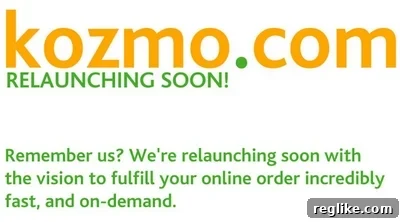
Indeed, just this month (relative to the original article’s publication), Yummy Foods successfully launched a sleek, minimalist splash page at Kozmo.com, proudly announcing their hard-won acquisition of the coveted domain name. This milestone represented a significant triumph, signaling that years of meticulous strategic planning and intricate maneuvering had finally yielded results. The splash page, often the crucial first public interface of a reborn venture, now stands as a powerful promise of what is yet to come, tantalizing those who remember the original Kozmo.com and captivating a new generation with its potential.
The Domain Dilemma: Navigating Kozmo.com’s Digital “Neverland”
While many defunct brands eventually see their assets, including domain names, sold off in clear bankruptcy proceedings, Kozmo.com’s situation was markedly more complex. This wasn’t a straightforward case of acquiring an expired domain; it involved navigating a digital asset that, for all practical purposes, appeared to exist in a state of perpetual limbo – a “neverland” where conventional domain expiration rules simply did not apply. This peculiar and persistent status meant that Yummy Foods could not merely bide their time, patiently waiting for the domain to become publicly available. Instead, they were compelled to devise and execute an entirely different, highly unconventional acquisition strategy.
The arduous journey to acquire Kozmo.com offers a rare glimpse into the intricate mechanics of domain registration and the unexpected ways an seemingly “dead” domain can remain inexplicably locked away from public access. Thanks to invaluable forensic tools like DomainTools, we can meticulously reconstruct the fascinating timeline of Kozmo.com’s registration status following its original collapse.
An Unusually Long-Term Hold: The Initial Post-Collapse Status
When Kozmo.com formally ceased its operations in April 2001, one might logically expect its domain registration to lapse relatively quickly, entering the standard deletion cycle. However, the initial Whois records presented a surprisingly different narrative. Intriguingly, the domain’s expiration date was inexplicably set for a full decade later, specifically April 2011. This strongly suggests that in the company’s final days, or perhaps shortly thereafter, a deliberate decision was made by someone to extend the registration for an extraordinary ten years. This could have been a desperate, last-ditch effort to preserve a perceived valuable asset, an administrative oversight by a remaining contact, or even a strategic hold by a party quietly hoping to salvage value at a later date. Whatever the underlying motive, this decade-long extension effectively prevented the domain from entering the public domain deletion cycle, thereby laying the groundwork for future complications and confusion.
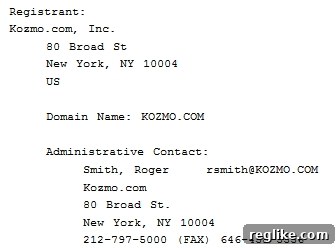
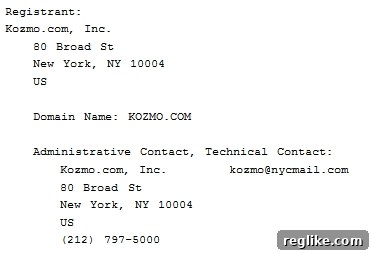
For several subsequent years, the registration record remained largely static, a digital ghost of a once-thriving enterprise. It wasn’t until 2005 that a minor but noteworthy change surfaced: the email address associated with the Administrative contact was updated. This subtle alteration provided a crucial hint that someone, somewhere, was still maintaining a minimal level of oversight or access to the domain’s administrative details, thereby preventing it from being truly abandoned and declared ownerless.
The Perplexing Dance Between Registrar and Registry Data
The true mystery surrounding Kozmo.com’s domain began to intensify as April 2011 approached. With the official registrar expiration date looming, the defunct company was clearly in no operational position to renew it. Ordinarily, this scenario would trigger the standard domain deletion cycle. This process typically commences with a grace period, during which the domain’s registry (Verisign, for all .com domains) frequently auto-renews the domain for a brief period. This provides the original owner a final opportunity to renew through their chosen registrar. If no renewal transaction occurs at the registrar level, the domain then conventionally enters a redemption period before ultimately being deleted and made available for public re-registration.
However, Kozmo.com defiantly bucked this conventional lifecycle. While the registrar’s Whois record steadfastly continued to display an expiration date of April 2011, Verisign’s authoritative registry records presented a strikingly different timeline, indicating an expiration date of April 2012. This glaring discrepancy, a clear divergence between the registrar’s data and the registry’s authoritative information, was highly unusual. It strongly suggested the presence of some form of “lock” or administrative hold placed at the registry level, effectively preventing the domain from proceeding through its normal and expected deletion process. Such locks can be instituted for a myriad of reasons, including ongoing legal disputes, specific administrative holds by the registry itself, or even complex pre-arranged agreements that preclude immediate public release.
The plot thickened considerably in April 2012. Instead of expiring as per the registrar’s record, the registry expiration date was inexplicably extended by yet another year, now showing April 2013, while the registrar expiration date in Whois stubbornly remained fixed at April 2011. This created a persistent state of profound confusion for anyone attempting to track the domain: which date represented the true expiration? And, more crucially, when, if ever, would this highly desirable and historically significant domain finally become available for legitimate acquisition?
The Failed Cybersquatting Complaint and a Strategic Pivot
Perplexed by the conflicting expiration dates and the domain’s persistent refusal to enter the public pool of available domains, Yummy Foods decided to pursue a different, more aggressive legal avenue: a cybersquatting complaint. Cybersquatting, in essence, refers to the bad-faith registration or use of a domain name that is identical or confusingly similar to a trademark belonging to another party. Yummy Foods’ argument likely centered on the premise that the Kozmo.com domain was being held without any legitimate intent or active use, thereby infringing upon their newly acquired Kozmo trademarks. However, as extensively documented, their complaint was ultimately denied.
The failure of this cybersquatting complaint, despite the inclusion of what was described as “false information” (which could have stemmed from genuine inaccuracies arising from the bewildering domain data or perhaps misinterpretations of the complex situation), proved to be a critical turning point. It unequivocally signaled that traditional legal challenges might not be effective against a domain trapped in such an anomalous administrative state. For a cybersquatting claim to succeed, there typically needs to be clear, demonstrable evidence of bad-faith registration and use, which might have been exceptionally difficult to prove against a completely defunct entity merely holding a domain with an unclear and perpetually extended status.
Then came April 2013, another purported expiration date for the registry. And yet again, Kozmo.com did not expire. Verisign’s records now astonishingly extended the expiration even further, to April 2014, while the registrar’s Whois data still stubbornly lagged behind, showing April 2011. This persistent, perplexing administrative anomaly made it abundantly clear that simply waiting for the domain to “drop” into the public domain was no longer a viable or realistic strategy for Yummy Foods.
The Breakthrough: A Direct Deal with the Registrar
With all conventional methods exhausted and the path forward seemingly blocked, Yummy Foods executed a shrewd and strategic pivot to a more direct, yet unconventional, approach. It became apparent to the new Kozmo.com team that Network Solutions, the registrar through which the domain had been continuously registered since its very inception, held a unique and powerful leverage in this unprecedented situation. Rather than continuing to battle the opaque layers of registry locks and the frustrating inconsistencies of conflicting expiration dates, Yummy Foods opted for direct negotiation.
In a move that ultimately proved to be the key to their success, Yummy Foods successfully struck a deal with Network Solutions, which is now a part of Web.com, to acquire the long-sought-after domain name. This pivotal negotiation likely took place just last month (referring to the time of the original article’s publication). Such a direct transaction completely bypasses the public deletion cycle. It typically involves the registrar facilitating a direct transfer of ownership from the original registrant (even if that entity is defunct or unresponsive) to the new acquirer, often for a mutually negotiated fee. The registrar, acting as the designated steward of the domain on behalf of its registrant, possesses the administrative authority to execute such a transfer, especially when the original owner is no longer actively managing the digital asset or has implicitly abandoned it through a prolonged lack of renewal responsiveness and communication.
This critical breakthrough powerfully highlights the indispensable role registrars play, not merely in the initial registration of domains, but also in the complex resolution of intricate ownership disputes and the facilitation of transfers for domains that have unfortunately fallen into administrative purgatory. For Yummy Foods, this direct, carefully negotiated deal was the absolute key to finally unlocking Kozmo.com, allowing them to legitimately claim the digital heart of their ambitious brand resurrection. This entire saga stands as a compelling testament to unwavering persistence, creative problem-solving, and the astute recognition that, at times, the most direct and effective path to achieving a seemingly impossible goal is through a carefully orchestrated agreement with the right gatekeeper.
What Lies Ahead for the Reborn Kozmo.com?
The triumphant acquisition of Kozmo.com is undeniably the first, albeit monumental, step for Yummy Foods. The real and demanding work of meticulously rebuilding the brand, developing a truly sustainable and profitable business model, and strategically reintroducing Kozmo.com to an entirely new generation of discerning consumers now lies ahead. Given the current explosive boom in the instant delivery sector, with formidable players like DoorDash, Uber Eats, and a plethora of specialized grocery delivery services already dominating the market, the reborn Kozmo.com faces intense and established competition. However, it also possesses a unique and powerful asset: a storied brand name that carries both the significant weight of history and the immense potential for renewed relevance and resonance in today’s fast-paced digital economy.
The remarkable saga of Kozmo.com’s domain acquisition serves as an compelling and invaluable case study for anyone with an interest in brand management, sophisticated domain name strategy, and the enduring, transformative power of a truly memorable name. It unequivocally demonstrates that in the dynamic and competitive digital age, the process of securing one’s online identity can be as challenging and fundamentally vital as the actual building of the business itself, sometimes demanding extraordinary and inventive efforts to bring a digital ghost triumphantly back to vibrant life.