
Ryan Kavanaugh’s Cybersquatting Claim Against Ethan Klein Fails: A Deep Dive into the UDRP Decision
In a significant ruling that underscores the boundaries of trademark protection and the scope of online free speech, film financier Ryan Kavanaugh recently lost a cybersquatting challenge he initiated against prominent YouTuber and host of the H3 podcast, Ethan Klein. As many observers and legal experts anticipated, the decision by the World Intellectual Property Organization (WIPO) panel upheld Klein’s right to maintain his controversial website, doesryankavanaughlooklikeharveyweinstein.com, rejecting Kavanaugh’s claims that the domain constituted cybersquatting.
This case captivated attention due to its high-profile parties and the unique nature of the domain name itself. It serves as a compelling example of how internet governance policies, like the Uniform Domain-Name Dispute-Resolution Policy (UDRP), navigate the complex interplay between protecting intellectual property rights and safeguarding legitimate non-commercial expression on the internet.
The Genesis of the Domain Dispute: A Celebrity Feud Turned Legal Battle
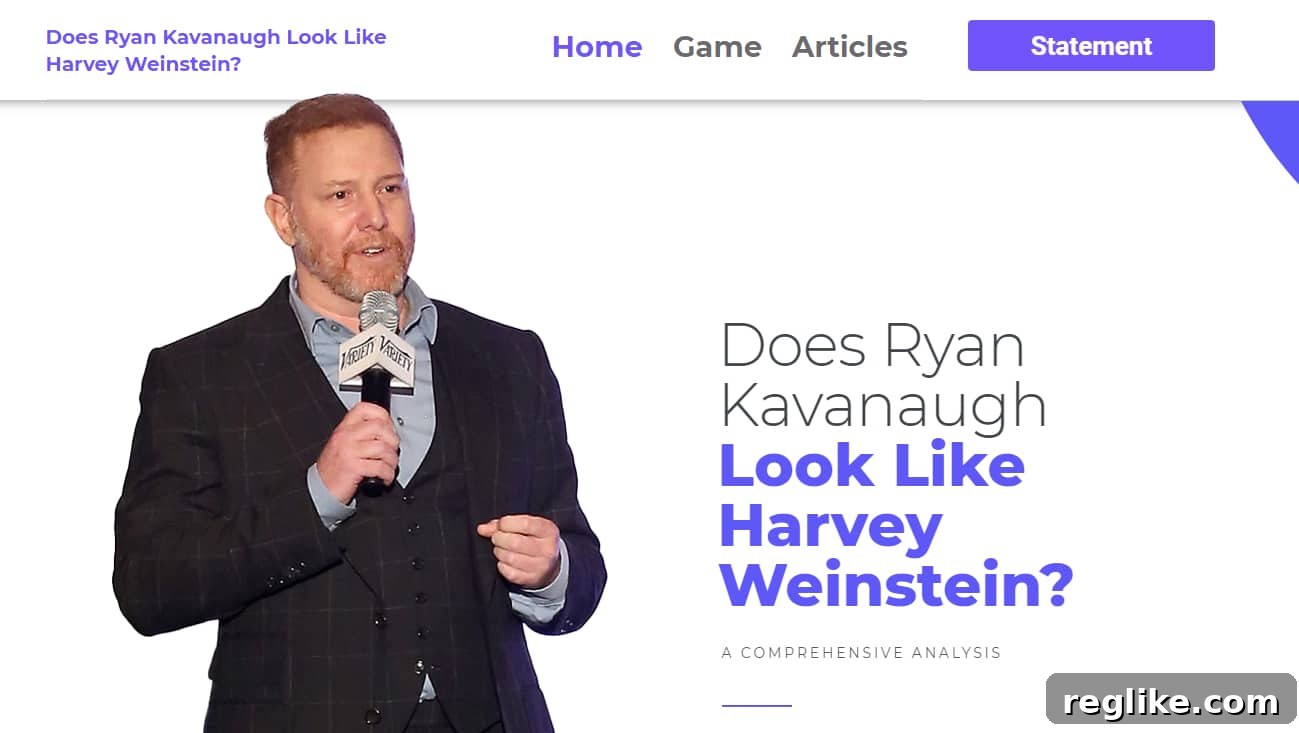
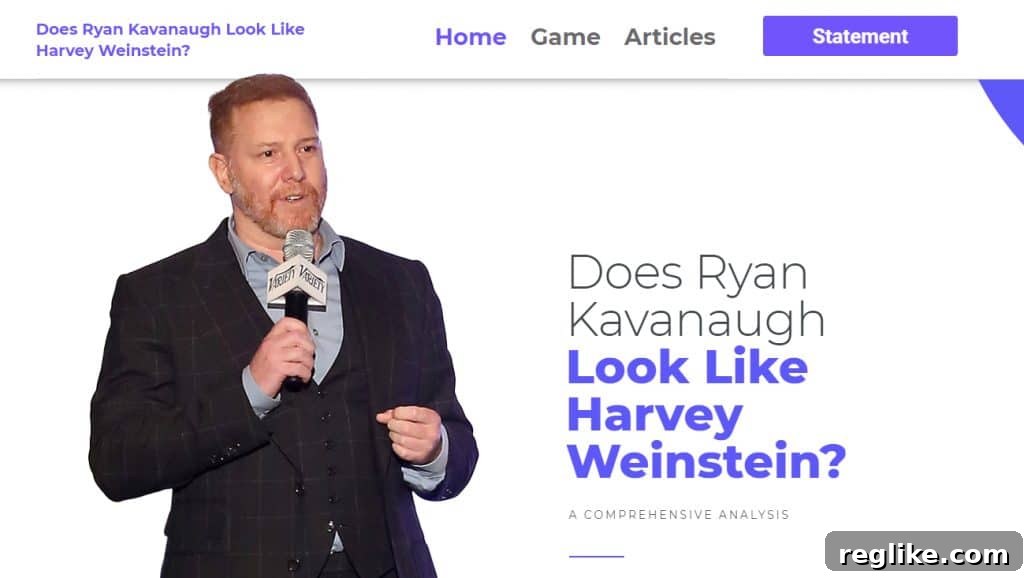
The core of this dispute lies in a website created by Ethan Klein, located at the strikingly direct domain name, doesryankavanaughlooklikeharveyweinstein.com. The site was designed to provoke discussion and critical commentary, drawing a visual comparison between Kavanaugh and the disgraced producer Harvey Weinstein. Beyond mere physical resemblance, the website delves into various aspects of Kavanaugh’s public history, including past DUI charges and other controversies, reflecting Klein’s consistent critical stance against Kavanaugh, often expressed on his popular H3 Podcast.
Klein’s creation of the website stemmed from an ongoing public feud and critical discourse, a common phenomenon in the digital age where public figures and content creators frequently engage in robust, sometimes confrontational, commentary. The website itself is a direct extension of Klein’s critical content, serving as a hub for discussions and information intended to scrutinize Kavanaugh’s persona and past actions. Kavanaugh, seeking to have this critical platform removed, resorted to a UDRP complaint, framing Klein’s actions as an illegal act of cybersquatting.
Understanding the Uniform Domain-Name Dispute-Resolution Policy (UDRP)
To fully grasp the significance of the WIPO panel’s decision, it is essential to understand the Uniform Domain-Name Dispute-Resolution Policy (UDRP). The UDRP is an international arbitration process established by the Internet Corporation for Assigned Names and Numbers (ICANN) to provide an expedited and cost-effective mechanism for trademark holders to challenge abusive domain name registrations, commonly known as cybersquatting.
Under the UDRP, a complainant (the trademark holder) must successfully demonstrate three cumulative elements to obtain the transfer or cancellation of a disputed domain name:
- The domain name is identical or confusingly similar to a trademark or service mark in which the complainant has rights. This criterion assesses whether the disputed domain name visually, aurally, or conceptually resembles the complainant’s established trademark to a degree that could mislead or confuse internet users.
- The registrant (the domain holder) has no rights or legitimate interests in respect of the domain name. This element explores whether the domain holder has any legitimate claim to use the domain, such as using it in connection with a bona fide offering of goods or services, for non-commercial purposes, or if they are commonly known by the domain name.
- The domain name has been registered and is being used in bad faith. This is often the most challenging element to prove. It requires evidence that the domain was registered primarily to sell it to the trademark owner for profit, to prevent the trademark owner from reflecting their mark in a corresponding domain name, to disrupt a competitor’s business, or to create a likelihood of confusion for commercial gain.
Failure to prove even one of these three elements results in the complaint being denied. The UDRP system is not designed to resolve complex legal issues like defamation or general content disputes, but rather to address clear-cut cases of domain name abuse.
Kavanaugh’s Arguments: Novel Approaches and Panel Rebuttals
In his UDRP filing, Ryan Kavanaugh presented several arguments, some of which were considered novel approaches within the framework of domain dispute resolution. However, the WIPO panel meticulously dissected and ultimately rejected each of these contentions, finding them insufficient to meet the UDRP’s stringent requirements.
Claim of Commercial Competition in the Entertainment Space
One of Kavanaugh’s primary arguments was that both he and Klein operate within the broad “entertainment space.” He contended that because they are both involved in entertainment, Klein’s website, by criticizing Kavanaugh, was effectively leveraging Kavanaugh’s mark for competitive advantage. The implication was that Klein was unfairly profiting or gaining notoriety at Kavanaugh’s expense within their shared industry.
The panel, however, did not find this argument persuasive. The mere fact that two parties are in the same broad industry does not automatically imply trademark infringement or cybersquatting, especially when the use of the domain is clearly for critical or commentary purposes. The panel recognized that Klein’s activities, while engaging with entertainment figures, primarily fall under critical commentary, which is distinct from directly competing in Kavanaugh’s specific area of film financing or production in a way that would exploit his trademark.
Argument of Commercial Gain Through Embedded YouTube Video
Kavanaugh further argued that Klein’s website was created for commercial gain because it embedded one of Klein’s YouTube videos. Since YouTube videos often display advertisements, and creators like Klein earn revenue from these ads based on viewership, Kavanaugh asserted this constituted commercial exploitation of his mark.
The WIPO panel carefully considered this point but ultimately concluded:
Complainant also argues that Respondent generates revenue from Respondent’s Website and competes with Complainant in the field of entertainment services based on a link to a YouTube video of the H3 Podcast on Respondent’s Website. Complainant argues the YouTube video generates revenue from hundreds of thousands of views, but the YouTube video contains critical commentary on Complainant consistent with the Respondent’s goal to criticize Complainant elsewhere on Respondent’s Website, and is not prominently displayed on Respondent’s Website. In the Panel’s view, the YouTube video link evinces only a minimal, incidental degree of commercial activity, and Respondent’s Website is mainly dedicated to noncommercial criticism.
This reasoning is critical. The panel differentiated between incidental revenue generation (from a linked video that is primarily critical) and the core purpose of the website. They emphasized that the site’s main dedication was to “noncommercial criticism.” This distinction is vital in UDRP cases, as it prevents trademark holders from stifling legitimate criticism under the guise of commercial exploitation, especially when any commercial benefit is indirect and secondary to the primary purpose of commentary.
The Claim of Higher Website Traffic and Weakness of Mark
Kavanaugh also attempted to bolster his case by alleging that Klein’s site about him received more traffic than his own official website. He presented data from a third-party site analytics system to support this claim. However, this argument presented several weaknesses.
Firstly, reliance on third-party traffic data can often be unreliable or difficult to verify conclusively in UDRP proceedings. More significantly, even if true, the panel implicitly suggested that such a situation might indicate a “weakness of the Complainant’s mark” rather than an act of bad faith cybersquatting. A strong, well-known trademark would typically generate more direct, legitimate traffic. If a critical site outperforms an official site, it doesn’t automatically mean bad faith; it might simply reflect public interest in the criticism or a less effective online presence for the complainant’s own mark.
Allegations of Defamation and “Lies”
Finally, Kavanaugh implied that Klein’s website contained “lies” that defamed him or tarnished his mark. This is a common tactic in disputes involving critical websites. However, the panel noted a crucial deficiency in Kavanaugh’s argument: he failed to identify *which specific statements* on Klein’s website were untrue or defamatory.
Complainant implies Respondent has defamed Complainant or tarnished Complainant’s Mark via “lies” on Respondent’s Website. But Complainant has not identified which statements made by Respondent on the website are “lies” or evidenced that any content at Respondent’s website is defamatory.
UDRP panels are not equipped, nor are they intended, to be courts for defamation claims. Their mandate is to assess domain name registration and use in relation to trademark rights and bad faith, not the veracity of website content. For a UDRP panel to even consider content, it typically needs to be demonstrably false and used in a way that is clearly designed to deceive or defraud for commercial gain, which was not established here. The failure to specify alleged falsehoods severely weakened Kavanaugh’s position on this point.
The WIPO Panel’s Verdict: Upholding Freedom of Speech
Based on its thorough review of the arguments and evidence, the WIPO panel ultimately found in Ethan Klein’s favor. Specifically, the panel ruled against Kavanaugh on the critical issues of “Rights or Legitimate Interests” and “Registration and Use in Bad Faith.” By failing to prove these two essential elements, Kavanaugh could not meet the burden required for a successful UDRP complaint.
While the panel did not make a formal determination on whether the domain name was “confusingly similar” to Kavanaugh’s mark (since the complaint failed on the subsequent elements), it’s noteworthy that two of the three panelists expressed a strong opinion on this matter. They believed the domain was *not* confusingly similar because its very structure and content make it abundantly clear that the website is not operated by Ryan Kavanaugh. The explicit, critical nature of the domain name itself, “doesryankavanaughlooklikeharveyweinstein.com,” signals that it is a commentary site, not an official site, thus reducing the likelihood of consumer confusion.
This decision reaffirms the principle that the UDRP is not a tool to suppress legitimate criticism or commentary. It highlights the importance of distinguishing between actual cybersquatting—where a domain name is registered in bad faith to exploit a trademark for commercial gain—and domain names used for non-commercial, critical, or satirical purposes. The panel’s finding reinforces the idea that individuals have a legitimate interest in using domain names for expressive activities, even if those activities are critical of a public figure.
Implications and Precedent: A Win for Online Commentary
The outcome of this UDRP case carries significant implications for both trademark holders and online content creators. For content creators and critics, it serves as a powerful validation of their right to use domain names for commentary and critique, provided such use is genuinely non-commercial and does not involve deceptive tactics to mislead consumers. It sets a precedent that embedding a monetized video, where the primary content is critical and the commercial gain is incidental, does not automatically transform a critical website into a bad-faith commercial enterprise for UDRP purposes.
For trademark holders like Ryan Kavanaugh, the decision serves as a reminder that the UDRP has specific limitations. It cannot be used as a broad tool to silence all negative commentary or to resolve defamation claims. Trademark law and domain name policy aim to prevent consumer confusion and predatory commercial exploitation, not to shield public figures from criticism. Those seeking to challenge critical content on the internet must often pursue more complex legal avenues, such as defamation lawsuits, which come with higher evidentiary burdens and are typically decided in traditional courts, not by UDRP panels.
The legal teams involved in this high-stakes dispute were Novian & Novian LLP, representing Ryan Kavanaugh, and Fox Rothschild LLP, representing Ethan Klein. Their arguments and the panel’s careful deliberations have contributed to a crucial clarification in the evolving landscape of internet law.
Conclusion
Ryan Kavanaugh’s attempt to take down the domain doesryankavanaughlooklikeharveyweinstein.com through a UDRP cybersquatting complaint ultimately failed. The WIPO panel’s decision underscored that Ethan Klein’s website primarily served as a platform for non-commercial criticism, and Kavanaugh failed to adequately prove bad faith registration or use, or the absence of legitimate interests. This ruling is a significant victory for online free expression and a valuable reminder that the UDRP is a targeted policy designed to combat genuine cybersquatting, not to suppress critical commentary. It reinforces the internet’s role as a diverse platform where both trademark rights and the fundamental right to criticize public figures must be carefully balanced.