
The Dark Side of Zero-Click Domain Parking: Unmasking Scams and Misleading Landers
The innovation of “zero-click” domain name parking emerged with a compelling promise: to streamline domain monetization by eliminating the need for visitors to navigate multiple clicks on a pay-per-click (PPC) page. Conceptually, it’s elegant. Instead of directing an unused domain to an intermediary page laden with keywords, a zero-click system forwards the visitor directly to a relevant advertiser’s website, collecting a fee for the direct referral. For instance, a sports-related domain might bypass a generic sports lander and send users straight to a major sports retailer’s site like The Sports Authority, offering a seemingly superior, one-step user experience.
In practice, however, this innovative approach has been riddled with significant issues, threatening its very credibility. While many parking companies leverage zero-click to enhance their standard PPC offerings, particularly when they anticipate higher monetization rates, a critical flaw has become glaringly apparent: despite their assurances, zero-click platforms appear alarmingly ineffective at identifying and eradicating scam and spam destinations within their networks. This systemic failure has transformed a promising monetization model into a breeding ground for deceptive practices, leaving users frustrated, exposed, and wary.
The Anatomy of Deception: How Bad Actors Exploit Zero-Click Systems
A significant part of the problem lies in the inherent flexibility—and often, lack of oversight—within zero-click redirect chains. A common tactic employed by malicious actors involves “bouncing” visitors between several domain names before they reach a final, undesirable destination. The initial URL submitted for approval might appear innocuous and legitimate, easily passing preliminary checks by the parking company. However, once approved and integrated into the network, the perpetrator can then surreptitiously redirect the destination page to an entirely different, unapproved, and often malicious site. This post-approval redirection allows bad actors to circumvent initial vetting processes, turning seemingly benign traffic sources into conduits for scams, phishing attempts, or unwanted software installations.
This elaborate dance of redirects is particularly insidious because it hides the true nature of the final destination, making it exceedingly difficult for zero-click providers to monitor every possible permutation of a redirect chain in real-time. The result is a wild west scenario where users, expecting a direct and seamless experience, are instead funneled through a maze of hidden redirects, ultimately landing on pages designed to trick them.
Case Study: The “I’m Human” Trap and the Esty.com Incident
A stark illustration of this deceptive methodology recently surfaced with the domain name Esty.com. While the exact details of its Universal Domain Name Dispute Resolution Policy (UDRP) case are outside the scope of this discussion, it’s highly probable that the well-known handmade goods marketplace, Etsy, initiated the complaint. Upon visiting the Esty.com domain, a user’s journey quickly devolved into a prime example of zero-click abuse. The initial click led to a series of rapid URL bounces, ultimately settling on a page hosted at arp.bettersearchtools.com. The landing page presented a façade designed to mimic legitimate security checks, particularly those seen on services like CloudFlare, which typically verify users to prevent DDoS attacks. The page displayed a prominent message implying a security check and the need to click a button to proceed.
However, a closer inspection revealed the page to be a sophisticated ruse, meticulously crafted to mislead unsuspecting visitors. While appearing to be a standard “I’m human” verification, the page included subtle yet crucial deceptive elements. A small disclaimer, barely noticeable, urged users to “continue and accept offer.” Below the primary button, even smaller print clarified the true intent: “By clicking the button above and installing the extension…” This seemingly innocuous “I’m human” button was, in fact, a Trojan horse. Users, eager to reach their intended destination and conditioned to trust such security prompts, would unknowingly trigger the installation of an unwanted Chrome extension, rather than simply proceeding to the site they originally sought.
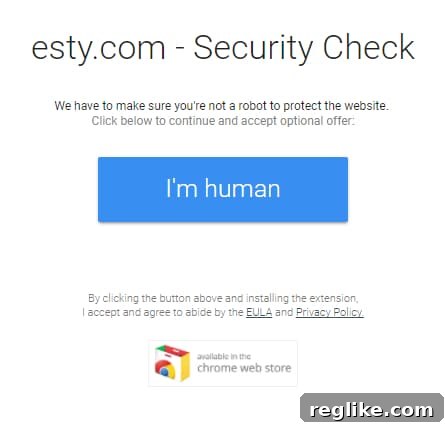
This particular scam highlights the cunning psychological manipulation employed by bad actors. They exploit user impatience, the desire for quick access, and the established visual cues of legitimate security measures. By camouflaging unwanted software installation as a routine security check, these malicious landers bypass user vigilance, leading to unsolicited installations that can compromise browser performance, privacy, and even security. The extension might inject unwanted ads, track browsing behavior, or even act as a gateway for more harmful malware.
The Broader Impact: Erosion of Trust and Security Risks
The rampant proliferation of these misleading landers and scams within zero-click parking programs carries far-reaching consequences beyond individual user frustration. Firstly, it severely degrades the user experience, transforming what should be a seamless redirection into a labyrinth of deceptive pop-ups and unwanted installations. This erosion of trust in domain monetization services ultimately harms the entire online ecosystem.
Secondly, the security implications are profound. Unwanted browser extensions can pose significant risks. They often come with broad permissions, allowing them to read and change data on websites, track browsing history, and even inject code. This can lead to privacy breaches, unwanted advertising, slowdowns in browser performance, and in severe cases, the installation of spyware or other malicious software. Users who fall victim to these tactics may find their personal data compromised or their browsing experience permanently degraded.
Furthermore, these practices cast a dark shadow on legitimate advertisers and domain owners. If a brand’s parked domain inadvertently directs users through a fraudulent zero-click chain, it can severely damage their reputation, leading to customer complaints and a general distrust in their online presence. Even if an advertiser is not directly involved, the overall perception of online advertising becomes tainted, making it harder for reputable businesses to engage with potential customers.
A Call for Accountability: The Day of Reckoning for Zero-Click Companies
The persistent failure of zero-click companies to effectively police their networks and prevent these scams is a critical issue that can no longer be ignored. The responsibility squarely rests on their shoulders to implement robust, proactive measures to identify and eliminate deceptive content. Claims of technical difficulty or the sheer volume of traffic are no longer acceptable excuses when user safety and trust are at stake. A “day of reckoning” is indeed coming, where the viability of the entire zero-click business model will be questioned if fundamental changes are not made.
What needs to change? For zero-click parking to regain credibility and fulfill its original promise, several key improvements are imperative:
- Enhanced Vetting Processes: Companies must move beyond superficial checks. This includes more rigorous manual reviews of advertiser URLs and sophisticated AI-driven analysis to detect suspicious redirect patterns, even those that occur post-approval.
- Proactive Real-Time Monitoring: Continuous, automated scanning of live redirect chains is crucial. Systems should be designed to detect unexpected bounces, changes in destination URLs, or the presence of known deceptive elements (like fake CAPTCHA pages or unsolicited software prompts).
- Robust User Reporting Mechanisms: Empowering users to easily report suspicious or misleading landers, and acting swiftly on those reports, can provide an invaluable layer of defense.
- Transparency and Clear Disclosure: Any instance where a user interaction leads to software installation or significant data collection must be accompanied by explicit, unambiguous disclosures, not hidden in tiny print.
- Industry Collaboration and Standards: Zero-click providers should collaborate to establish industry-wide best practices, share intelligence on emerging scam tactics, and collectively raise the bar for network integrity.
- Consequences for Non-Compliance: Advertisers found to be engaging in deceptive practices must face immediate and severe penalties, including permanent bans from the network.
Without such proactive and stringent measures, the zero-click domain parking model risks becoming entirely discredited. The convenience it offers cannot outweigh the inherent risks and the damage caused by widespread fraud. The promise of efficient domain monetization should not come at the cost of user security, privacy, and trust. It is time for zero-click companies to prioritize integrity over unchecked revenue, or face the inevitable shuttering of a business model that, despite its potential, has become synonymous with deception.