
2-U.com Auction: Unraveling the $20,000 Mystery – Is It Real or Just a Mirage?
The dynamic world of domain investing is often characterized by shrewd observations, calculated risks, and the occasional speculative gamble. However, every now and then, an anomaly emerges that captures the attention of the entire community. Such is the case with the recent Afternic auction for 2-U.com, a domain that, despite its seemingly modest structure, has inexplicably garnered a staggering $20,000 bid. While the allure of short, memorable domains is undeniable, the trajectory of this particular auction raises more questions than answers, prompting a closer look at the true motivations behind its skyrocketing valuation. Is this a legitimate demand for a hidden gem, or merely a theatrical display designed to inflate perceived value?
The Allure of Short Domains and the 2-U.com Enigma
In the vast digital landscape, domain names serve as the fundamental addresses of online entities. Their value is often dictated by factors such as brevity, memorability, relevance, and the potential for strong branding. Short, two-character domains, especially those without hyphens, are generally considered premium assets, commanding significant prices due to their scarcity and broad branding potential. These domains are akin to prime real estate in the digital world. The domain 2-U.com, while certainly short, includes a hyphen, a characteristic that typically somewhat reduces its premium status compared to its hyphen-less counterparts. Despite this, its current valuation far surpasses what many would expect for such a structure, leading to a palpable sense of skepticism within the domain investing circles.
The initial draw to 2-U.com isn’t entirely unfounded, however. A quick search reveals an active website currently operating at 2-U.com.my, the country-code top-level domain for Malaysia. This existing online presence strongly suggests that 2-U.com likely receives some level of direct or mistyped traffic, potentially from users assuming the .com version exists or accidentally typing it. For an entity operating under 2-U.com.my, acquiring the globally recognized .com equivalent would be a highly strategic move. Such an acquisition would offer comprehensive brand protection, enable broader international reach, and establish a more universally recognized online presence. This practical utility provides a plausible, albeit limited, explanation for genuine initial interest in the domain. However, the subsequent bidding history paints a far more complex and perplexing picture, moving beyond mere strategic acquisition into the realm of the extraordinary.
A Chronicle of Bids: From Modest Interest to an Astronomical Price Tag
To truly understand the peculiar nature of the 2-U.com auction, one must delve into its historical bidding data. What began as a slow, gradual accumulation of interest over several years suddenly transformed into an intense bidding frenzy in a remarkably short period. The early bids reflect a conventional appreciation for a domain with some inherent, albeit not extraordinary, value, indicating a steady, organic market interest:
- July 2005: An initial, modest $150 bid indicated exploratory interest from a potential buyer who saw some value in the domain.
- January 2006: The price edged up to $205, suggesting continued, cautious interest from other potential buyers, signaling a slight increase in perceived worth.
- April 2006: A slight increase to $240 further solidified the domain’s perceived value in the low hundreds, maintaining a steady, predictable growth trajectory.
- April 2007: A more substantial jump to $500 marked a renewed, perhaps slightly more serious, level of attention, possibly from a buyer with a specific use case in mind.
For nearly two years, the domain’s value steadily, albeit slowly, appreciated, reflecting a typical pattern for domains with niche appeal or minor traffic. These increments were consistent with market expectations for a hyphenated, two-character domain that had a potential, but not definitive, use case. The trajectory was predictable, unremarkable, and certainly did not foreshadow the dramatic, almost unbelievable, events that were about to unfold, dramatically altering the domain’s perceived worth.
The Emergence of “Hensem”: The Architect of the $20,000 Surge
The quiet period of predictable bidding was shattered on November 20th of the current year. User “Hensem” entered the scene with a bid of $525, a seemingly innocuous increment that nevertheless set the stage for an unprecedented and highly suspicious escalation. What followed was an astonishing series of events that defy conventional auction logic, pushing the domain’s price into the stratosphere in a matter of days.
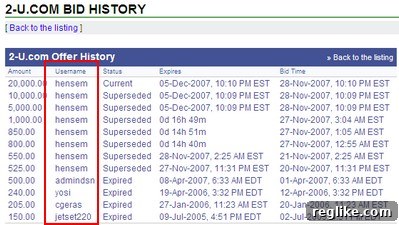
The bidding war, if one could truly call it that, began almost immediately after Hensem’s initial bid. But here’s the crucial twist that unravels the credibility of the auction: the primary, if not sole, participant in this “war” appeared to be Hensem themselves. The bid history, as detailed below, reveals a pattern that is highly suspicious and indicative of what is commonly known as “shill bidding” or, at the very least, a highly unusual and self-defeating bidding strategy that lacks any logical foundation:
- November 20: Hensem places the initial $525 bid, entering the auction with an unremarkable increment.
- November 21: Hensem places another bid, pushing the price higher, but notably, seemingly against their own previous bid or with minimal competition.
- November 27: Hensem aggressively places three more bids in rapid succession, dramatically escalating the auction price in a short timeframe.
- November 28: Hensem continues the relentless pursuit, adding three further bids, culminating in the current astonishing $20,000 valuation.
This sequence of events raises immediate and significant red flags for any seasoned domain investor or auction observer. In a legitimate auction, multiple distinct bidders compete against each other, each attempting to outbid the previous offer by the smallest possible increment to secure the item at the lowest possible price. When a single user, especially one who initiated the bidding frenzy, is responsible for the vast majority of the subsequent bids, it strongly suggests an attempt to artificially inflate the price. This practice, often seen in various online marketplaces, can be motivated by several intentions:
Possible Motivations Behind the Suspicious Bidding
- Shill Bidding: The most common and immediate suspicion is that “Hensem” is either the seller themselves or acting as a proxy on behalf of the seller. The primary goal of shill bidding is to artificially drive up the price and create an illusion of high demand, hoping to entice a genuine, unsuspecting buyer to pay an inflated price. If no genuine buyer emerges at the manipulated price, the seller simply doesn’t complete the transaction, usually without significant penalty on most platforms, though it is a clear violation of terms of service.
- Buyer’s Remorse or Panic: A less likely, but theoretically possible, scenario is that “Hensem” genuinely desires the domain but is employing an incredibly poor and frantic bidding strategy. Perhaps they are panicking and overbidding themselves in a misguided, desperate attempt to secure the domain. However, placing eight consecutive self-bids over multiple days to reach $20,000 from $525 is an extreme and highly improbable manifestation of accidental or panicked bidding.
- Testing the Market: The seller might be using a proxy to aggressively test how high the domain could potentially go, or to establish a new, higher perceived market value. While this is a plausible, albeit unethical, strategy, it carries significant risk if they end up being the high bidder with no genuine intention or ability to complete the purchase.
- Accidental Multiple Bids: While it is conceivable for one or two mistaken bids to occur due to technical glitches or user error, a pattern of eight consecutive self-bids spread over multiple days is highly improbable to be attributed solely to accidental input or system errors.
The domain auction is set to conclude on December 5th. However, given the highly irregular bidding pattern and the significant disparity between the domain’s perceived inherent value and its current astronomical price, the likelihood of this transaction actually culminating in a completed sale is exceedingly low. Experienced domain investors are well-versed in recognizing such artificial inflation, and it’s improbable that a legitimate, informed buyer would step in at the $20,000 mark under these highly questionable circumstances.
Understanding Domain Valuation and Market Realities
The 2-U.com saga serves as a compelling case study in the complexities of domain valuation and the potential pitfalls and deceptive practices that can emerge in online auctions. While domain names can indeed fetch exceptionally high prices, particularly ultra-premium generic terms or highly sought-after brand names, the underlying value must be rooted in tangible factors such as traffic, branding potential, keywords, and market demand. For 2-U.com, the primary genuine value driver appears to be its connection to the existing 2-U.com.my website. For the owner of the .my domain, securing the .com equivalent would be a judicious strategic move, offering several distinct advantages:
- Brand Consistency: Ensuring a unified and consistent brand identity across different Top-Level Domains (TLDs), preventing confusion and strengthening brand recall.
- Traffic Capture: Effectively redirecting any misdirected traffic from users mistakenly typing the .com version to their primary .my site, thereby maximizing reach.
- Defensive Registration: Proactively preventing competitors, cybersquatters, or malicious actors from acquiring the .com and potentially harming their brand reputation or diverting traffic.
However, even for a highly brand-conscious and strategically minded buyer, a $20,000 price tag for a hyphenated, two-character domain with limited global recognition (outside of its specific .my context) is exceedingly difficult to justify financially. Most corporations and serious investors would conduct a thorough cost-benefit analysis before committing such an amount, especially when the domain’s initial, more realistic bids consistently hovered around the low hundreds of dollars—a valuation far more aligned with the market for this specific type of domain.
The broader domain market, particularly for premium and speculative domains, operates on established principles of supply and demand, perceived utility, and historical sales precedents. While outliers and record-breaking sales do occur, a sudden 40x jump in price, almost entirely driven by a single bidder, is highly unusual and typically indicative of market manipulation. Platforms like Afternic, while generally robust and reputable, can still be subject to such attempts, and it’s ultimately up to astute buyers to scrutinize bid histories carefully and apply critical thinking before participating in the final moments of an auction.
Conclusion: A Speculative Bubble Poised to Burst?
The ongoing auction for 2-U.com stands as a testament to the unpredictable nature of the domain market and the occasional emergence of questionable bidding practices. What started as a moderately interesting domain with a plausible, albeit limited, use case has been propelled into a speculative bubble by what appears to be a solitary, overzealous, or possibly manipulative bidder. The historical bids provided a clear and consistent picture of the domain’s organic value appreciation, which stood firmly in the hundreds of dollars, reflecting a natural market trajectory.
The sudden and dramatic explosion to $20,000, orchestrated almost entirely by the user “Hensem,” casts a long shadow of doubt over the legitimacy and sincerity of the current price. While the auction is slated to conclude on December 5th, it is highly improbable that this particular transaction will successfully close at its current astronomical figure. Domain investors and enthusiasts alike would be wise to view this auction not as an accurate indicator of 2-U.com’s true market value, but rather as a cautionary tale of potential auction manipulation and the critical importance of discerning genuine demand from artificially inflated prices.
Ultimately, the saga of 2-U.com will likely end not with a completed sale, but with a withdrawal, a default, or a significantly lower price renegotiation, leaving behind a curious anecdote in the annals of domain name auctions. The lesson remains clear for all participants in the domain market: always scrutinize the bidding history meticulously, understand the true value proposition of any domain you pursue, and approach unusually high or aggressively driven bids with a healthy and unwavering dose of skepticism.