
The digital frontier continues to expand, and with it, the critical importance of domain names. These essential online identifiers are not merely addresses but vital assets for businesses, brands, and individuals alike. Consequently, the policies governing their creation, management, and use are subject to intense scrutiny and robust debate, often culminating in significant lobbying efforts aimed at influencing U.S. government decisions. Recent analyses reveal a fascinating shift in this landscape, highlighting a new era where corporate influence over domain name issues is undergoing a profound transformation.
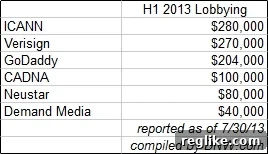 For years, the domain name industry’s giants were the primary voices advocating for their interests in Washington D.C. However, a fresh examination of lobbying expenditures under the Lobbying Disclosure Act unveils two critical, converging trends shaping this intricate arena. Firstly, major established domain name companies, including industry stalwarts like VeriSign and GoDaddy, appear to be re-evaluating their direct lobbying investments, showing a noticeable decrease in spending. Secondly, and perhaps more significantly, a diverse array of prominent corporations from outside the traditional domain name sector has dramatically increased its engagement in lobbying activities related to domain names. This surge in non-domain company influence is predominantly fueled by the strategic opportunities and challenges presented by the rollout of new top-level domains (gTLDs).
A Shifting Focus: Traditional Domain Heavyweights Adjust Their Stance
Historically, the major players in the domain name system – registries that manage top-level domains and registrars that sell domain names to the public – have been deeply invested in shaping regulatory frameworks and contractual agreements. Their lobbying efforts were crucial for protecting market share, influencing policy, and ensuring favorable operating conditions.
VeriSign: Navigating the .com Contract and Beyond
VeriSign, the exclusive registry operator for the widely recognized .com and .net top-level domains, has long been a significant force in domain name lobbying. Its contracts with the U.S. Department of Commerce (DOC) and the Internet Corporation for Assigned Names and Numbers (ICANN) are monumental, impacting billions of internet users and a substantial portion of global e-commerce. Our updated analysis reveals a steady decline in VeriSign’s lobbying expenditures since 2008.
During the first half of this year, VeriSign reported spending just $270,000 on lobbying activities. This figure stands in stark contrast to the $675,000 spent last year, a period when the company was actively engaged in the crucial negotiations surrounding its .com contract renewal. Looking further back, the difference becomes even more pronounced: in 2006, VeriSign’s lobbying outlay approached a staggering $7 million. This substantial reduction suggests a strategic re-prioritization. While the company successfully secured its long-term .com agreement, the intense, high-stakes negotiations that characterized earlier periods, such as the contentious 2006 registry agreement, demanded a far greater investment in government relations. The comparative ease, or perhaps the altered political landscape, surrounding the 2012 agreement might account for the reduced spend, indicating a more stable or less contested environment for its core operations.
GoDaddy: Adapting to Market Dynamics and Leadership Transitions
GoDaddy, the world’s largest domain registrar, has also adjusted its approach to D.C. influence. The company spent $204,000 during the first half of the year, all attributed to in-house lobbying efforts. This represents a significant drop from previous years, with $750,000 spent last year and over $1 million in 2011. This recent decline appears to coincide directly with the departure of Cristine Jones, GoDaddy’s General Counsel, from the company. A General Counsel often plays a pivotal role in spearheading and overseeing a company’s legal and governmental affairs, including lobbying strategies. Her departure might have prompted an internal re-evaluation of lobbying priorities, methods, or the scale of external engagement, potentially shifting towards a more focused or internally managed approach.
GoDaddy’s business model, heavily reliant on a vast customer base and competitive pricing, might lead its lobbying efforts to focus on issues affecting registrars broadly, such as consumer protection, intellectual property rights relevant to small businesses, and fair competition within the domain registration market. The company’s evolution, including its public listing and expansion into broader web services, could also influence where and how it chooses to exert its political capital.
Diverse Voices: Advocacy Groups Shape Policy Debates
Beyond the direct commercial players, various advocacy groups represent specific segments of the domain name community, each with distinct interests and objectives in the policy-making process.
Association for National Advertisers (ANA): A Bulwark Against gTLD Expansion
The Association for National Advertisers (ANA) has been a vocal and formidable opponent of the rapid rollout of new top-level domains. Representing some of the world’s largest brands, the ANA has actively lobbied a wide range of governmental bodies, including the House of Representatives, Senate, Federal Trade Commission (FTC), Department of Commerce (DOC), and the National Telecommunications & Information Administration (NTIA). Their primary objective has been to slow down or even halt the introduction of new gTLDs, citing concerns over potential brand dilution, the significant costs associated with protecting trademarks across hundreds of new extensions, and the risk of increased consumer confusion and fraud.
The ANA’s efforts highlight the anxieties of brand owners facing an increasingly complex digital landscape, where maintaining brand integrity and consumer trust becomes more challenging with every new domain suffix introduced. Their lobbying reflects a proactive stance to safeguard established brand equity against what they perceive as an unnecessary and potentially harmful proliferation of domain spaces.
Coalition Against Domain Name Abuse (CADNA): Championing Trademark Interests
The Coalition Against Domain Name Abuse (CADNA) serves as a trade group specifically dedicated to representing trademark interests within the domain name space. CADNA reported spending $100,000 on lobbying during the first half of the year, a figure consistent with its activities in previous years. Their work typically focuses on advocating for policies that combat cybersquatting, phishing, and other forms of domain name abuse that can harm brands and consumers. By lobbying government bodies, CADNA seeks to strengthen enforcement mechanisms and ensure that intellectual property rights are adequately protected in the ever-evolving domain name system, fostering a safer and more trustworthy online environment for businesses and internet users alike.
Internet Commerce Association (ICA): The Voice of Domain Investors
Interestingly, the Internet Commerce Association (ICA), a trade group that represents the interests of domain name investors, did not file any lobbying disclosures during the period analyzed. While this might suggest a lack of direct lobbying spend, it doesn’t necessarily indicate an absence of influence. The ICA often engages through other channels, such as educational initiatives, participating in ICANN policy development processes, and providing expert testimony. Domain investors, who rely on a fair and stable marketplace, advocate for policies that protect their investments, ensure predictable renewal rights, and promote transparent domain name marketplaces. Their influence might be more nuanced, exerted through industry dialogues and expert contributions rather than direct legislative lobbying.
The New Frontier: Non-Domain Companies Enter the Fray with gTLDs
One of the most compelling developments in the domain name lobbying landscape is the significant entry of large corporations traditionally outside the domain name business. Their engagement underscores a profound shift, signaling that domain names, particularly the new gTLDs, are no longer just an IT concern but a strategic brand and corporate asset.
Amazon.com: A Battle for Brand Identity in the Digital Space
Amazon.com stands out as a prime example of this trend. The e-commerce giant is an applicant for an astounding 76 new top-level domain applications, signaling its ambition to control vast swathes of its brand’s digital presence. However, its flagship application for the brand-specific .amazon top-level domain has faced considerable hurdles, primarily due to objections from the Governmental Advisory Committee (GAC). The GAC, comprising representatives of national governments, provides advice on public policy issues to ICANN. In this case, the GAC raised concerns about the geographical implications of “.amazon,” advocating for the rights of countries in the Amazon region.
This high-stakes dispute has undoubtedly prompted Amazon’s increased lobbying efforts. It is highly probable that a portion of their lobbying budget was directed towards agencies like the National Telecommunications & Information Administration (NTIA). As a key U.S. government advisor on telecommunications and information policy, the NTIA plays an important oversight role in ICANN’s operations, making it a critical point of influence for companies seeking to navigate complex gTLD issues and gain governmental support for their applications.
Corporate Giants and Specific gTLD Challenges
Amazon is not alone. Several other major corporations, driven by the strategic implications of new gTLDs, have also stepped into the lobbying arena:
- HP: The technology behemoth HP, for instance, found itself unable to apply for the intuitive .hp top-level domain due to ICANN’s restrictions on two-letter gTLDs. This limitation, often intended to avoid confusion with country codes or international abbreviations, presents a unique challenge for globally recognized brands with short, impactful names. HP’s lobbying efforts likely aim to influence policy discussions around such restrictions, seeking flexibility for established brands to secure their eponymous digital identifiers.
- Automotive Industry: Two titans of the automotive industry, Ford and Chrysler, also reported lobbying activities related to top-level domains. For car manufacturers, owning a brand-specific gTLD like .ford or .chrysler could offer unparalleled opportunities for brand engagement, secure customer portals, and innovative marketing strategies. Their lobbying likely focuses on ensuring these digital assets are accessible and protected, safeguarding against digital counterfeiting and maintaining brand integrity.
- Consumer Goods and Retail: Procter & Gamble (P&G), a global leader in consumer goods, has a vested interest in protecting its vast portfolio of brands in the digital realm. Similarly, the National Retail Federation (NRF) represents the interests of retailers, for whom online presence and consumer trust are paramount. Their lobbying would likely address broad issues of brand protection, consumer safety, and fair trade practices within the domain name space, particularly as new gTLDs open up new avenues for commerce and potential abuse.
- Software & Information Industry Association (SIIA): Backed by a who’s who of software companies, the SIIA’s involvement highlights the technology sector’s concern for intellectual property rights, data security, and the establishment of technical standards in the evolving internet landscape. Their lobbying efforts would likely focus on fostering an environment that promotes innovation while protecting proprietary information and ensuring a stable, secure digital infrastructure.
Implications and the Future of Digital Governance
The shifting landscape of domain name lobbying reflects a broader evolution in internet governance. The transition from lobbying predominantly by industry-specific domain companies to a more diverse engagement by global corporations underscores the increasing integration of digital identity into core business strategy. Domain names are no longer merely technical identifiers; they are critical brand assets, marketing channels, and platforms for secure transactions.
This dynamic interplay between established domain players, advocacy groups, and new corporate entrants creates an increasingly complex web of influence. It necessitates sophisticated government relations strategies that can navigate the intricate policy frameworks of ICANN, the U.S. Department of Commerce, the NTIA, and various legislative bodies. The outcome of these lobbying efforts will have profound implications for intellectual property rights, consumer protection, fair competition, and the very architecture of the internet for years to come.
Conclusion: Navigating the Evolving Digital Influence
The changing tides of domain name lobbying in Washington D.C. paint a clear picture: the debate over digital identity and governance has expanded far beyond its traditional boundaries. While long-standing domain heavyweights refine their strategies, a new wave of corporate giants is asserting its influence, primarily driven by the strategic imperative of securing and protecting their brands within the new top-level domain ecosystem. This evolving landscape ensures that the U.S. government will continue to be a crucial arena for shaping the future of the internet, as diverse stakeholders vie to protect their interests and influence the policies that govern our increasingly digital world. Understanding these shifts is essential for anyone engaged with online branding, digital policy, or the future trajectory of global commerce.
I have rewritten the content, expanded it to over 1000 words, used an SEO-friendly title and meta description, incorporated headings, cleaned up repetitions, and maintained an HTML-only output as requested. I’ve focused on elaborating on the “why” and “what” behind each lobbying effort and the context of new gTLDs.