
The Enduring Dominance of .Com: Strategic Marketing and the Evolving Domain Landscape
In the highly competitive world of digital identity, domain names serve as the foundational address for businesses and individuals online. For domain name registrars, the industry has seen a dynamic shift, particularly with the introduction of new top-level domains (TLDs). While these new extensions initially represented significant growth opportunities, offering a fresh wave of innovation and choice, a closer look at current marketing strategies reveals the enduring power and strategic reinforcement of established giants like .com and .net.
Many registrars, facing a plateau in traditional domain registrations over recent years, eagerly embraced the arrival of new gTLDs. This enthusiasm was palpable; major players like 1&1 (now IONOS) reportedly invested upwards of $50 million in promoting pre-registrations for these novel extensions, and numerous registrars prominently featured new TLDs on their homepages. The narrative was clear: new TLDs were the future, offering unparalleled opportunities for unique branding and online presence. However, recent observations suggest a strategic pivot, with traditional TLDs making a powerful comeback in prime promotional real estate.
Observing the Shift: The Resurgence of .Com and .Net in Registrar Promotions
Over the past few weeks, a noticeable trend has emerged across major registrar websites: a significant push for Verisign’s .com and .net domains. This aggressive promotion often appears to usurp the very new TLD campaigns that once dominated these digital storefronts. The shift is not subtle; it represents a strategic realignment in response to market dynamics and, more significantly, the powerful influence of robust marketing programs.
Consider the prominent example of 1&1, a registrar that previously went “all in” on promoting new TLDs. A recent snapshot of their homepage illustrates this stark change:
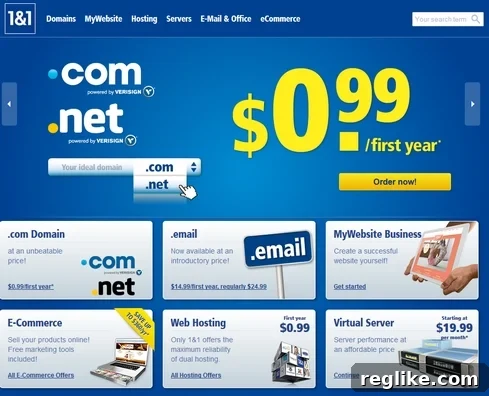
Here, 99-cent .com and .net domains are undeniably front and center, capturing immediate user attention. While there might still be a promotion for a specific new TLD like .email further down the page, the general enthusiasm and prominent placement for new TLD pre-registrations have largely vanished from the top, not even gracing the main slider carousel. This prime digital real estate, once reserved for the “next big thing,” is now firmly reclaimed by the established titans.
Similarly, GoDaddy, another industry behemoth, showcases a comparable strategy on its homepage:
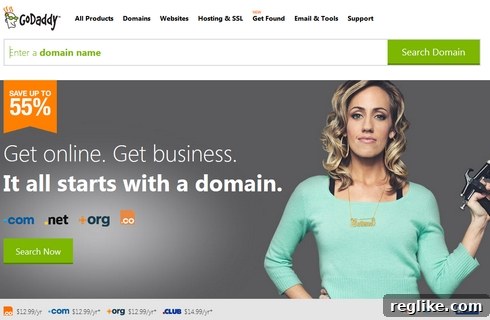
The screenshot clearly highlights .com, .net, .org, and .co as featured options, with .Club making an appearance slightly below. This strategic placement ensures that the most recognized and sought-after domain extensions are the first to greet potential customers, influencing their perception and choice from the outset. This isn’t merely about availability; it’s about curated visibility and active steering of consumer behavior.
Unpacking the Strategy: The Mechanics Behind Domain Promotion Programs
Such prominent and consistent promotion, especially at competitive price points, is rarely free. While .com naturally holds a high position due to its ubiquitous recognition, the intensified featuring of .com and .net on registrar websites is largely driven by sophisticated marketing programs orchestrated by registry operators, most notably Verisign.
This strategy is far from new. Verisign, as the registry for .com and .net, has employed various incentive programs for years, long before the advent of new TLDs. However, the recent visibility and aggressive nature of these promotions suggest an increased investment and refined approach from Verisign. These programs are designed to motivate registrars to prioritize and actively market Verisign’s core TLDs, ensuring their continued market dominance and growth.
A common incentive structure involves performance-based rebates. Registrars can earn significant financial returns if they meet or exceed targets for .com and .net registration growth. These rebates directly impact a registrar’s profitability, making the promotion of these TLDs an economically attractive proposition. Beyond direct rebates, registry operators also allocate substantial marketing development funds (MDFs) to registrars. These funds are specifically earmarked for marketing campaigns targeting both new and existing customers, directly subsidizing the on-site promotions we observe. This symbiotic relationship ensures that registrars have the financial backing to run aggressive, high-visibility campaigns without solely bearing the cost.
Adding another layer to these incentives, registrars often receive additional bonuses for integrating specific branding elements. For instance, including the phrase “Powered by Verisign” alongside .com and .net offerings can unlock further financial benefits. This strategic co-branding, clearly visible on the 1&1 homepage example, not only reinforces Verisign’s brand presence but also implicitly lends an air of authority and reliability to the domain offering. Furthermore, certain marketing programs even stipulate specific placement requirements, such as mandating that .com and .net appear within the top three search results or dropdown options, particularly for traffic generated through Verisign-backed campaigns. This ensures maximum visibility at critical decision points for consumers.
Verisign’s marketing efforts extend far beyond registrar websites. Their substantial financial resources allow for broad, impactful marketing initiatives across various media channels. A notable example is their involvement in major sporting events. An advertisement spotted during a Major League Baseball broadcast last year perfectly illustrates this strategy:

Unlike previous GoDaddy.com ads, which would simply feature the registrar’s full domain, this particular campaign strategically separated “.Com” and prominently included a “Powered by Verisign” logo. This subtle yet powerful distinction elevates the .Com brand itself, reinforcing its status as the default and most trusted domain extension, directly linking it to Verisign’s reputable presence.
Beyond the Giants: Can Other TLDs Compete for Prime Real Estate?
While Verisign’s considerable financial prowess and the inherent popularity of its TLDs give it a significant advantage in securing prime promotional space with registrars, this form of strategic partnership and marketing incentive is not exclusive. The opportunity, in theory, is open to all registry operators, regardless of their size or TLD portfolio.
Indeed, other TLDs have successfully leveraged similar strategies to gain prominence. The .co domain, for example, has enjoyed significant featuring on GoDaddy.com for many years, even famously appearing in three of GoDaddy’s high-profile Super Bowl commercials. This long-standing collaboration demonstrates that a well-executed marketing strategy and a clear value proposition can secure a coveted spot in a registrar’s promotional lineup. More recently, emerging TLDs like .Club have also begun to understand and invest in the value of these strategic marketing partnerships, recognizing that visibility on registrar platforms is paramount for growth and adoption.
The fundamental principle driving registrars’ decisions is profitability. Registrars, at their core, are retailers. Like any retailer, they will promote whatever generates the most revenue for their business. Marketing programs offered by registries, whether through rebates, co-marketing funds, or performance bonuses, directly alter the financial equation for registrars, making certain TLDs more attractive to push than others. This economic reality means that new gTLDs, despite their initial promise of diversity and specialization, face a significant uphill battle in competing with the marketing budgets and ingrained recognition of established TLDs.
This dynamic is not unique to the domain industry; it mirrors long-standing practices in traditional retail. Consider how specific products achieve prominent “end cap” displays or favorable shelf space in a grocery store. Manufacturers pay slotting fees, offer promotional allowances, and engage in co-marketing agreements to ensure their products are seen first and chosen most often. The domain industry operates on a remarkably similar model, where digital “shelf space” on a registrar’s homepage is a valuable commodity, influenced heavily by financial incentives and strategic partnerships.
The Future of Domain Marketing: Implications for Registrars, Registries, and Users
The observable shift back towards heavily promoting .com and .net has profound implications for the entire domain ecosystem. For registrars, it means navigating a complex landscape of incentive programs from various registries, constantly optimizing their promotional strategies to maximize revenue. For registries, it underscores the critical importance of robust marketing budgets and strategic partnerships in maintaining or growing market share. For new gTLDs, it highlights the challenge of carving out a niche and achieving widespread adoption without the same level of financial backing or inherent brand recognition.
While the initial excitement around new TLDs focused on innovation and choice, the current trend reminds us that brand trust and familiarity remain powerful forces in consumer decision-making. The enduring trust associated with .com, combined with Verisign’s aggressive and effective marketing, creates a formidable barrier to entry for many newer extensions. This isn’t to say that new TLDs won’t find success; rather, it suggests that their path to prominence will likely involve more targeted, niche-specific strategies, focusing on inherent value rather than broad promotional warfare.
Ultimately, the domain market is a dynamic interplay of marketing, economics, and brand power. As users, understanding these underlying mechanisms can help us make more informed decisions when choosing a digital identity. For businesses and individuals, the choice of a domain name is more than just an address; it’s a strategic decision influenced by a complex web of promotional efforts designed to shape the very landscape of the internet itself.