
Navigating the Complex World of Trademarks: Unpacking Dubious Applications and USPTO Refusals
The integrity of the United States trademark system is continuously tested by applicants attempting to register marks without genuine intent to use them in commerce. One such case involves a company that has submitted numerous questionable trademark applications, many of which have faced immediate scrutiny and refusal from the U.S. Patent and Trademark Office (USPTO). This saga highlights critical aspects of trademark law, particularly the stringent requirements for proving “use in commerce” and the legal ramifications of filing applications in bad faith.
The company in question, Indiana-based Trademark King Inc., embarked on an ambitious and highly controversial endeavor, filing over 150 trademark applications around Thanksgiving last year. These filings, reportedly costing an estimated $50,000, targeted a diverse range of terms – from universally recognized brands and famous names to common commercial phrases and even domain names owned by others. Such a broad and aggressive filing strategy immediately raised red flags, attracting significant attention from intellectual property experts and brand owners alike.
Understanding the Scope of Trademark King’s Aggressive Filings
Trademark King Inc.’s list of applications read like a directory of public consciousness, including well-established entities such as “NCAA Final Four” and “Google.com.” The filings also encompassed the names of prominent individuals like “Elton John” and “Warren Buffet,” alongside widely used commerce terms such as “Labor Day Sale” and “Black Friday Deals.” This pattern suggested a strategy less focused on protecting a bona fide business’s brand identity and more on appropriating widely recognized or generic terms for speculative gain.
The sheer volume and nature of these applications presented an immediate challenge to the fundamental principles of trademark law. Trademarks are intended to serve as source indicators, distinguishing the goods or services of one party from those of others. They are not meant to be hoarded or registered without actual commercial use or a legitimate intent to use. Filing for famous marks or generic phrases often runs afoul of established legal doctrines like likelihood of confusion, descriptiveness, genericness, or false suggestion of connection, making successful registration highly improbable.
The Cornerstone of Trademark Law: The “Specimen of Use” Requirement
A crucial component of any trademark application in the U.S. system, particularly for those based on actual use, is the submission of a “specimen of use.” This requirement mandates that applicants provide tangible evidence demonstrating that the mark is currently being used in commerce in connection with the specified goods or services. For goods, a valid specimen might be a label, tag, container, or product packaging bearing the mark. For services, it could be advertising materials, brochures, a website screenshot where the service is offered, or signs displaying the mark at the point of service.
When Trademark King Inc. initially submitted its barrage of applications, many, if not all, failed to include the required specimens showing legitimate use in commerce. This omission is a significant deficiency that can, and often does, lead to immediate refusal by the USPTO. The absence of a valid specimen suggests a lack of actual commercial activity associated with the mark, undermining the very premise of trademark protection, which is rooted in real-world market use.
USPTO’s Swift Response: Grounds for Initial Refusal
Predictably, the USPTO has issued initial refusals on a substantial number of Trademark King Inc.’s applications. These office actions primarily cite the glaring lack of proper specimens and, importantly, highlight what the USPTO refers to as “apparent shenanigans” – a clear indication of the questionable intent behind these filings. The USPTO’s examining attorneys meticulously review each application against the strict criteria of the Trademark Act and their internal examination guidelines.
A prime example of these refusals involves the application for “Selection Sunday.” The USPTO’s examining attorney specifically pointed out that this phrase “falsely implies a connection” to the NCAA, a well-known entity that legitimately uses the term in connection with its college basketball tournament selections. The refusal went further, explicitly noting that Trademark King Inc.’s attempt to create such a connection was evidenced by a series of other recently filed applications, including:
That this applicant is attempting to create a connection with the NCAA via the applied-for mark is further evidenced by several of its other recently filed applications:
86464112 NCAA FINAL FOUR
86464136 2015 NCAA FINAL FOUR INDIANAPOLIS
86464144 2016 NCAA FINAL FOUR HOUSTON
86464147 2017 NCAA FINAL FOUR PHOENIX
86464161 2018 NCAA FINAL FOUR SAN ANTONIO
86464173 2019 NCAA FINAL FOUR MINNEAPOLIS
86464184 2020 NCAA FINAL FOUR ATLANTA
Such a pattern of filings for marks related to a single well-known organization strongly suggests an attempt to capitalize on, or falsely associate with, the existing goodwill and recognition of another’s brand. This constitutes a direct violation of trademark principles designed to prevent consumer confusion and unfair competition.
Trademark King’s Questionable “Response” Strategy
In response to these detailed refusals, Trademark King Inc. has attempted to counter the USPTO’s objections with what appears to be a highly unorthodox strategy: a slight modification to the “Goods and Services” description. For instance, the “Selection Sunday” application was amended to include the rather unusual description: “Selling or leasing the trademark Selection Sunday to anyone for a legal business activity.”
This amendment raises significant questions about the applicant’s understanding of “use in commerce.” Trademark law generally requires that the mark be used in connection with goods or services *offered to the public*, not merely as an asset to be sold or leased in an abstract sense. While trademarks themselves can be licensed or assigned, merely claiming the service of “selling the trademark” without any underlying legitimate commercial activity for the mark itself is unlikely to satisfy the USPTO’s strict requirements for bona fide use. It appears to be an attempt to manufacture a service around the mark itself, rather than using the mark to brand an actual service provided to consumers.
The Absurdity of Submitted Specimens: “Trademarking.com” and “HolyBible.com”
The challenge of demonstrating legitimate “use in commerce” for such a wide array of generic terms, famous brands, and especially domain names not owned by the applicant, is inherently difficult. This difficulty became strikingly evident in the specimens Trademark King Inc. eventually submitted for some of its applications.
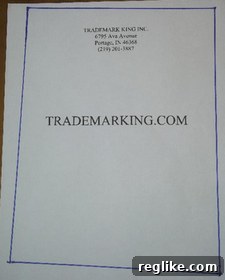
Consider the application for “Trademarking.com.” This domain name is publicly known to be owned by prominent domain investor Rick Schwartz. Despite this, Trademark King Inc. submitted a specimen that was nothing more than the words “Trademarking.com” typed on a piece of paper. A similar, equally inadequate specimen was provided for “HolyBible.com” and the aforementioned “Selection Sunday” application.
Such submissions are far from meeting the legal standard for a valid specimen of use. A specimen must show the mark as it is actually used in the marketplace, typically on goods, packaging, or in advertisements for services. A simple word typed on a piece of paper demonstrates neither commercial use nor the mark functioning as a source identifier. This level of submission not only indicates a fundamental misunderstanding or disregard for trademark law but also suggests an attempt to circumvent the system with minimal effort, expecting it to be accepted as legitimate.
Legal and Ethical Implications of Trademark Squatting
The actions of Trademark King Inc. fall squarely into the controversial realm of “trademark squatting” or “bad faith” filings. Trademark squatting occurs when an individual or entity registers a trademark, often a famous or generic one, with the primary intention of profiting from it through resale to the legitimate owner or by preventing others from using it, rather than intending to use it for their own goods or services. This practice poses a significant threat to legitimate brand owners, forcing them to incur substantial legal costs to oppose such applications or to initiate cancellation proceedings. It diverts resources from genuine innovation and market competition towards defensive legal battles.
The USPTO, through its examining attorneys and the Trademark Trial and Appeal Board (TTAB), is vigilant in identifying and rejecting such bad-faith applications. Grounds for refusal often include a lack of bona fide intent to use the mark, false suggestion of a connection, or likelihood of confusion with existing marks. The “typed on paper” specimens, the targeting of well-known brands, and the broad, speculative nature of the applications collectively paint a picture of an intent that is inconsistent with the spirit and purpose of trademark law.
Protecting Your Brand: Lessons from the Trademark King Saga
This case serves as a crucial reminder for all businesses and brand owners about the importance of proactive and diligent brand protection. Key takeaways include:
- Due Diligence: Conduct thorough trademark searches before adopting a new brand name or logo to ensure its availability and registrability.
- Bona Fide Intent: Always file trademark applications with a genuine intent to use the mark in commerce for the specified goods or services. This intent is a legal requirement and is scrutinized by the USPTO.
- Understand Specimen Requirements: Be prepared to provide valid specimens of use that clearly demonstrate the mark’s actual use in the marketplace. Vague or manufactured specimens will almost certainly lead to refusal.
- Monitor Trademark Filings: Regularly monitor trademark applications filed by others, especially within your industry or for marks similar to your own, to detect potential squatting or infringement early.
- Seek Expert Guidance: Consult with experienced trademark attorneys to navigate the complexities of trademark law, ensuring your applications are strong and your brand is adequately protected.
The U.S. trademark system is designed to protect creativity, foster fair competition, and prevent consumer confusion. Attempts to exploit or circumvent this system through dubious filings ultimately undermine its integrity and are, as evidenced by Trademark King Inc.’s experience, unlikely to succeed. The message from the USPTO is clear: a legitimate trademark requires genuine use, not just a typed name on a piece of paper.