
Good luck pronouncing this domain name without an explanation.
The Critical Role of Domain Names in Startup Success: A QuiQui.me Case Study
 In the dynamic realm of startup innovation, groundbreaking ideas often capture headlines and investor attention. Yet, the path from concept to widespread adoption is paved with more than just technological prowess; it requires meticulous attention to branding and market positioning. A seemingly minor detail, the choice of a domain name, can wield significant power in this journey, acting as a direct gateway for customers and a foundational element of brand identity. This article examines the intriguing case of a San Francisco startup, QuiQui.me, to illuminate the profound impact a domain name can have on a venture’s potential for success, particularly in the burgeoning sectors of drone delivery and e-pharmacy.
Revolutionizing Last-Mile Logistics: The Ascent of Drone Delivery and E-Pharmacy
The global logistics industry is experiencing a seismic shift, driven by consumer demand for speed, convenience, and efficiency. Drone technology, once confined to science fiction, is rapidly emerging as a viable solution for last-mile delivery, promising to circumvent traditional logistical bottlenecks and provide unprecedented service levels. This technological leap holds particular promise for industries requiring rapid and secure distribution, such as pharmaceutical delivery. The rise of e-pharmacy, offering direct-to-consumer delivery of medications and health products, has reshaped healthcare accessibility, a trend significantly accelerated by recent global events that emphasized contactless services and home convenience.
San Francisco, a vibrant epicenter of technological advancement, naturally serves as a fertile ground for startups aiming to disrupt traditional markets. The vision of receiving essential pharmacy items via autonomous drones promises not only unparalleled speed but also enhanced privacy and reliability. Such innovation aims to transform how individuals access critical healthcare products, providing urgent relief and routine convenience. It is within this ambitious and rapidly evolving context that companies like QuiQui.me emerge, seeking to carve out their niche by leveraging cutting-edge technology to solve real-world problems.
Introducing QuiQui.me: Ambition, Innovation, and a Branding Conundrum
At its core, QuiQui.me is an ambitious San Francisco startup dedicated to revolutionizing pharmaceutical delivery through drone technology. Their mission is clear: to offer a rapid, reliable service for pharmacy items, addressing the growing need for efficient healthcare logistics. However, despite their innovative service model, the company faces a considerable challenge in market penetration and brand recognition, largely stemming from their chosen domain name: QuiQui.me. The company intends for its name to be pronounced “Quickie,” a direct and fitting descriptor for a service emphasizing speed and efficiency.
The central dilemma lies in the phonetic ambiguity of “QuiQui.” Unlike intuitive spellings, “QuiQui” does not immediately or consistently lead to the pronunciation “Quickie” for most English speakers. Moreover, the letter sequence “Qui” can be pronounced in various ways depending on context, creating confusion when repeated within the same name. This linguistic hurdle means that company representatives are frequently compelled to provide extensive explanations whenever introducing their brand. This constant need for clarification not only impedes organic word-of-mouth marketing but also represents a significant obstacle to building a memorable and easily recognizable brand identity in a fiercely competitive startup ecosystem.
The Undeniable Pitfalls of Unintuitive Domain Names
A domain name is far more than a mere technical address on the internet; it is a critical component of a brand’s digital identity and marketing strategy. For any startup, especially one relying on rapid customer adoption and viral growth, an unintuitive or hard-to-pronounce domain name can lead to a cascade of negative consequences:
- Impeded Word-of-Mouth Marketing: Organic referrals are a cornerstone of startup growth. If potential customers struggle to pronounce or spell a brand name correctly, they are significantly less likely to share it with others. This directly stifles invaluable free marketing and limits the company’s natural spread through personal networks.
- Reduced Discoverability and SEO Challenges: In an era dominated by search engines and app stores, discoverability is paramount. A confusing domain name makes it difficult for users to find the company directly. If a customer hears “Quickie” but inputs “QuiQui” incorrectly or spells it differently, they may never reach the intended website or app. While direct domain name exact match is less critical for SEO ranking than it once was, the underlying user experience and ability to be found are vital.
- Weakened Brand Recall and Recognition: Memorability is a key trait of successful brands. Names that require explanations or present phonetic puzzles are inherently harder to recall, impacting brand stickiness and making it more challenging to cultivate a loyal customer base. The mental effort required to decode the name detracts from the brand’s core message.
- Increased Marketing and Educational Costs: Brands with ambiguous names often incur higher marketing expenses. They must dedicate significant resources to educating their target audience on the correct pronunciation and spelling, diverting capital that could otherwise be invested in product development, service enhancement, or broader market expansion.
- Erosion of Professionalism and Trust: While some quirky names can be endearing, a name that is overly complicated or consistently misleads on pronunciation can inadvertently project an image of carelessness or lack of foresight. This can subtly undermine consumer trust and confidence, particularly critical for a service involving sensitive items like pharmaceuticals.
The “.me” Domain Trend: Balancing Uniqueness with Clarity in the Digital Landscape
For many years, the scarcity of desirable .com domains has been a widely discussed topic in the digital world. This perceived limitation has propelled countless businesses, particularly startups, to explore alternative Top-Level Domains (TLDs) such as .net, .org, .io, .co, and increasingly, .me. Originally the country code TLD for Montenegro, .me has gained significant traction for personal branding, online portfolios, and as a creative option for tech companies looking for a distinctive digital identity. Its appeal often stems from its ability to suggest a personal connection (“about me”) or to creatively complete a phrase, offering a fresh alternative to the saturated .com landscape.
However, the pursuit of a unique or clever domain name must always be weighed against the paramount importance of clarity and user-friendliness. While a .me domain can undoubtedly help a brand stand out, its effectiveness is severely compromised if it introduces more confusion than distinction. For a service-oriented business like QuiQui.me, which relies on rapid public adoption and seamless delivery, the primary objective should be effortless accessibility. The combination of a .me domain with a phonetically challenging name suggests a prioritization of uniqueness over user experience, a trade-off that frequently proves detrimental in the long term, especially when building a mass-market brand.
When the Logo Becomes an Explanation: A Symptom, Not a Solution
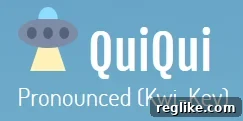
The notable decision by QuiQui.me to explicitly include its pronunciation directly within its logo is a revealing detail. While it signals an awareness within the company that their brand name poses a communication challenge, it also highlights the symptom of a deeper, foundational branding flaw. Ideally, a company logo should serve as a concise, powerful visual representation of the brand, conveying its essence and values at a glance, not as a phonetic tutorial. The necessity of embedding pronunciation guidance into the logo indicates that the brand anticipates public difficulty in articulating or remembering its name without constant assistance.
This compensatory measure has far-reaching practical implications. Every single piece of marketing collateral, every advertisement, every digital interface, and every customer service interaction will invariably require this additional layer of explanation. This not only increases the cognitive load on the consumer, forcing them to first decode the name before absorbing the service message, but also adds operational overhead for the company. Instead of instantly conveying its innovative purpose, the brand’s identity is initially obscured by the need to clarify its very name, potentially leading to user frustration and diluted marketing impact in a market that demands instant understanding.
Strategic Domain Name Selection: Indispensable Best Practices for Startups
The choice of a domain name stands as one of the most critical early decisions for any startup, shaping its digital footprint and long-term brand trajectory. It demands foresight, a deep understanding of market dynamics, and acute awareness of how consumers interact with digital brands. Adhering to certain best practices can significantly mitigate common pitfalls and lay a solid foundation for growth:
- Simplicity and Memorability: Prioritize names that are effortlessly easy to spell, pronounce, and recall. Actively avoid complex spellings, numerical substitutions, hyphens, or any phonetic ambiguities that could confuse your audience.
- Relevance and Clarity: The domain name should ideally resonate with the nature of the business or its core offering. It should provide immediate context and an intuitive understanding to potential customers about what your company does.
- Availability Across TLDs: While .com retains its status as the most recognized TLD, exploring relevant new TLDs (e.g., .delivery, .tech, .app, .health) can be strategic, provided clarity remains paramount. It’s also wise to secure common variations or misspellings if feasible, to safeguard your brand.
- Audience Consideration: Thoroughly consider your target demographic. Will they appreciate a quirky, unconventional name, or do they expect directness, professionalism, and ease of use? Align your choice with their expectations.
- Future-Proofing: Select a name that offers flexibility for potential expansion of services or product lines without becoming outdated, irrelevant, or overly restrictive to your brand’s evolution.
- Legal and Brand Conflict Checks: Before fully committing, conduct comprehensive checks to ensure the chosen name isn’t too similar to existing trademarks or established brands, thereby preventing costly legal disputes and consumer confusion down the line.
A Clearer Path Forward: The “Quickie.delivery” Opportunity
Considering the inherent branding challenges faced by QuiQui.me, a remarkably straightforward and highly effective solution presents itself: the domain Quickie.delivery. This alternative offers numerous compelling advantages for a startup specializing in the rapid delivery of pharmacy items, directly addressing the core issues of the current branding:
- Perfect Phonetic Alignment: “Quickie” directly matches the company’s intended pronunciation, instantly eliminating any confusion and the need for constant explanation.
- Instant Service Clarity: The “.delivery” TLD immediately communicates the company’s core business model. This provides instant context to anyone encountering the brand, making its purpose clear without a single word of additional explanation.
- Enhanced Discoverability: With the exact phonetic spelling and a highly relevant TLD, “Quickie.delivery” would be exponentially easier for customers to find through search engines, app store searches, and direct URL entry.
- Stronger Brand Association: The name “Quickie.delivery” powerfully reinforces the company’s key selling proposition – speed and efficiency in delivery. This creates a potent and memorable brand association that resonates directly with consumer needs.
- Strategic Affordability: As highlighted, this highly desirable and brand-aligned domain is available for a surprisingly low cost, representing an exceptionally cost-effective strategic investment in the startup’s long-term branding and marketing efficiency.
Investing in a clear, intuitive domain name early in a startup’s lifecycle is not merely an expense; it is a critical strategic investment that pays dividends in marketing efficiency, brand equity, and consumer trust. It streamlines communication, significantly reduces marketing overhead by minimizing the need for constant clarification, and builds confidence with consumers from their very first interaction.
Conclusion: Branding as the Essential Foundation for Innovation
The entrepreneurial journey is inherently challenging, filled with unforeseen obstacles and fierce competition. While technological innovation, particularly in transformative fields like drone delivery and e-pharmacy, is undeniably paramount, its success hinges on a robust and clear brand foundation. The case of QuiQui.me serves as a compelling and poignant reminder that while creativity in naming can be appealing and distinctive, clarity, pronounceability, and ease of access must ultimately take precedence. This is especially true for startups aiming for broad public adoption and relying on seamless user experience.
A domain name like Quickie.delivery is more than just a web address; it embodies a promise of transparency, operational efficiency, and a frictionless user experience. As the drone delivery and e-pharmacy sectors continue their rapid expansion, the companies that judiciously balance cutting-edge technological advancements with clear, intuitive branding will be the ones that truly soar. They will build enduring trust and foster loyalty with every seamless interaction, proving that in the competitive digital landscape, providing customers with an effortlessly understandable and memorable brand is, unequivocally, the quickest and most effective path to sustained success.