
Paul Le Roux: The Mastermind Who Built His Own Domain Registrar to Evade Justice
In the shadowy annals of cybercrime, few figures loom as large or as ingeniously as Paul Le Roux. A programmer turned international criminal mastermind, Le Roux orchestrated a global empire built on illicit drugs, arms dealing, and violence. What’s perhaps even more remarkable is how he leveraged and manipulated the very infrastructure of the internet to facilitate his operations, going so far as to create his own ICANN-accredited domain name registrar to circumvent domain suspensions. This audacious move highlights the critical role domain names play, not just in legitimate businesses, but also in the clandestine world of organized crime.
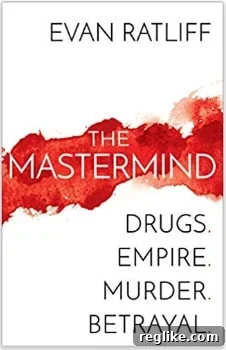 The intricate and chilling saga of Paul Le Roux is meticulously chronicled in Evan Ratliff’s gripping book, The Mastermind: Drugs. Empire. Murder. Betrayal. This non-fiction masterpiece delves into Le Roux’s evolution from a gifted but disturbed programmer into the architect of a vast, interconnected web of illegal enterprises. At the heart of his early operations, and a critical component of his initial rise, was an illicit online pharmacy business known as RX Limited. This venture served as a primary revenue stream and laid the groundwork for his more expansive and violent criminal endeavors.
The Genesis of an Empire: RX Limited and the Digital Frontier
Le Roux’s vision for RX Limited was simple yet profoundly lucrative: exploit the internet to sell prescription pills directly to consumers in the United States, bypassing traditional legal and medical oversight. His strategy involved registering a multitude of domain names, each serving as a storefront for his digital drug bazaar. These websites were often promoted through aggressive and pervasive spam campaigns, flooding inboxes with offers for controlled substances. This approach, while effective in generating sales, inevitably drew the attention of internet service providers, anti-spam organizations, and ultimately, domain name registrars.
Operating an illegal service and promoting it through widespread spam campaigns presented a significant operational challenge for Le Roux. Legitimate domain registrars, the companies responsible for managing the registration of domain names, are bound by terms of service and often by law to act against domains engaged in illicit activities. This meant that Le Roux’s domain names were constantly at risk of termination or suspension, a potentially fatal blow to his online pharmacy empire. Each suspension meant lost revenue, wasted marketing efforts, and the need to constantly re-establish his online presence. For most criminals, this constant cat-and-mouse game with registrars would be an insurmountable hurdle. But Paul Le Roux was no ordinary criminal.
The Audacious Workaround: Building His Own ICANN-Accredited Registrar
Instead of merely replacing suspended domains or seeking out more lenient registrars, Le Roux conceived of a truly audacious solution: he would create his own domain name registrar. This wasn’t a superficial endeavor; he aimed for full legitimacy, seeking accreditation from the Internet Corporation for Assigned Names and Numbers (ICANN). ICANN is the global multi-stakeholder organization that coordinates the Internet’s naming system, ensuring the stable and secure operation of the internet. Becoming an ICANN-accredited registrar is a rigorous process, requiring significant investment, technical expertise, and adherence to strict policies and contractual obligations.
Le Roux’s registrar, named ABSystems, was established under a stolen identity, adding another layer of deception to his already intricate web of lies. By owning his own registrar, Le Roux gained unprecedented control over his domain portfolio. He could register new domains at will, circumventing the scrutiny of third-party registrars. When a domain was flagged or reported, he could simply move it, or even prevent its suspension altogether, by controlling the underlying registration service. This move provided an unparalleled level of operational resilience and anonymity, allowing his illicit businesses to thrive with minimal interference from the legitimate internet governance ecosystem he had infiltrated.
ICANN’s Intervention and the Aftermath for the Domain Industry
Despite Le Roux’s elaborate measures, the scale and nature of ABSystems’ activities eventually attracted the attention of ICANN. The organization, tasked with maintaining the integrity of the domain name system, initiated an investigation into ABSystems. In 2013, after identifying multiple breaches of its Registrar Accreditation Agreement (RAA), ICANN took decisive action, terminating ABSystems’ accreditation. This was a significant event, as ICANN’s termination of a registrar is not a common occurrence and signals serious violations.
When a registrar is terminated, ICANN has a protocol in place to ensure that the domains registered under that registrar are not lost or rendered inaccessible. This process typically involves transferring the domains to another ICANN-accredited registrar. Often, legitimate registrars view these bulk transfers as an opportunity to expand their customer base and domain portfolio. However, in the case of ABSystems, the situation was far from a straightforward business opportunity. The vast majority of domains under ABSystems’ control were associated with criminal enterprises, spam, and other illicit activities.
This led to a challenging predicament for the receiving registrar. As famously reported, EnCirca, the registrar that inherited a significant portion of ABSystems’ domains, found itself holding a “bag of bad domains.” Faced with thousands of domains linked to fraud, spam, and other criminal activities, EnCirca had little choice but to suspend them en masse. This incident served as a stark reminder to the domain industry of the hidden dangers and liabilities associated with mass domain transfers and underscored the importance of robust due diligence in such scenarios. It also highlighted the complex balance ICANN must strike between maintaining internet stability and policing illicit activities within its purview.
Connecting the Digital Dots: The Role of Whois and DomainTools
While Paul Le Roux went to extraordinary lengths to hide his identity and obfuscate his operations, the very nature of domain name registration leaves digital breadcrumbs. The detectives and investigators who tirelessly pursued Le Roux understood this fundamental principle of digital forensics. They expertly leveraged tools and databases like Whois and DomainTools to piece together his sprawling criminal network.
Whois: The Internet’s Public Directory
Whois is a public database that contains information about registered domain names, including details about the registrant, administrative contact, technical contact, and the registrar itself. While privacy services can mask some of this information, patterns often emerge. Investigators can use Whois to uncover registration dates, server details, and sometimes even the names and addresses Le Roux used, or variations thereof. Even when false identities were used, repeated use of the same contact details, IP addresses, or name servers across seemingly disparate domains could reveal connections that pointed back to a single orchestrator.
DomainTools: A Forensic Powerhouse
DomainTools takes Whois data and elevates it to a powerful investigative platform. It allows for historical Whois lookups, revealing how a domain’s registration details have changed over time. More critically for cases like Le Roux’s, DomainTools offers “reverse Whois” capabilities. This means investigators can search by registrant name, email address, or even IP address to discover all associated domain names. Imagine finding an email address linked to one of Le Roux’s known associates on a legitimate-looking domain, and then using reverse Whois to discover it’s also tied to dozens of RX Limited pharmacy sites and other suspicious domains. This kind of cross-referencing was instrumental in mapping Le Roux’s digital footprint.
By meticulously analyzing these digital trails, law enforcement was able to connect seemingly unrelated websites, identify shared infrastructure, and ultimately link these assets back to Paul Le Roux. The digital evidence gathered through domain analysis provided crucial intelligence, helping to build a comprehensive picture of his organization and aiding in his eventual capture and prosecution. It’s a testament to the power of open-source intelligence and digital forensics in combating sophisticated cybercrime.
The Enduring Legacy of Le Roux and Domain Names in Cybercrime
The story of Paul Le Roux, as brilliantly told in The Mastermind, serves as a compelling case study on multiple fronts. For the domain name industry, it highlights the constant battle against abuse and the challenges of maintaining a robust and trustworthy internet infrastructure. It underscores the critical responsibility of ICANN and registrars to identify and mitigate threats posed by malicious actors seeking to exploit the system.
For law enforcement, Le Roux’s saga is a vivid illustration of how traditional criminal investigations now inherently involve digital forensics. Understanding how criminals leverage domain names, IP addresses, and online infrastructure is no longer an ancillary skill but a core component of modern investigative work. The ability to trace digital assets, analyze domain ownership patterns, and utilize specialized tools like Whois and DomainTools has become indispensable in dismantling global criminal networks.
Ultimately, The Mastermind is more than just a thrilling true-crime narrative; it’s a profound look at the intersection of technology, ambition, and unchecked malevolence. Domain names, often perceived as mundane technical details, emerge as pivotal elements in this grand scheme, showcasing their fundamental importance in both legitimate commerce and the dark underbelly of the digital world. Le Roux’s extraordinary attempt to control the very pipes of the internet for his illicit gains remains a unique and cautionary tale, solidifying the book’s status as a fascinating and essential read for anyone interested in cybercrime, digital investigations, or the chilling capabilities of an unfettered criminal genius.