
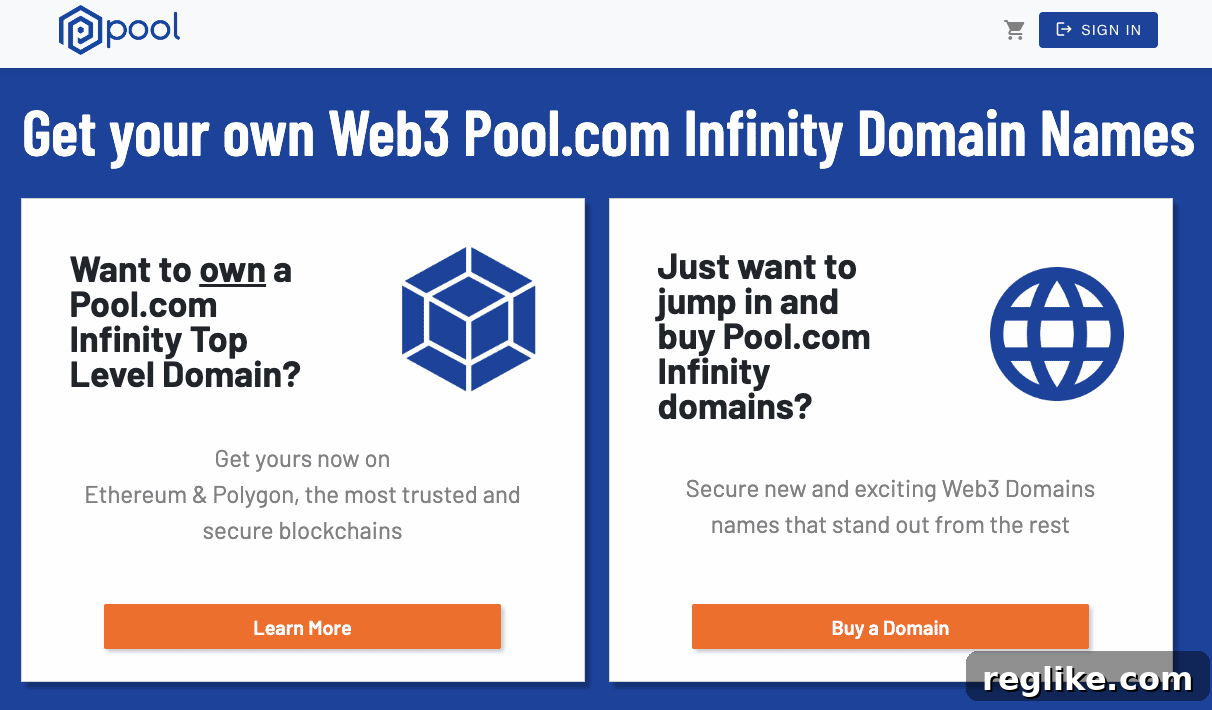
Pool.com, a long-established name in the traditional domain industry, has boldly thrown its hat into the increasingly crowded ring of companies offering alternative-root domain names, signaling a significant shift towards the decentralized web.
Pool.com’s Bold Pivot: Navigating the Future of Web3 Domains
Pool.com, a name synonymous with domain drop-catching and aftermarket services for many years, has announced a dramatic transformation of its business model. The company, renowned for helping users secure expiring domain names, is now repositioning itself at the forefront of the decentralized internet, embracing the burgeoning Web3 domain name ecosystem.
This strategic relaunch sees Pool.com entering the dynamic and often complex world of Web3 domains, a move that could redefine its legacy in the digital space. By venturing into this innovative realm, Pool.com aims to empower individuals and businesses with new ways to establish their presence online, moving beyond the centralized governance of ICANN-managed domains.
Understanding the Web3 Domain Landscape
The concept of Web3 domains represents a significant departure from the traditional domain name system (DNS) that has underpinned the internet for decades. Unlike conventional domains (like .com, .org, .net) which are managed by the Internet Corporation for Assigned Names and Numbers (ICANN), Web3 domains leverage blockchain technology to offer a decentralized and often censorship-resistant naming system. These domains are typically owned as NFTs (Non-Fungible Tokens), granting true ownership and control to their holders.
The appeal of Web3 domains lies in their promise of a more open, user-centric internet. They are often used as cryptocurrency wallet addresses, decentralized website URLs, or universal digital identities across various blockchain applications. Players like Ethereum Name Service (ENS) with their .eth domains, Unstoppable Domains offering a range of extensions like .crypto and .nft, and Handshake providing a framework for custom top-level domains, have already carved out significant niches in this evolving market. Pool.com’s entry adds another formidable competitor to this innovative, yet complex, environment.
Pool.com’s Innovative Web3 Domain Model: TLDs and SLDs
Pool.com’s new business model appears to operate with a structure reminiscent of systems like Handshake, providing a robust framework for decentralized domain management. At its core, the platform allows users to register their own unique Top Level Domains (TLDs) within the Web3 space. This is a powerful proposition, enabling entrepreneurs, brands, and communities to establish their own distinct digital territories.
Beyond TLD ownership, Pool.com facilitates the creation and distribution of Second Level Domains (SLDs) under these newly registered TLDs. This means a TLD owner can effectively become their own mini-registry, minting and selling individual domains to others, much like ICANN-accredited registrars sell .com domains. This model fosters a vibrant ecosystem where creativity and entrepreneurial spirit can thrive.
According to the official Pool.com website, their service offers comprehensive capabilities:
“Pool.com offers you access to purchase your own unique Top Level Domain in Web3. It also offers the ability to mint and distribute Second Level Domains, and allows you to sell Second Level Domains to others. Got a great idea for a top level domain like .running that you want to sell to the world? We enable you to do all of that easily.”
“Sounds a bit complicated? We are the experts and are here to help. Our 24/7 call centre team will fully support all your web3 needs.”
This statement underscores their commitment to making the intricate world of Web3 domains accessible. By emphasizing 24/7 support, Pool.com aims to lower the barrier to entry for users who may be unfamiliar with blockchain technology or decentralized naming systems, leveraging their decades of experience in customer service from the traditional domain market.
Pricing Structure and Accessibility
Entry into the Web3 TLD market through Pool.com comes with a notable investment. The company charges a registration fee of $25,000 for a Top Level Domain, valid for a two-year period. This pricing indicates that Pool.com is targeting serious investors, established businesses, or ambitious entrepreneurs looking to create their own digital namespace with significant brand authority.
For those who register TLDs and wish to sell SLDs under them, Pool.com implements a commission structure. The platform charges a 30% commission on second-level domains sold through its marketplace. This model provides an incentive for Pool.com to support the success of its TLD owners while also generating revenue from the subsequent SLD transactions.
On the consumer side, Pool.com is making Second Level Domains highly accessible. Many extensions, including novel options like emoji domains, are available for a remarkably affordable price of just $5. This aggressive pricing strategy for SLDs could significantly broaden the appeal of Pool.com’s Web3 domains, encouraging wider adoption and experimentation among individual users and small businesses seeking an affordable entry point into the decentralized web.
The “Pool Infinity Domain” Sunrise Period: Protecting Brand Integrity
Recognizing the critical importance of brand protection in any naming system, Pool.com has implemented a “sunrise period” for trademark holders. This crucial phase allows legitimate owners of trademarks to register their marks as “Pool Infinity Domains” before these names become available to the general public. This practice mirrors established traditions in the conventional domain industry, where sunrise periods are standard procedure for new TLD launches.
Pool.com has specifically earmarked a selection of domains for this exclusive sunrise period. Trademark holders have a defined window – until March 10 – to claim their corresponding Web3 domains. This proactive measure aims to mitigate potential cybersquatting and ensure that brands can secure their digital identity in the new decentralized landscape without undue competition or intellectual property infringements. Should these earmarked domains remain unclaimed by their respective trademark owners by the deadline, they will then be released for general public registration, opening up opportunities for others to acquire these valuable digital assets.
Addressing the Challenge of Name Collisions
One of the most significant and inherent challenges facing the burgeoning alternative-root domain space, including Pool.com’s new offering, is the issue of “name collisions.” This occurs when the same domain string exists under multiple, independent naming systems, leading to potential confusion and fragmentation of the internet.
As the article highlights, a prime example of this collision potential exists between Pool Infinity Domains and Handshake domains. For instance, a user might be able to register “.startup” as a Pool Infinity Domain, while at the same time, Namecheap could be offering second-level registrations under the very same “.startup” string within the Handshake network. This creates a dilemma: which “.startup” is the “real” one? Which version will a user’s browser or application resolve?
Name collisions pose several practical problems:
- User Confusion: Users might inadvertently land on the wrong website or send funds to an incorrect wallet address if they assume a domain leads to a single, universally recognized destination.
- Brand Dilution: Businesses and individuals might struggle to establish a singular, authoritative online presence if their desired domain exists across multiple, competing decentralized roots.
- Technical Resolution Issues: Standard web browsers primarily resolve ICANN-approved domains. Accessing alternative-root domains often requires specific browser extensions, custom DNS resolvers, or specialized gateway services, further complicating the user experience when collisions occur across these disparate systems.
- Security Risks: Malicious actors could exploit name collisions to trick users into visiting phishing sites or interacting with fraudulent services, undermining trust in the decentralized web.
While the Web3 community is actively exploring solutions to these challenges, such as universal resolvers or clearer user interfaces for differentiating between domain roots, name collisions remain a critical hurdle for widespread mainstream adoption of alternative domain systems. Pool.com’s success will, in part, depend on how it navigates and helps users understand these inherent complexities.
The Road Ahead for Pool.com in Web3
Pool.com’s pivot into Web3 domains represents an ambitious and forward-thinking strategy for a company with a long history in the traditional domain market. By offering both TLD and SLD registration, coupled with dedicated customer support, they aim to carve out a significant presence in this rapidly evolving sector. The focus on trademark protection via the sunrise period demonstrates a commitment to a more orderly and secure decentralized internet.
However, the journey will not be without its challenges, particularly regarding the inherent complexities of name collisions and the ongoing efforts to standardize resolution for alternative root domains. As the decentralized web continues to mature, companies like Pool.com will play a crucial role in shaping its infrastructure, offering innovative naming solutions, and ultimately influencing how users interact with the internet of tomorrow. Their deep experience in the domain aftermarket could provide a unique perspective and competitive edge in this exciting new frontier.