
Protecting Prestige: The Juilliard School’s Victory Against Digital Impersonation
In the vast and interconnected digital landscape, where information flows freely and brand identities are constantly established and challenged, safeguarding an institution’s legacy is paramount. The renowned Juilliard School, a global beacon for performing arts education located in the heart of New York City, recently took decisive action to protect its esteemed reputation and prevent potential harm to its community. This case highlights the critical importance of intellectual property rights and vigilance in an era where digital impersonation and online fraud are ever-present threats.
The Challenge: Juilliard.me and Allegations of Fraudulent Activity
The incident centered around a website operating under the domain name Juilliard.me. The Juilliard School, a name synonymous with excellence and artistic mastery, discovered that this site was allegedly engaging in activities that misrepresented its affiliation with the prestigious institution. Concerned by these activities, the school initiated proceedings through the World Intellectual Property Organization (WIPO), a global forum dedicated to protecting intellectual property rights and resolving disputes.
The action was specifically filed against the registrant of Juilliard.me, an individual based in Cambridge, Massachusetts. The core of Juilliard’s complaint was that the website was falsely soliciting donations and offering services under misleading pretenses, thereby exploiting the trust and goodwill associated with the Juilliard brand. This form of online deception, often termed cybersquatting or brand impersonation, poses a significant risk to established entities, leading to potential financial loss for unsuspecting individuals and reputational damage for the authentic organization.
Unveiling the Deception: How Juilliard.me Operated
Prior to its eventual shutdown, the Juilliard.me website presented itself in a manner that could easily deceive unsuspecting students, prospective applicants, and generous donors. According to The Juilliard School’s complaint, the site prominently featured offerings such as “Google Apps for Students at The Juilliard School.” While this might seem innocuous on the surface, the crucial element of deception lay in the accompanying solicitation. The website included a section pointedly titled “Sign Me Up!” and further urged visitors with the text, “Get Yours with a Tax-Deductible Gift… minimum $100.00.”
This structure is a classic tactic in online fraud and phishing scams, designed to create a sense of legitimacy by offering a plausible service, then leveraging that perceived legitimacy to solicit funds. For a student eager to connect with their academic institution or a donor looking to support the arts, such an offer, especially with the promise of a tax-deductible gift, could appear entirely credible. The inclusion of “tax-deductible” further aims to lend an air of authenticity and financial benefit, enticing individuals to part with their money under false pretenses. This type of scheme not only defrauds individuals but also undermines the legitimate fundraising efforts of charitable and educational institutions.
The fact that the domain owner failed to respond to The Juilliard School’s formal complaint only further underscores the likely fraudulent nature of the operation, indicating a lack of legitimate claim or defense for their activities. In most domain dispute cases, a non-response is often interpreted as an admission of guilt or at least an inability to counter the strong evidence presented by the complainant.
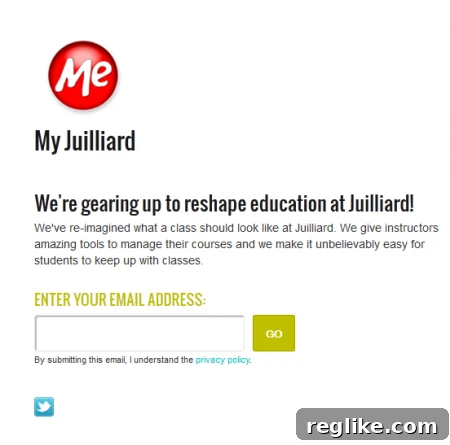
As of the resolution of the dispute, visitors to Juilliard.me would no longer encounter the deceptive offers. Instead, they would typically see a blank page, an error message, or a placeholder indicating the domain has been taken down or is no longer active, as illustrated by the common outcome in such WIPO proceedings:
Understanding WIPO and the UDRP: A Vital Tool for Brand Protection
The Juilliard School’s reliance on the World Intellectual Property Organization (WIPO) and its Uniform Domain-Name Dispute-Resolution Policy (UDRP) is a testament to the effectiveness of these international mechanisms in combating cybersquatting and trademark infringement. WIPO provides an accessible and relatively swift alternative to traditional court litigation, which can be significantly more time-consuming and expensive, especially across international borders where varying legal systems can complicate proceedings.
The UDRP was established by the Internet Corporation for Assigned Names and Numbers (ICANN) to provide a streamlined process for resolving disputes concerning the abusive registration of domain names. It serves as a crucial line of defense for intellectual property rights holders in the ever-expanding digital realm.
How the UDRP Works
Under the UDRP, a complainant (like The Juilliard School) must demonstrate three key elements to succeed in transferring a domain name:
- Identical or Confusingly Similar: The domain name in question (Juilliard.me) must be identical or confusingly similar to a trademark or service mark in which the complainant has rights (e.g., “Juilliard”). The addition of a generic top-level domain (gTLD) like “.me,” “.com,” or “.org” typically doesn’t negate the fundamental similarity to the core brand name, as internet users often overlook these extensions or expect the most prominent part of the domain to be the brand identifier.
- No Rights or Legitimate Interests: The registrant of the domain name must have no rights or legitimate interests in respect of the domain name. This means they are not commonly known by the domain name, have no prior rights to it, are not making a legitimate noncommercial or fair use of the site, and are not using it in connection with a bona fide offering of goods or services. Registering a domain name simply because it contains a famous trademark, without any connection to the trademark holder, usually falls into this category.
- Registered and Used in Bad Faith: The domain name must have been registered and is being used in bad faith. Examples of bad faith include using the domain to intentionally attract internet users for commercial gain by creating confusion with the complainant’s mark, registering the domain primarily to disrupt the business of a competitor, or acquiring the domain primarily for the purpose of selling it to the trademark owner or a competitor for valuable consideration in excess of documented out-of-pocket costs. The fraudulent solicitation of funds under the guise of an established institution is a strong indicator of bad faith use.
In the Juilliard.me case, the use of “Juilliard” in the domain, coupled with the solicitation of “tax-deductible gifts” and offers for “Google Apps for Students at The Juilliard School,” strongly indicated both confusing similarity and bad faith use intended to capitalize on the school’s reputation. The registrant’s failure to respond further solidified these points, paving the way for a successful resolution and the eventual transfer or takedown of the fraudulent site. The efficiency of the UDRP system allowed Juilliard to swiftly reclaim control over its digital identity and protect its stakeholders.
The Broader Implications: Safeguarding Digital Identity and Trust
This incident transcends a single domain dispute; it serves as a powerful reminder of the ongoing battle institutions and individuals face against online fraud and digital identity theft. For an institution of Juilliard’s caliber, protecting its brand isn’t just about legal ownership; it’s about preserving its integrity, preventing financial harm to its supporters, and maintaining the trust of its global community of students, alumni, faculty, and patrons. The digital age has blurred lines, making it easier for malicious actors to mimic legitimate entities, creating a complex challenge for brand reputation management and consumer safety.
Risks for Individuals and Organizations in a Digitally Vulnerable World
- Financial Loss: Individuals making “donations” to fraudulent sites unknowingly contribute to illicit activities and lose their hard-earned money, often without recourse.
- Identity Theft: Websites asking for personal information under false pretenses can lead to severe consequences, including credit fraud, account takeovers, and other forms of identity theft.
- Reputational Damage: Even if the institution isn’t directly involved in the fraudulent scheme, the existence of such sites can sow doubt and erode its hard-earned reputation, potentially impacting future donations, applications, and public perception.
- Diversion of Resources: Institutions must divert valuable resources (legal, IT, communications, and public relations teams) to address these threats, investigate claims, and pursue legal action, taking away from their core mission and operational budget.
- Erosion of Trust: Repeated encounters with fraudulent sites can make the public more skeptical of legitimate online initiatives, making it harder for institutions to engage with their community digitally.
Proactive Measures for a Safer Digital Environment
To mitigate such risks and bolster defenses against online impersonation and fraud, both institutions and individuals must adopt proactive and vigilant measures. These strategies are essential for fostering a secure and trustworthy online ecosystem.
For Educational and Cultural Institutions:
- Vigilant Domain Monitoring: Implement continuous monitoring services to regularly scan for new domain registrations that are identical or confusingly similar to their trademarks. Early detection is key to swift action.
- Register Key Variations: Proactively secure multiple relevant domain name extensions (e.g., .com, .org, .edu, .net, .me, and country-code TLDs if applicable) and common misspellings to preempt cybersquatters and block potential avenues for fraud.
- Educate Stakeholders: Consistently inform students, faculty, staff, alumni, and donors about official communication channels, legitimate donation methods, and how to identify fraudulent websites, phishing attempts, or suspicious solicitations. Create easily accessible resources and guidelines.
- Strong Legal Frameworks: Develop a robust intellectual property strategy and have a legal team prepared to utilize tools like WIPO’s UDRP or national legal systems to enforce trademark rights swiftly and effectively.
- Secure Website Practices: Ensure all official websites use HTTPS (indicated by a padlock icon and “https://” in the URL), display clear and verifiable contact information, and follow best practices for online security, including regular security audits and updates.
- Transparent Communication: Publicly address known instances of fraud or impersonation to inform and protect the community, demonstrating a commitment to their safety.
For Students, Donors, and General Internet Users:
- Verify URLs: Always double-check the URL of any website, especially before entering personal information or making payments. Look for subtle misspellings (e.g., “Julliard” instead of “Juilliard”) or unusual domain extensions that might indicate a fake site. A legitimate institution’s domain will typically be straightforward.
- Look for HTTPS: Ensure the website uses a secure connection, indicated by “https://” in the URL and often a padlock icon in the browser address bar. While HTTPS doesn’t guarantee legitimacy, its absence for a site requesting sensitive information is a major red flag.
- Be Skeptical of Unsolicited Requests: Exercise extreme caution with emails, social media messages, or other communications asking for donations, personal information, or offering exclusive access, especially if they create a sense of urgency or seem “too good to be true.” Phishing attempts often leverage emotional triggers.
- Confirm with Official Sources: If in doubt about a donation request or service offer, bypass the suspicious link. Instead, visit the institution’s official website by typing its known URL directly into your browser or contact them via official phone numbers listed on verified public directories.
- Report Suspicious Activity: Report any suspected fraudulent websites or phishing attempts to relevant authorities (like the FBI’s Internet Crime Complaint Center – IC3 in the US, or local cybercrime units) or the institution itself. Your report can help protect others.
- Use Strong, Unique Passwords: Protect your own accounts across various online platforms with strong, unique passwords and enable two-factor authentication whenever possible.
The Enduring Legacy of The Juilliard School
The Juilliard School stands as a monumental institution, shaping the future of performing arts since its founding in 1905. Located at Lincoln Center in New York City, it offers world-class training in dance, drama, and music to exceptionally talented young artists from around the globe. Its alumni list reads like a who’s who of cultural icons, including celebrated musicians, actors, and dancers who have profoundly influenced the artistic landscape and brought immense joy and inspiration to millions. This rich history and unparalleled influence underscore why the protection of its brand, both online and offline, is not merely a legal formality but a commitment to preserving cultural heritage and ensuring the integrity of its mission to provide the highest caliber of artistic education.
The successful resolution of the Juilliard.me case serves as a clear message: reputable institutions are actively monitoring the digital space and are prepared to defend their intellectual property rights rigorously. This vigilance is crucial not only for the institutions themselves but for the wider public that trusts and supports them, ensuring that legitimate avenues for engagement and contribution remain clear and secure. It reinforces the idea that even in the rapidly evolving digital world, the foundational principles of trust, authenticity, and legal recourse remain vital.
Conclusion: A Call for Digital Vigilance and Robust Protection
The Juilliard School’s proactive stance against the fraudulent Juilliard.me website exemplifies the imperative for robust brand protection in the digital age. As online interactions become increasingly integral to our daily lives, from education and commerce to philanthropy and social connection, the potential for exploitation by malicious actors grows. This case highlights the efficacy of international bodies like WIPO in providing accessible and effective recourse for trademark holders against cybersquatters and those who seek to profit from deception by leveraging established brand equity.
Ultimately, safeguarding digital identities and ensuring the security and authenticity of online transactions is a shared responsibility. For esteemed organizations like Juilliard, it means an unwavering commitment to continuous monitoring, proactive enforcement of intellectual property rights, and diligent education of their community. For internet users, it calls for constant vigilance, critical evaluation of online sources, and an understanding of the mechanisms available to report and combat fraud. By working collaboratively and leveraging available legal tools, we can collectively strive to create a safer, more trustworthy digital environment for education, philanthropy, artistic expression, and all forms of legitimate online engagement.