
Bill Clinton’s Domain Name Challenge: A Deep Dive into UDRP and Digital Brand Protection
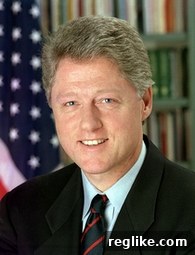
In an era where digital identity is paramount, even the most prominent public figures are not immune to the complexities of domain name disputes. Former United States President Bill Clinton recently found himself in such a predicament, challenging the registration of three domain names bearing his name. Despite his formidable track record of political victories, he was unable to persuade an arbitrator to grant him rights to williamclinton.com, williamjclinton.com, and presidentbillclinton.com.
This case serves as a compelling illustration of the Uniform Domain-Name Dispute-Resolution Policy (UDRP), highlighting its intricate requirements and the high bar for proving specific elements, particularly “bad faith.” The decision underscores the fine line between legitimate political expression and trademark infringement in the digital realm.
Understanding the Uniform Domain-Name Dispute-Resolution Policy (UDRP)
The UDRP is an international system established by the Internet Corporation for Assigned Names and Numbers (ICANN) to provide a streamlined, administrative process for resolving domain name disputes without requiring costly and time-consuming litigation. It is a crucial tool for trademark owners seeking to combat cybersquatting – the abusive registration of domain names that exploit existing brand recognition.
To succeed in a UDRP complaint, a complainant, such as Bill Clinton in this instance, must prove three cumulative elements:
- The domain name is identical or confusingly similar to a trademark or service mark in which the complainant has rights.
- The registrant (often referred to as the respondent) has no rights or legitimate interests in respect of the domain name.
- The domain name has been registered and is being used in bad faith.
Failure to prove any one of these three elements is fatal to a UDRP complaint, regardless of the perceived impropriety of the domain name registration or use.
The Parties and the Dispute
The domain names in question – williamclinton.com, williamjclinton.com, and presidentbillclinton.com – were registered by an entity known as “Web of Deception.” A significant detail in the case was the allegation that these domain names were forwarded to the Republican National Committee’s (RNC) official website. This action immediately introduced a political dimension to what would otherwise be a standard trademark dispute, adding layers of complexity to the assessment of “legitimate interests” and “bad faith.”
Element 1: Confusing Similarity to Common Law Marks
The first hurdle for Bill Clinton was to demonstrate that the domain names were identical or confusingly similar to a mark in which he held rights. While Bill Clinton might not possess a registered trademark for “Bill Clinton” in the conventional commercial sense, individuals, especially prominent public figures, can establish “common law” trademark rights in their names. These rights arise from consistent and widespread public association of the name with the individual’s identity, reputation, or public persona, effectively functioning as a source identifier.
In this case, the arbitrator readily agreed that the domain names were “confusingly similar” to Bill Clinton’s common law marks. Given his global recognition, the variations incorporating his full name (William Clinton, William J. Clinton) and his former title (President Bill Clinton) clearly fall within the scope of confusing similarity. This part of the complaint was straightforward and successfully established.
Element 2: Lack of Rights or Legitimate Interests
The second UDRP element requires the complainant to show that the registrant has no legitimate rights or interests in the domain names. Under UDRP policy, legitimate interests can arise in various ways, such as using the name in connection with a bona fide offering of goods or services, being commonly known by the domain name, or making a legitimate non-commercial or fair use of the domain name without intent for commercial gain or misleading consumers.
In the Clinton case, the arbitrator determined that the respondent, “Web of Deception,” did not demonstrate a bona fide use of the domain names. Merely forwarding a domain name to another website, especially without any accompanying content or context on the domain itself, is generally insufficient to establish legitimate interests. The arbitrator explicitly noted that the respondent “didn’t even bother to set up a critical site or parody.” This suggests that had the domains hosted content that genuinely constituted fair use, such as a commentary site or a satirical portal, the outcome on this element might have been different. However, the simple redirection without any explanatory content fell short of establishing legitimate rights or interests.
Element 3: The Challenge of Proving “Bad Faith”
The most crucial and often the most challenging element to prove in UDRP cases is “bad faith.” The UDRP policy provides specific examples of what constitutes evidence of registration and use in bad faith (UDRP Paragraph 4(b)), although these examples are not exhaustive:
- Registering primarily for the purpose of selling, renting, or transferring the domain name to the trademark owner or a competitor for valuable consideration in excess of documented out-of-pocket costs.
- Registering the domain name to prevent the owner of the trademark or service mark from reflecting the mark in a corresponding domain name, provided there is a pattern of such conduct.
- Registering primarily for the purpose of disrupting the business of a competitor.
- Intentionally attempting to attract, for commercial gain, Internet users to your website or other online location, by creating a likelihood of confusion with the complainant’s mark as to the source, sponsorship, affiliation, or endorsement of your website or location or of a product or service on your website or location.
Despite the domain names being confusingly similar and the respondent lacking legitimate interests, the arbitrator ultimately found no evidence of bad faith. This finding was the deciding factor in Bill Clinton’s loss. The arbitrator’s rationale, as quoted in the original report, was precise:
The Panelist simply cannot find bad faith in this case. None of the elements of bad faith are met. The Respondent’s conduct in registering, acquiring and utilizing these domain names is simply not within the UDRP definition of bad faith. The facts alleged by Complainant are simply unpersuasive. Evidence of bad faith (i) requires a showing that the names were registered or acquired for the purpose of selling or transferring the name to the mark holder; (ii) in order to prevent the mark holder from registering the domain; (iii) to disrupt a competitor’s business; or (iv) to attract Internet users by confusing them. The only one of these that could possibly apply is (ii), which requires a showing of a pattern of conduct. While Respondent’s conduct in registering the names of politicians does reflect a pattern, Respondent has adequately rebutted any inference of bad faith.
This excerpt is critical. While the forwarding to the Republican National Committee’s website might seem inherently “bad” in a general sense, or even politically motivated, the UDRP mandates a very specific definition of bad faith. The arbitrator carefully examined the four UDRP bad faith criteria and found that none were adequately met. Specifically, regarding the “pattern of conduct” to prevent the mark holder (element ii), the panelist acknowledged that the respondent *did* show a pattern of registering names of politicians. However, the respondent successfully “rebutted any inference of bad faith,” meaning they likely presented arguments or evidence that their actions, while perhaps provocative, did not meet the specific legal intent of preventing Bill Clinton from registering the domains for *commercial* purposes or within the UDRP’s defined scope.
This highlights a key distinction: general objectionable behavior or political trolling does not automatically equate to “bad faith” as defined by the UDRP. The policy is primarily designed to combat commercial cybersquatting and brand exploitation, not necessarily to regulate all forms of critical or politically-motivated domain name registration, provided they do not infringe upon the complainant’s rights as defined by the UDRP framework.
The “Republican Confusion” Argument
An interesting and somewhat “amusing” argument presented by Bill Clinton’s team was the suggestion that internet users might be confused into thinking he had become a Republican due to the domain forwarding. The complaint cited Senator Arlen Specter’s defection from the Republican to the Democratic party as an example of political shifts that could lead to such (mis)understandings.
In fact, Complainant suggests in its Additional Submission that an Internet user might be confused and think that former President Clinton had become a Republican. After all, says Complainant, Senator Arlen Spector recently left the Republican Party and became a Democrat.
While this argument attempts to touch upon the “attracting users by confusing them” element of bad faith (UDRP 4(b)(iv)), it generally struggles to meet the policy’s commercial intent. The UDRP typically looks for confusion regarding commercial sponsorship, affiliation, or endorsement of goods or services. Political statements or potential confusion about a politician’s party affiliation, while potentially misleading, do not neatly fit into the commercial-centric framework of UDRP’s bad faith definition unless there’s an underlying commercial gain being sought through that confusion.
Arbitrator Discretion and Case Variability
The original article astutely observed that “This case was truly a roll of the dice. Run this case through multiple panelists and you would get varying answers.” This statement reflects an important reality of UDRP proceedings. While the policy provides a clear framework, its application often involves a degree of subjective interpretation by individual panelists regarding the specific facts presented. Different arbitrators might weigh evidence differently, particularly concerning the nuanced definition of “bad faith” and what constitutes an adequate rebuttal of an inference of bad faith.
Factors such as the specific arguments made by both parties, the quality of evidence presented, and a panelist’s individual interpretation of precedent can all contribute to variations in outcomes across seemingly similar cases. This highlights the importance of meticulous preparation and strategic argumentation for both complainants and respondents in UDRP disputes. The outcome underscores that simply having a famous name is not enough; one must convincingly demonstrate that all three UDRP criteria, especially bad faith, have been met according to the policy’s strict definitions.
Implications and Takeaways for Digital Brand Protection
Bill Clinton’s lost domain challenge offers several key takeaways for individuals and brand owners navigating the digital landscape:
- Proactive Registration is Key: The most effective way to prevent domain disputes involving your name or brand is to proactively register relevant domain names across various top-level domains (TLDs) before others do.
- UDRP’s Strict Bad Faith Definition: Understand that “bad faith” under UDRP is a legal term with specific definitions, often centered around commercial intent and exploitation, and not merely general objectionable behavior or political expression.
- The Importance of All Three Elements: A UDRP complaint fails if even one of the three required elements cannot be proven. Complainants must build a strong case for each one.
- Challenges in Non-Commercial Disputes: Cases involving public figures or political domains, where direct commercial gain might not be evident, can be particularly challenging under UDRP’s existing framework.
- Documentation is Crucial: Both parties must meticulously document their claims, evidence, and rebuttals to sway the arbitrator’s decision.
Ultimately, while Bill Clinton’s inability to secure these domain names might be surprising given his public stature, the decision serves as a powerful reminder of the precise, often technical, nature of online brand protection mechanisms like the UDRP. It reinforces that winning a domain dispute requires more than just a famous name; it demands a clear alignment of facts with the policy’s rigorous requirements, especially when it comes to proving the contentious element of “bad faith.” The digital realm continues to present unique challenges, requiring a sophisticated understanding of both law and technology to navigate successfully.