
The landscape of domain names is perpetually dynamic, with strategic shifts by major registries often sending significant ripples across the entire ecosystem. Recently, Uniregistry, a prominent and influential operator overseeing numerous new Top-Level Domains (nTLDs), announced a series of substantial price adjustments for several of its offerings. This strategic move, particularly targeting vertical TLDs characterized by lower registration volumes, has ignited extensive discussion and meticulous analysis among domain industry professionals, long-term investors, and individual registrants alike. To gain a clearer, more granular understanding of the potential far-reaching implications of such a monumental change, we embarked on an intensive, in-depth investigation into one of these highly specialized domain extensions: .guitars.
 Uniregistry’s decision to significantly increase the renewal prices of several top-level domain names under its management marks a pivotal strategic shift in its approach to ensuring the profitability and long-term sustainability of niche TLDs. This change is particularly pronounced in categories such as .guitars, where the annual retail price is slated to quintuple, soaring from an initially accessible range of approximately $20-$30 to a considerably higher threshold of $100 or even exceeding that figure. Such an aggressive and sudden price hike inevitably raises critical questions regarding the overall sustainability, future growth trajectory, and market acceptance of these highly specialized domain extensions.
The Strategic Rationale: Understanding Uniregistry’s Stance
As articulated by Uniregistry founder Frank Schilling, these substantial price increases are presented as an essential, perhaps even inevitable, measure required to ensure the financial viability and enduring profitability of domain strings like .guitars. The unique economics inherent in operating new gTLDs, particularly those catering to smaller, more specialized user bases, present a distinct set of operational and financial challenges. Registries, by their very nature, are burdened with fixed annual fees, the most significant of which is the mandatory $25,000 charge levied by ICANN (the Internet Corporation for Assigned Names and Numbers). This fee must be paid regardless of the number of active registrations within a given TLD.
For a niche TLD such as .guitars, which currently maintains a relatively modest number of active registrations, covering these substantial foundational costs demands a considerably higher per-domain revenue. Indeed, .guitars presently occupies a very small footprint within the expansive global domain name landscape. When the zone file was meticulously downloaded for the purpose of this analytical study earlier in the week, it contained a mere 1,546 names. While other respected public statistics platforms, such as nTLD stats, indicate a slightly elevated figure of 1,851 total registrations, the overarching volume unequivocally remains quite low.
To put this into sharper financial perspective, even assuming a modest wholesale price of $15 per domain, .guitars would barely generate sufficient aggregate revenue to adequately cover the critical $25,000 annual ICANN fee. This calculation doesn’t even begin to account for a myriad of other essential operational expenditures, which include crucial aspects like marketing initiatives, maintaining robust technical infrastructure, and supporting a dedicated staff. This undeniable financial reality serves to underscore the registry’s powerful motivation to fundamentally re-evaluate and adjust its pricing strategy. The clear objective is to transition towards a more sustainable model where a higher per-domain revenue, derived from a more committed and value-driven user base, can effectively sustain the entire TLD operation and foster its long-term growth.
Methodology: A Deep Dive into the .Guitars Ecosystem
To truly comprehend the potential magnitude of Uniregistry’s price adjustments, it was paramount to transcend mere statistical figures and delve deeply into the granular composition of the .guitars zone. Our primary objective was to meticulously identify and categorize the diverse types of registrants currently utilizing this niche TLD. This approach moved beyond simple quantitative data, aiming instead to uncover the real-world applications, underlying motivations, and varying levels of commitment behind these registrations. Over a concentrated period of 24 hours, an exhaustive manual review was meticulously conducted on nearly 1,000 .guitars domains. Each domain was individually examined to ascertain its specific usage pattern and to identify the nature of its owner. This hands-on, detail-oriented investigative approach proved invaluable, providing nuanced insights that automated analytics tools frequently miss.
From the initial pool of 1,546 names discovered within the zone file, the first critical step involved a comprehensive cleanup and filtering process. A total of 117 domains were distinctly identified as being registered directly by the registry itself. These domains are typically reserved for internal testing, strategic future premium releases, or other operational purposes. For the integrity of our primary analysis, these were intentionally excluded, allowing us to focus exclusively on third-party registrants and their genuine usage patterns. Furthermore, an additional 13 domains were observed to be resolving directly to expiration pages or were configured to use nameservers explicitly associated with the expiration process, clearly indicating they were in the final stages of being dropped from the registry. While it is highly probable that a greater number of domains were in various preceding phases of expiration, only those exhibiting clear and unambiguous signs of impending deletion were removed for the scope of this study.
Following these essential exclusions and meticulous data refinement, a robust core dataset comprising 1,416 third-party domain names remained. This purified dataset served as the solid foundation for our subsequent detailed categorization and in-depth analytical assessment, ensuring that the findings accurately reflected the genuine, active, and potentially active third-party utilization of the .guitars TLD.
Deconstructing Registrant Categories: Who Are the .Guitars Domain Owners?
1. Dedicated End Users: The Vibrant Core of the .Guitars Community
Among the 1,416 actively managed third-party domains, our analysis definitively identified at least 393 that were unmistakably attributed to “end users.” Within the context of this study, end users are defined as individuals, businesses, or organizations possessing a direct, logical, and often deeply passionate connection to the expansive world of guitars. This incredibly diverse group spans a wide spectrum, encompassing everything from long-established and renowned guitar manufacturers, highly skilled independent luthiers, and specialized instrument retailers, to dedicated guitar instructors, emerging and seasoned professional musicians, specialized sheet music publishers, music academies, and even enthusiastic hobbyists deeply embedded within the global guitar community. For these specific registrants, a .guitars domain offers far more than just an address; it provides a highly relevant, instantly recognizable, and exceptionally memorable online identity that immediately communicates their specialization and passion.
A more granular breakdown of these end-user domains revealed distinct patterns of active engagement:
- Active Websites (140 domains): A significant and encouraging portion, precisely 140 domains, were found to be resolving to fully operational, dedicated, and often highly professional websites hosted directly on the .guitars TLD. These digital presences frequently showcased comprehensive instrument catalogs, cutting-edge online guitar lesson platforms, intricate musician portfolios, vibrant community forums, or specialized review sites. While it is inherently challenging to ascertain with absolute certainty that none of these might be merely duplicate content or framed versions of existing sites on alternative TLDs, a substantial majority underwent rigorous checks and appeared to represent unique, value-adding contributions to the online guitar landscape. These registrants clearly represent the most committed segment, actively leveraging their niche domain for their primary, often business-critical, online presence.
- Forwarded Domains (157 domains): Another considerable segment, comprising 157 domains, was observed to be forwarding web traffic seamlessly to websites hosted on other, more established TLDs, predominantly .com or various country-code TLDs (ccTLDs). This particular strategy often points towards a defensive registration, where the registrant strategically aims to secure their brand’s presence within the specialized .guitars namespace while concurrently directing visitors to their already established and primary online portal. This approach can also signify an experimental phase, an additional branding channel, or a long-term placeholder.
- Unresolved or Registrar Holding Pages (96 domains): The remaining 96 end-user domains either failed to resolve to any active web content whatsoever or pointed to a generic, default registrar holding page. This category typically suggests a lack of immediate development, a “set it and forget it” approach where the domain is held for potential future use, or simply remains as an undeclared placeholder. This segment indicates less immediate commitment to developing an active online presence.
It is crucial to acknowledge that while our meticulous manual identification process was thorough and comprehensive, it is highly probable that an even greater number of genuine end-users have registered .guitars domain names. However, their specific connection or intended use may not have been immediately discernible due to a lack of resolution or generic content on their domains. Nevertheless, for the purpose of this study, none of these additional, less identifiable domains were found to be actively resolving or forwarding to a functional website beyond a registrar’s default page. Consequently, the definitive count of demonstrably active websites hosted directly on the .guitars TLD stood at 140.
By synergistically combining these 140 live websites with the 157 forwarded domains, we arrive at an approximate total of 300 “active” .guitars domains currently utilized by their specific target audience. This robust figure clearly signifies a core group of users who perceive tangible, enduring value in this unique domain extension, whether it’s for direct brand building, targeted marketing, or essential protective measures.
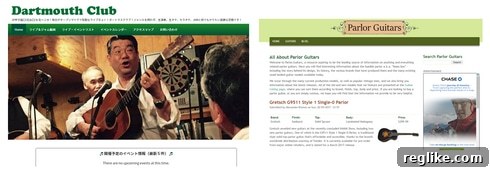
As predicted, a diverse and vibrant array of registrants has wholeheartedly embraced the .guitars TLD. This includes numerous well-established guitar manufacturers and specialized music stores, who proudly feature their extensive product offerings and services on dedicated .guitars websites. Compelling examples such as Rocha.guitars and Jacaranda.guitars vividly demonstrate how businesses are skillfully crafting distinctive and memorable brand identities within this highly specialized domain space, directly appealing to their target demographic.

Beyond these larger commercial entities, a significant and often more numerous majority of the active sites we observed belong to independent musicians, dedicated guitar teachers, bespoke instrument repair shops, custom guitar builders, and other passionate hobbyists deeply embedded in the guitar community. These individuals and smaller, often artisan businesses frequently leverage the .guitars domain to establish a clear, concise, and incredibly memorable online presence that resonates profoundly with their niche audience. Dartmouth.guitars, potentially a university music program, and Parlor.guitars, perhaps a vintage guitar dealer or boutique shop, serve as quintessential examples of how this specialized TLD effectively empowers unique communities and individual endeavors within the vast and multifaceted world of guitars.
2. Defensive Registrations: Safeguarding Brand Identity in a Digital World
While many of the end-user domains categorized as either forwarded or unresolved could arguably be considered a form of defensive purchase, there exists a distinct and specific category of defensive registrations: those initiated by major brands that appear to have no immediate or direct operational connection to guitars or the broader music industry. These registrations are typically strategic and forward-looking moves, meticulously executed to protect a brand’s invaluable intellectual property and to proactively prevent any potential misuse, unauthorized squatting, or brand dilution across the rapidly expanding and evolving landscape of new gTLDs.
Our detailed analysis successfully identified at least 101 domains that unequivocally fall into this particular category. Prominent and illustrative examples include high-profile names such as TDameritrade.guitars and Twitter.guitars, which powerfully demonstrate how globally recognized corporations strategically extend their brand protection efforts even into highly specialized and seemingly unrelated TLDs. It is highly plausible, if not probable, that the actual number of such defensive registrations is considerably higher, as some smaller or less globally recognized brands may have also engaged in similar protective registrations, which were not immediately apparent or easily identifiable during our extensive review process.
The underlying rationale driving such widespread defensive registrations is inherently multifaceted. Brands are primarily motivated to prevent unauthorized third parties from registering their established name in conjunction with a potentially misleading, undesirable, or even damaging context, thereby striving to maintain absolute control over their comprehensive online presence and brand narrative. For larger, multinational entities, the comparatively modest cost associated with a few additional defensive domain registrations is often considered a negligible operational expense when weighed against the potentially colossal damage of brand dilution, reputational harm, or costly legal battles to reclaim intellectual property. However, in light of the significant and unexpected price increases, these established defensive strategies will undoubtedly undergo a rigorous re-evaluation. Brands will be compelled to carefully weigh the escalating cost of maintaining these protective registrations against the perceived residual risk of not having them, a process that could potentially lead to a rationalization and streamlining of their extensive domain portfolios.
3. Domain Investors: Speculation and Strategy in the Niche Domain Market
The dynamic domain name market has historically attracted a diverse array of investors, ranging from seasoned professionals to burgeoning newcomers, and the emergence of new gTLDs has proven to be no exception. Our comprehensive study revealed that at least 216 .guitars domains are currently held by dedicated domain investors. This specific category rigorously includes any domain that reliably resolves to a recognized parking page (e.g., SedoParking.com, UniregistryMarket.net), an aftermarket nameserver service, or a clearly designated “domain for sale” landing page. It is critically important to differentiate these actively invested domains from generic registrar holding pages, which typically do not signify an active investment intent or an ongoing monetization strategy.
Domain investors operating within the .guitars niche likely acquired these domains with a clear anticipation of future appreciation, fervently hoping to eventually sell them at a substantial profit to a relevant end-user, or to develop them into monetized micro-sites or lead-generation platforms. Their investment strategies frequently involve the acquisition of keyword-rich, highly brandable, or inherently descriptive names within a specific niche TLD. However, the ultimate success and profitability of such speculative investments are intrinsically reliant on striking a delicate balance between the initial acquisition and ongoing renewal costs, and the eventual potential selling prices. A dramatic and sudden price hike, such as the one recently implemented by Uniregistry, fundamentally alters this delicate economic equation. Investors will now be compelled to scrutinize their portfolios with renewed intensity, ruthlessly prioritizing only the most promising and highest-potential assets, and very likely allowing those with lower perceived value or prohibitively higher holding costs to expire.
4. The Uncategorized “Other Half”: Elusive Usage and Dormant Potential
A substantial and intriguing portion of the remaining domains, precisely 706, could not be definitively categorized based on their apparent owner type or discernible usage. This significant “other half” represents a considerable segment of the .guitars TLD that presents a more ambiguous and less clear picture of active engagement.
Many of these domains appear to be held by small-time speculators or individual registrants who, perhaps on an impulse or with a nascent idea, registered a few .guitars domains but have not subsequently chosen to actively park them with conventional domain parking companies, nor have they developed them into any discernible or functional websites. Their underlying motivations could span a broad spectrum, ranging from purely speculative interest to personal projects that have yet to fully materialize or launch. Others within this group could genuinely be end users whose specific names or intended uses were not immediately obvious or discoverable through our meticulous manual review, perhaps due to the use of generic registration data, a lack of public-facing development, or simply a prolonged period of dormancy.
Crucially, regardless of their potential ownership types or initial intentions, none of these 706 domain names were found to be actively used in any recognizable or value-generating capacity. They did not resolve to live, functional websites, forward seamlessly to other online properties, or explicitly point to clear “for sale” pages indicating an active investment. This significant number of unused domains starkly highlights a persistent challenge for the registry: the ongoing imperative to translate mere registrations into active, value-generating online presences that can genuinely justify escalating ongoing renewal fees and contribute meaningfully to the TLD’s overall ecosystem and perceived utility.
The Impact of the Price Hike: A Tipping Point for Renewal Decisions?
The pivotal question now confronting registrants and the wider domain community is stark and inescapable: how many of these existing .guitars domain owners will genuinely be willing to commit to paying $100 or more annually for their domains? The comprehensive answer to this complex and multi-layered question will not fully materialize for another year or two, as individual renewal dates gradually come due. However, we can construct plausible scenarios and forecast likely behaviors for each distinct registrant type.
Domain Investors: This group is arguably the most acutely sensitive to price increases. Many investors operate within meticulously calculated, often razor-thin margins, and a sudden quintupling of renewal fees will undeniably trigger a significant and systematic pruning of their portfolios. Only the most premium, demonstrably valuable, highly sought-after, or strategically important .guitars domains will likely be deemed worthy of retention, while a substantial number of others will be unceremoniously allowed to expire. This inevitable market adjustment could potentially flood the aftermarket with previously held “investor” domains, thereby creating a more challenging environment for individual investors seeking favorable returns on their remaining assets.
Dedicated End Users (Active Websites): For the 140 end users who have painstakingly developed and maintain fully functional websites on their .guitars domains, the renewal decision will be considerably more nuanced. Those for whom .guitars is an absolutely integral component of their core brand identity or fundamental business operation may reluctantly absorb the increased cost, rationalizing it as a necessary, albeit unwelcome, expense for maintaining their established online presence. However, even among this highly committed cohort, some, particularly smaller businesses, independent artists, or individual musicians operating with constrained budgets, may find the new price point genuinely prohibitive. They might be compelled to consider the arduous and potentially costly process of migrating to a .com, .net, or a more affordable alternative, albeit recognizing the inherent costs and effort associated with re-branding and the potential setbacks to their hard-earned SEO rankings.
End Users (Forwarded or Unresolved): This specific segment presents an even greater degree of uncertainty. For those who utilize forwarded domains, the defensive strategy might suddenly become economically untenable if the perceived brand value within a niche TLD does not sufficiently justify the escalated cost. Domains that remain unresolved, often purchased speculatively or designated for long-dormant projects, are highly unlikely to be renewed at the significantly increased price point. The once-common “set it and forget it” mentality quickly morphs into an economically unfeasible approach when the annual cost jumps to $100 or more.
Defensive Registrations: Large, well-capitalized corporations engaging in defensive registrations typically command substantial annual budgets. For such entities, an annual fee of $100 per domain might still be considered a justifiable and minor cost for comprehensive brand protection, particularly for globally recognized trademarks. However, even these sophisticated organizations rigorously perform cost-benefit analyses, and a significant price increase could very well prompt a strategic review of whether every single niche TLD necessitates defensive registration. Smaller brands that initially adopted a similar protective strategy might, regrettably, find themselves financially compelled to drop these registrations.
A crucial “wildcard” that could significantly influence this unfolding scenario is Uniregistry founder Frank Schilling’s prior indication that he might consider applying discounts to the newly announced prices. Should renewal prices indeed be set significantly lower than the projected $100 for the initial year or two, it could substantially cushion the financial blow and potentially encourage a higher overall renewal rate. Nevertheless, registrants will require absolute clarity and transparency regarding the longevity and precise structure of any such potential discounts to enable them to make truly informed and sustainable long-term decisions concerning their domain portfolios.
The Economics of Niche TLDs: Balancing Volume with Value
From Uniregistry’s strategic vantage point, the announced price increase is far more than a simple revenue grab; it represents a deliberate and profound re-calibration of their entire business model for low-volume TLDs. The registry’s financial calculation is remarkably straightforward: if approximately one-fifth (or 20%) of its existing registrants remain loyal and commit to paying the newly adjusted price, the price increase becomes financially viable, enabling them to comfortably cover their fixed operational costs and potentially generate a healthy profit. Uniregistry is clearly making a calculated bet on the steadfast loyalty of a significant proportion of its registrants — particularly the highly committed end users and brand protectionists — to endure the change. For certain market segments, this gamble is likely a well-informed one.
For example, well-established brands that utilize .guitars defensively might not “blink an eye” at the increased annual fee, perceiving it as a comparatively minor cost for maintaining robust and comprehensive brand control. Similarly, small businesses or individual professionals who have made a substantial investment in developing their .guitars website and carefully cultivating their brand identity will find it exceptionally challenging and economically arduous to abandon it. For them, renewal, even at a higher price point, often becomes the more pragmatic and less disruptive option.
Furthermore, this audacious price adjustment strategy is also designed to strategically “unlock” premium domain inventory that was previously priced prohibitively high. Many valuable, short, or highly descriptive .guitars domains that were once held at extremely elevated premium prices might now become readily available at the new standard $100 annual registration fee. This potential influx of newly accessible premium names could effectively stimulate fresh demand from a new wave of registrants who previously found the original premium pricing structure prohibitive, thereby injecting renewed vigor and fresh registrations into the TLD’s ecosystem.
To further elucidate the often-divergent economic models prevalent in the nTLD space, consider a compelling and illustrative comparison between Uniregistry’s .game TLD and Rightside’s .games TLD:
- .game (Uniregistry): This particular TLD operates with a relatively low registration volume, currently boasting approximately 2,500 registered names. Its pricing strategy, mirroring that of .guitars, is deliberately positioned at a premium, often commanding a price 10 to 20 times higher than its counterpart, .games.
- .games (Rightside): In stark contrast, .games has successfully achieved a much higher registration volume, proudly exceeding 10,000 active registrations. Its pricing strategy is unequivocally volume-driven, characterized by significantly lower annual fees designed to encourage widespread adoption.
The fundamental question of “who is making more money?” becomes inherently complex and multi-layered. Uniregistry’s strategic approach with .game (and now extending to .guitars) embodies a “high-value, low-volume” philosophy, specifically aiming for higher profit margins per individual domain. They fundamentally rely on the perceived premium nature and inherent exclusivity of the domain to justify the elevated cost, meticulously targeting a smaller, more affluent, or intensely committed user base. Rightside, conversely, with its .games TLD, exemplifies a quintessential “low-value, high-volume” approach, striving to maximize total revenue through broad market adoption and widespread accessibility, even if it entails accepting lower per-domain returns.
Each of these distinct models possesses its own inherent merits and unique risks. The premium model, while holding the potential to generate substantial revenue from fewer registrations, simultaneously runs the considerable risk of alienating price-sensitive buyers and inadvertently stifling organic, grassroots growth. The volume model, while highly effective in encouraging widespread adoption, necessitates colossal marketing investments and can often lead to fierce competition and reduced profitability at lower price points. Uniregistry’s decisive move with .guitars unequivocally signals a strong and unwavering commitment to the premium, value-driven model. The registry firmly believes that a higher price point will ultimately cultivate a healthier, more dedicated, and ultimately more profitable TLD ecosystem, even if this strategic shift necessitates the shedding of some of the less committed or price-sensitive registrants in the process.
The ultimate outcome of this bold and potentially transformative pricing strategy will undoubtedly serve as an invaluable and crucial case study for the entire nTLD industry. It will provide profound insights into whether a higher-price, lower-volume approach can genuinely and sustainably drive long-term profitability and successfully foster a robust, dedicated, and thriving community around highly specialized niche domain extensions.