
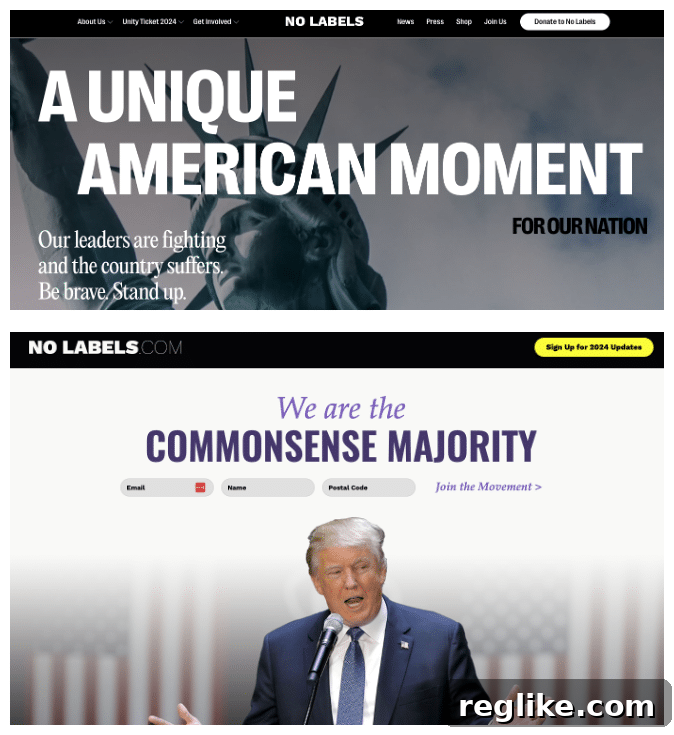
Navigating the Digital Minefield: No Labels Battles Deceptive NoLabels.com in Critical Domain Dispute
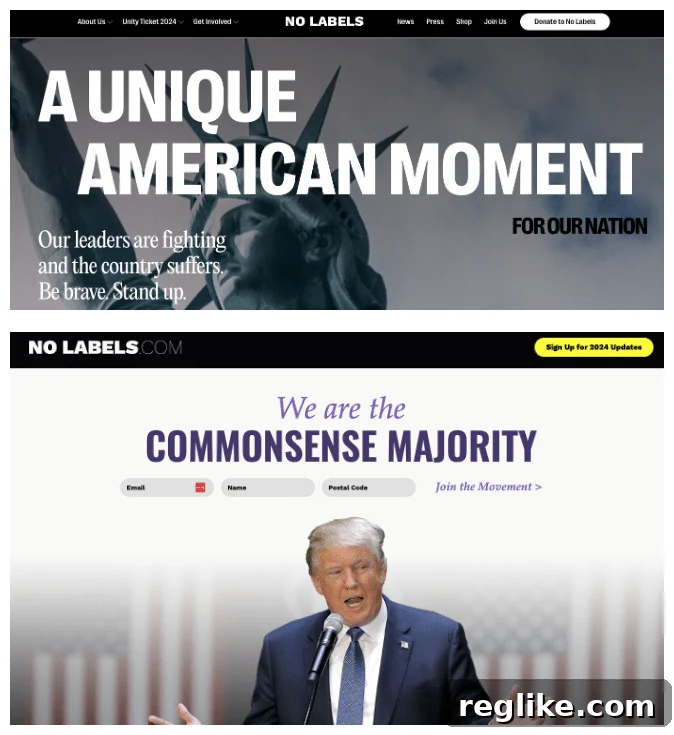
In an era where digital identity is paramount and political discourse often fraught with misinformation, a significant legal battle has unfolded between the centrist U.S. political organization No Labels and a newly formed entity operating under the confusingly similar domain, NoLabels.com. This dispute highlights the critical importance of online branding, domain integrity, and the potential for digital deception to impact political movements and voter perception.
No Labels, known for its mission to foster a more unified political culture and promote common-sense solutions, has taken assertive action, filing a comprehensive lawsuit against NoLabels.com, Inc. The core of the complaint centers on allegations that NoLabels.com is intentionally mimicking the political party’s identity to mislead the public, exploit its established brand, and potentially undermine its objectives. This case serves as a stark reminder of the sophisticated tactics employed to sow confusion in the digital realm, especially within the sensitive landscape of political activism.
The Genesis of a Movement: Understanding No Labels’ Mission
The No Labels political party emerged with a clear and ambitious vision: to bridge the growing partisan divide in American politics. Positioned as a centrist organization, it advocates for pragmatic solutions and bipartisan cooperation, actively seeking to move beyond the entrenched ideological battles that often paralyze Washington. Their stated goal is to build a “Common Sense” legislative agenda and, notably, to potentially field a “Unity Ticket” for the upcoming presidential election, offering voters an alternative to the traditional two-party system. This aspiration inherently relies on clear communication, an unambiguous public image, and the ability to distinguish itself from the political noise.
For an organization like No Labels, which aims to attract a broad spectrum of disaffected voters, clarity and trust are non-negotiable. Their official digital home, nolabels.ORG, serves as the primary conduit for disseminating their message, recruiting volunteers, and soliciting donations. The “.org” domain suffix traditionally signifies a non-profit organization, aligning perfectly with No Labels’ non-partisan, public-service-oriented mission. Any attempt to dilute or misdirect this online presence poses a direct threat to their foundational principles and operational efficacy.
The Confusing Counterpart: Deconstructing NoLabels.com
The defendant in this lawsuit, NoLabels.com, Inc., is a recently incorporated entity that acquired the nolabels.COM domain name earlier this year. The timing of this acquisition, coinciding with No Labels’ increasing national prominence, raises immediate questions about intent. The “.com” domain, typically associated with commercial enterprises, immediately creates a subtle but significant distinction from the “.org” used by the political party. However, for the average internet user, the distinction can be easily overlooked, leading to significant confusion.
Upon visiting nolabels.COM, the deceptive nature of the site becomes apparent. While it incorporates certain design elements and language that resonate with the official No Labels’ messaging, it simultaneously features content that stands in direct opposition to the political party’s stated positions and goals. This calculated ambiguity is particularly insidious. It’s not a straightforward parody site, which would likely be protected under free speech principles. Instead, it presents a confusing amalgamation of genuine-sounding rhetoric interspersed with contradictory material, creating a potent tool for public deception. Further evidence of malicious intent comes from the revelation that NoLabels.com, Inc. has actively purchased Google Ads, strategically driving traffic to its website, capitalizing on search queries intended for the legitimate No Labels organization.
One of the most striking examples of this deliberate misinformation is the prominent display of images of candidates whom No Labels explicitly opposes or is not supporting for its potential Unity Ticket. For instance, the site features a large photograph of former President Donald Trump on its landing page, a figure whom the centrist party would likely oppose given its mission to unite the country beyond partisan extremes. Additionally, the website includes an image of Tyson Draper, falsely labeled as a “No Labels U.S. Senate Candidate.” Such assertions are not merely misleading; they are actively designed to misrepresent the party’s affiliations and endorsements, thereby confusing potential voters and donors.
The Legal Battle Unfolds: Allegations of Trademark Infringement
In its lawsuit, No Labels asserts a strong case for trademark infringement and unfair competition. The organization emphasizes that its objection is not aimed at stifling free speech or legitimate political commentary. Indeed, No Labels’ official website encourages “robust debate on the many issues confronting our country” and acknowledges that “politics is often rough and tumble.” However, the lawsuit draws a clear line between legitimate critique and intentional deception aimed at exploiting a registered trademark and confusing the public.
The legal document articulates this distinction with precision:
To be clear, No Labels does not object to third parties referencing No Labels when commenting on No Labels’ positions or candidates. Nor does No Labels seek to stifle free political discussion or competing points of view. Indeed, No Labels’ own website encourages “robust debate on the many issues confronting our country” and the organization “understand[s] that politics is often rough and tumble.”
What Defendant cannot do, however, is use the No Labels Registered Trademark, and language and imagery evocative of the legitimate No Labels Website, to attract Internet traffic to an Infringing Website that is designed to mislead and confuse the public, including voters and donors, in order to harm No Labels.
This statement underscores the core legal argument: while political discourse is broad, the deliberate use of a trademark, coupled with confusing imagery and content, to misdirect the public constitutes a clear violation of legal and ethical boundaries. The lawsuit further elaborates on the specific instances of misrepresentation:
Although No Labels’ objection to Defendant’s Infringing Website is not based on the specific candidates currently displayed on the Infringing Website—indeed, No Labels would object to candidates from either end of the political spectrum being falsely associated with No Labels – the Infringing Website includes candidates that No Labels is explicitly not supporting.
Specifically, the Infringing Website prominently features a large photograph of former President Donald Trump on its landing page. The Infringing Website also includes a photograph of Tyson Draper, with a caption falsely describing Mr. Draper as a “No Labels U.S. Senate Candidate.”
These specific examples are crucial for demonstrating the actionable harm and the calculated intent behind the NoLabels.com website. By associating the party with figures it doesn’t endorse, the infringing site risks alienating potential supporters, confusing voters about its actual platform, and eroding the trust it has meticulously worked to build. This deliberate association with opposing figures undermines the very essence of the “Unity Ticket” concept that No Labels is working towards.
The Critical Importance of Domain Names in Modern Politics
This case vividly illustrates the immense value and vulnerability of domain names in the digital age, particularly for political entities. A domain name is often the first point of contact between an organization and its audience. It acts as a digital storefront, a brand identifier, and a gateway to information. For a political party, a clear, unambiguous domain name is essential for direct communication with constituents, fundraising, and mobilization efforts.
The distinction between a “.org” and a “.com” domain, while seemingly minor, holds significant weight in user perception. Historically, “.org” has been reserved for non-profit organizations, charities, and public interest groups, fostering an expectation of trustworthiness and public service. Conversely, “.com” is inherently commercial, suggesting a profit-driven enterprise. When a political organization like No Labels uses “.org” to convey its non-partisan, public-service mission, the appearance of a deceptively similar “.com” domain can create significant confusion, leading people to question the authenticity or even the motives of the legitimate entity. This form of “cybersquatting” or “typosquatting” (though not strictly a typo here, but a domain suffix variation) is a well-known tactic to divert traffic and confuse users, often with malicious intent.
The act of purchasing Google Ads to drive traffic to the infringing site further demonstrates a calculated effort to capitalize on No Labels’ brand recognition and divert individuals who are actively searching for the legitimate organization. This not only siphons potential supporters and donors but also actively funnels them into an environment designed to sow doubt and spread misinformation.
Seeking Justice: Domain Transfer and Monetary Damages
No Labels is seeking definitive legal remedies to rectify the harm caused by NoLabels.com, Inc. The primary request from the court is the transfer of the nolabels.COM domain name to the political party. This action would effectively neutralize the source of confusion and prevent future misuse. Beyond the domain transfer, No Labels is also pursuing monetary damages, aiming to compensate for the harm inflicted upon its brand, its reputation, and potentially the financial losses incurred due to diverted traffic and donations.
A favorable ruling for No Labels in this case could set an important precedent for other political organizations facing similar digital threats. It would send a clear message that exploiting domain names and trademarks for political deception will not be tolerated, reinforcing the necessity of integrity in online political discourse. Conversely, an unfavorable outcome could embolden others to employ similar tactics, further muddying the waters of digital political engagement.
Conclusion: A Fight for Clarity in a Complex Digital Landscape
The lawsuit brought by No Labels against NoLabels.com, Inc. transcends a simple domain dispute; it represents a critical battle for clarity and integrity in the increasingly complex digital political landscape. In an era where trust in institutions is often fragile, and misinformation spreads rapidly, the ability of a political organization to maintain a clear and authentic online identity is paramount. This case serves as a vital reminder to voters, donors, and political actors alike about the constant vigilance required to distinguish genuine voices from those designed to deceive. As the legal proceedings unfold, the outcome will undoubtedly have lasting implications for how political branding, digital rights, and the fight against online deception are perceived and managed in the United States and beyond.