
Unlocking Digital Opportunities: How .xyz Revolutionizes Domain Marketing with Savvy Strategies
In the fiercely competitive landscape of the internet, establishing a unique and memorable online presence is paramount. For businesses, creators, and individuals alike, a domain name serves as the cornerstone of their digital identity. Amidst the proliferation of new generic top-level domains (gTLDs), one name consistently stands out for its bold and unconventional approach to marketing: .xyz. While opinions may vary on its methods, there’s no denying the ingenuity and strategic depth behind .xyz’s campaigns, pushing the boundaries of traditional domain name promotion.
The success of any gTLD hinges not just on its availability or perceived coolness, but crucially on its visibility and the ease with which potential users can discover and register it. .xyz, launched in 2014, quickly cemented its reputation as a forward-thinking player by constantly experimenting with creative marketing and sales tactics designed to capture attention and drive adoption. Their innovative spirit often involves identifying overlooked channels and transforming them into potent avenues for user engagement and acquisition. This commitment to breaking the mold has allowed .xyz to carve out a significant niche in a crowded market, challenging established norms and demonstrating that effective marketing in the domain industry requires more than just standard advertising.
One particularly striking example of .xyz’s out-of-the-box thinking involves leveraging a common internet phenomenon: the “com.com” typo. This seemingly minor error, often resulting from rapid typing or muscle memory, directs a surprising amount of traffic to what is essentially a non-existent or redirecting second-level domain. For years, users accustomed to typing “.com” at the end of a web address might accidentally double it, leading to a unique browsing pattern. Rather than ignoring this digital quirk, .xyz has ingeniously transformed it into a powerful, albeit unconventional, marketing tool. This strategy not only demonstrates a keen understanding of user behavior but also showcases a remarkable ability to convert potential missteps into valuable opportunities for discovery and engagement within the domain name ecosystem.
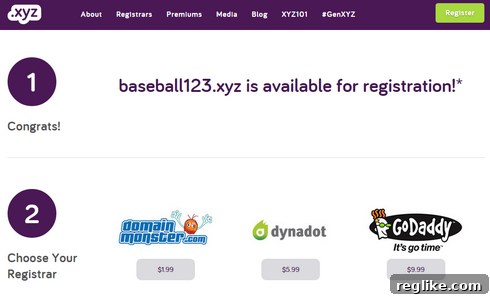
The brilliance of the “com.com” strategy lies in its simplicity and its direct relevance to domain name acquisition. Here’s how it works: when a user inadvertently types a domain like “yourchosenname.com.com” into their browser, .xyz has configured a system to intercept and interpret this input. Depending on the specific “com.com” address entered, the user is then presented with tailored information regarding .xyz domain availability. For instance, if you were to type “baseball123.com.com,” instead of encountering an error page or an unrelated website, you would likely be greeted with a clear and compelling notice indicating that “baseball123.xyz” is available for registration. This direct, real-time availability check, coupled with an immediate link to register the desired .xyz domain, streamlines the path from discovery to acquisition, making the process remarkably efficient and user-friendly. It’s an almost perfect alignment of user intent (even if accidental) and a direct solution, turning a potential moment of frustration into a seamless opportunity.
The strategic deployment doesn’t end there. If a user types in a “com.com” variant where the corresponding .xyz domain is already taken, .xyz has devised an intelligent fallback mechanism. In such cases, the system typically redirects the user to either a general sales page for .xyz domains, showcasing the broader benefits and features of the gTLD, or to an advertiser page. This dual approach ensures that even when a specific .xyz name isn’t available, the accidental traffic is still monetized or leveraged for broader brand awareness. It’s a testament to the comprehensive nature of their strategy, ensuring that every user interaction, regardless of its initial intent, serves a purpose within their marketing funnel. The immediate goal is not just to sell a specific domain, but to educate, inform, and familiarize a wider audience with the .xyz brand as a viable and modern alternative to traditional domain extensions.
One might wonder about the volume of traffic generated by “com.com” typos. While precise figures are often proprietary, industry experts widely agree that the traffic remains substantial. The domain “com.com” itself held significant value and was famously owned by CNET (CBS Interactive) for an extended period before being sold in recent years. This history alone indicates the sheer volume of accidental entries it must have received over decades, solidifying its status as a high-traffic destination due to its unique position as a common typing error. The acquisition and utilization of such a domain for marketing purposes underscore .xyz’s shrewd understanding of digital real estate and its ability to identify and capitalize on non-traditional traffic sources that competitors might overlook. This historical context further validates the strategic wisdom of investing in and optimizing for such an unconventional but potent channel, transforming a long-standing internet quirk into a dynamic marketing platform.
The “com.com” strategy is more than just a clever trick; it’s a masterclass in opportunistic marketing and brand building within the domain industry. It demonstrates a profound understanding of internet user psychology and the subtle ways people interact with web addresses. By transforming an accidental keystroke into a direct pathway to domain registration, .xyz isn’t just selling domains; it’s educating users about new possibilities in online identity. This proactive approach helps to demystify new gTLDs and positions .xyz as an accessible and forward-thinking choice for anyone looking to establish an online presence. Furthermore, this tactic indirectly contributes to SEO efforts by increasing direct traffic to .xyz related properties and enhancing brand recall. When users are repeatedly exposed to the .xyz brand through such direct and relevant interactions, it naturally leads to higher organic search interest and recognition over time.
Beyond the immediate conversions, this strategy plays a vital role in building brand awareness and establishing .xyz as a memorable option. In a market saturated with countless domain extensions, standing out requires more than just offering competitive pricing or generic advertising. It demands innovation and a willingness to engage potential customers in unexpected places. The “com.com” tactic ensures that .xyz is consistently introduced to a stream of internet users who are actively engaged with domain-related queries, even if unintentionally. This constant, albeit subtle, reinforcement builds familiarity and trust, crucial elements for long-term brand success. It also subtly positions .xyz as a leader in innovative marketing within the domain space, inspiring other gTLDs to reconsider their own outreach strategies and explore non-traditional channels.
Of course, such a strategy raises interesting questions about ethical boundaries and user experience. Is it a form of “typo squatting”? While it leverages typos, it differs from traditional typo squatting, which typically involves registering a misspelled version of a specific brand or popular website to divert traffic maliciously. In the case of “com.com,” the domain itself isn’t a brand, but rather a generic common error. Therefore, .xyz’s use is generally seen as a clever and benign way to engage users, offering a helpful service (domain availability check) rather than exploiting a brand for illicit gain. The focus remains on providing relevant information to users who are already in a domain-centric mindset, making the interaction largely positive and informative.
In conclusion, .xyz continues to set a high bar for innovative domain marketing. Their strategic utilization of the “com.com” typo phenomenon exemplifies a willingness to explore unconventional channels and convert digital quirks into tangible business opportunities. This approach not only drives direct domain registrations but also significantly boosts brand awareness, positioning .xyz as a dynamic and accessible choice in the ever-evolving world of online identity. As the digital landscape continues to expand, it’s clear that creative and user-centric marketing strategies, like those pioneered by .xyz, will be essential for success. They remind us that sometimes the most effective solutions are found by looking beyond the obvious, transforming perceived limitations into powerful advantages. We extend a tip of the hat to sources like Joe Politzer for bringing such insightful strategies to light, further enriching our understanding of the cutting edge of domain industry marketing.