
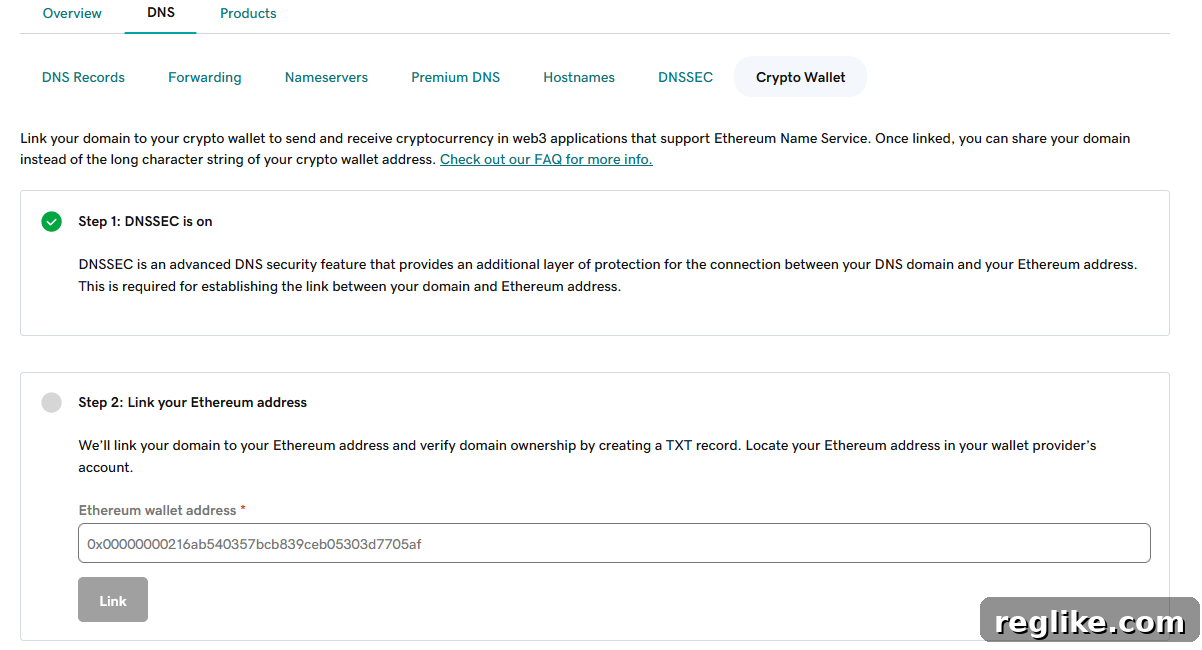
GoDaddy, the world’s preeminent domain registrar, has rolled out a groundbreaking two-step wizard, significantly simplifying the process of connecting traditional domain names to Ethereum crypto wallets. This innovative feature marks a pivotal moment in the convergence of the established internet infrastructure and the burgeoning Web3 ecosystem.
Bridging Web2 and Web3: GoDaddy’s Strategic Move
In a major development that underscores the accelerating integration of traditional web services with decentralized technologies, GoDaddy (NYSE: GDDY), the world’s largest domain registrar, has officially launched a streamlined method for its users to link their domain names directly to Ethereum Name Service (ENS) addresses. This initiative follows closely on the heels of an announcement by Ethereum Name Service (ENS) last week, which unveiled a new, “gasless” mechanism designed to facilitate the connection of conventional domain names with blockchain wallet addresses, making the process more accessible and cost-effective than ever before. GoDaddy’s move is a powerful endorsement of this effort, potentially catalyzing broader adoption of Web3 identities across its vast user base.
The introduction of this feature by such a dominant player in the domain industry is not merely a technical update; it represents a significant strategic step towards democratizing access to Web3 functionalities. By simplifying a previously complex process, GoDaddy is effectively lowering the barrier to entry for millions of users who may be familiar with traditional domain management but new to the intricacies of blockchain technology. This integration is poised to transform how individuals and businesses manage their digital identities and assets across both the centralized and decentralized web.
The Seamless Two-Step Integration: A Closer Look
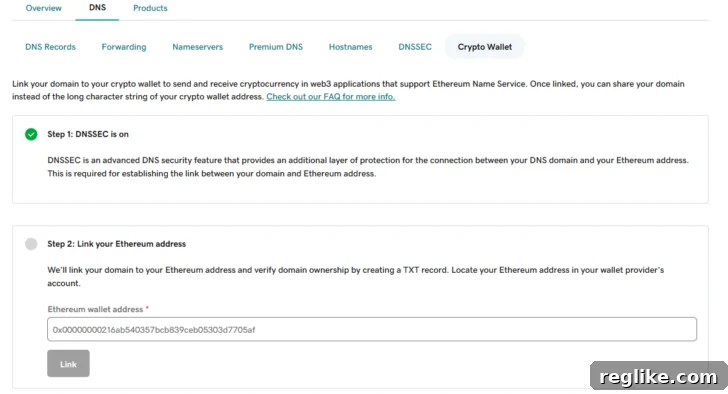
GoDaddy’s new system is designed with user-friendliness at its core. Customers navigating their domain manager will now discover a distinct “Crypto Wallet” option nestled within the familiar DNS section. This intuitive placement ensures that users can easily locate and activate the new feature without extensive searching or technical expertise.
The entire process has been distilled into two straightforward steps, a testament to GoDaddy’s commitment to simplicity:
- Activate DNSSEC: The first step requires users to click a single button to enable DNSSEC (Domain Name System Security Extensions). DNSSEC is a critical security protocol that adds a layer of authentication to the DNS, protecting users from data spoofing and ensuring that they are connecting to the legitimate wallet address. GoDaddy automates this crucial step, abstracting away the underlying technical complexities that might otherwise deter less experienced users.
- Enter Ethereum Wallet Address: Once DNSSEC is activated, users simply need to input their Ethereum wallet address into the designated field. This is the human-readable address (e.g.,
yourname.ethor the hexadecimal address) that they wish to associate with their domain.
Behind the scenes, GoDaddy’s system intelligently takes over. It automatically adds the necessary TXT (text) record to the domain’s DNS settings. A TXT record is a type of resource record in the DNS used to provide text information to sources outside your domain. In this context, it acts as a verifiable link, proving the domain’s association with the specified Ethereum wallet. It’s important to note that for this automated setup to function correctly, the domain must be configured to point to GoDaddy’s nameservers, ensuring that GoDaddy has the necessary control over the DNS records.
Empowering Users with Simplicity and Security
While the typical cryptocurrency user who would opt to link a domain with their wallet address is generally expected to be technologically proficient, GoDaddy’s initiative goes a step further by making this connection incredibly simple. Traditionally, users would have to manually configure DNSSEC, which involves generating and securely managing cryptographic keys, and then meticulously add a TXT record with specific ENS-related data. This often required delving into technical documentation, understanding specific record formats, and navigating potentially complex DNS interfaces – a process prone to errors and a significant time sink for many.
GoDaddy’s wizard eliminates these common hurdles entirely. By automating the implementation of DNSSEC and the creation of the TXT record, the company removes the friction associated with integrating traditional domains with the Ethereum Name Service. This abstraction means that users can focus on the utility of their Web3 identity rather than getting bogged down in the underlying network configurations. It significantly enhances the user experience, transforming what could be a daunting technical task into a quick and secure operation. This move not only benefits seasoned crypto users seeking convenience but also makes the world of Web3 more accessible to a broader audience, encouraging wider adoption.
Understanding Ethereum Name Service (ENS) and its Importance
To fully appreciate the significance of GoDaddy’s integration, it’s essential to understand the role of the Ethereum Name Service (ENS). ENS is a decentralized, open, and extensible naming system based on the Ethereum blockchain. Its primary function is to translate human-readable names, like john.eth, into machine-readable identifiers, such as Ethereum addresses (e.g., 0xAbc...123), content hashes, and other resource records.
In essence, ENS serves a similar purpose to the Domain Name System (DNS) for the traditional internet. Just as DNS allows you to type google.com instead of an IP address (172.217.160.142), ENS enables users to replace long, complex hexadecimal cryptocurrency wallet addresses with simple, memorable names. This drastically improves the user experience for various blockchain interactions:
- Simplified Transactions: Sending and receiving cryptocurrency becomes as easy as sending an email, reducing the risk of errors associated with lengthy addresses.
- Decentralized Identity: An ENS name can serve as a unified digital identity across various decentralized applications (dApps), linking to profiles, avatars, and other information.
- Web3 Websites: ENS can also resolve decentralized websites hosted on IPFS or Swarm, making them accessible through human-friendly names.
The “gasless” connection feature recently introduced by ENS is particularly relevant here. Prior to this, connecting a traditional DNS domain to ENS often involved transactions on the Ethereum blockchain, incurring “gas fees.” The new gasless method, which leverages DNS TXT records, allows for this connection without direct blockchain transaction costs for the initial setup, further enhancing accessibility and reducing financial barriers. GoDaddy’s automated system directly utilizes this gasless approach, making the integration even more appealing.
Broader Implications and Future Outlook
GoDaddy’s crypto wallet integration is more than just a new feature; it’s a powerful statement about the future direction of the internet. By facilitating the easy connection between traditional domain names and decentralized identities, GoDaddy is actively participating in the evolution towards a more integrated and user-friendly Web3 environment. This move could inspire other major domain registrars to follow suit, further accelerating the mainstream adoption of blockchain-based identities and services.
The enhanced security offered by automated DNSSEC implementation is also a critical component. As digital assets become increasingly valuable, the integrity of the connection between a domain and a crypto wallet is paramount. DNSSEC helps mitigate threats like DNS hijacking, where malicious actors might redirect domain traffic to fraudulent wallet addresses. By ensuring that the connection is cryptographically secure, GoDaddy helps build trust and confidence in Web3 interactions.
Looking ahead, this integration opens up a multitude of possibilities. We might see an increase in businesses adopting ENS names for their official crypto operations, providing a clear and verifiable link between their traditional brand and their Web3 presence. Individual users can establish a cohesive digital identity that spans both the conventional web and the decentralized ecosystem. This cross-pollination will likely foster innovation, leading to new applications and services that leverage the strengths of both Web2 and Web3 technologies.
The question of how many people will ultimately utilize this feature at GoDaddy remains to be seen. However, given GoDaddy’s immense market share and its proactive approach to simplifying Web3 integration, the potential for widespread adoption is substantial. This development is a clear indicator that Web3 is no longer a niche technology; it is steadily making its way into the mainstream, facilitated by established players who are committed to making it accessible to everyone.