
Sony’s Enduring Legacy: Securing the Walkman Domain, Yet Its Digital Future Remains a Mystery
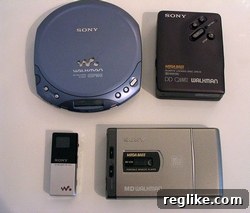
In a significant move for brand protection in the digital era, Sony Corporation has successfully acquired the domain name Walkman.net following a recent domain arbitration case adjudicated by the esteemed World Intellectual Property Organization (WIPO). This victory adds another crucial online asset to Sony’s intellectual property portfolio, securing a domain that resonates deeply with decades of audio innovation and cultural impact. However, while the acquisition of such a prominent domain might suggest an impending digital revival or a dedicated web portal, a closer look at Sony’s past actions with similar online properties suggests that enthusiasts might need to temper their expectations for a brand-new Walkman website anytime soon.
The Iconic Walkman: A Revolution in Personal Audio
The Sony Walkman, first introduced to the world in 1979, was more than just a portable cassette player; it was a cultural phenomenon that fundamentally reshaped how people consumed music. Before its advent, listening to music outside the home was largely a communal or stationary activity, confined to boomboxes, car stereos, or home systems. The Walkman, with its compact design and lightweight headphones, offered an unprecedented level of personal freedom, allowing individuals to carry their favorite tunes with them wherever they went – whether jogging in the park, commuting on public transport, or simply enjoying a quiet moment outdoors. This innovation sparked a global revolution, liberating music from the confines of space and time and making it an integral, personal soundtrack to daily life.
Its impact was profound, extending beyond mere technology. The Walkman fostered a new form of social interaction, creating “personal bubbles” of sound in public spaces while simultaneously connecting people through a shared love of music. It became an essential accessory, a fashion statement, and a symbol of modernity and personal expression. So ubiquitous did the brand become that, for a significant period, “Walkman” transcended its proprietary origins and evolved into a generic term for any portable music device, much like “Kleenex” is often used for facial tissue or “Hoover” for vacuum cleaners. This speaks volumes about its market dominance and cultural penetration, making it one of the most successful consumer electronics products of all time. While the advent of MP3 players in the late 1990s and early 2000s, followed by smartphones, eventually diminished the Walkman’s mainstream prominence, the brand name itself has remained synonymous with quality portable audio, a legacy Sony continues to leverage in its current range of high-resolution audio players.
Sony’s Vigilant Stance on Brand Protection
In the digital age, a company’s intellectual property extends far beyond physical products and registered trademarks; it crucially encompasses its online presence. Domain names like Walkman.net are invaluable digital assets, representing brand identity and serving as potential gateways to consumers. For a global conglomerate like Sony, with a portfolio of world-renowned brands, aggressive and proactive domain name protection is not just a strategic choice but a fundamental necessity. The threat of cybersquatting, where individuals register domain names corresponding to well-known trademarks with malicious intent (e.g., to profit from traffic, confuse consumers, or simply sell the domain back to the rightful owner at an inflated price), is a persistent challenge that companies must actively combat.
This is where mechanisms like the Uniform Domain-Name Dispute-Resolution Policy (UDRP) come into play. Administered by organizations such as WIPO, UDRP provides an efficient and relatively cost-effective means for trademark owners to reclaim domain names that have been registered in bad faith. Sony’s success in the Walkman.net case underscores its unwavering commitment to safeguarding its iconic brand from unauthorized use in the digital realm. By securing such domains, Sony not only prevents potential misuse but also ensures that the brand’s online narrative remains firmly under its control, preserving its reputation and consumer trust.
The Precedent of Walkman.com: A Tale of Dormancy
While the acquisition of Walkman.net is undeniably a victory for Sony’s legal team, it’s crucial to examine this event in the context of the company’s prior actions regarding its Walkman-related domains. This isn’t the first time Sony has pursued and won a high-profile domain name associated with the brand. Back in 2000, amidst the early boom of the commercial internet, Sony successfully secured the coveted domain name Walkman.com through a similar arbitration process. At the time, this win was widely reported and sparked considerable anticipation about Sony’s potential plans for a dedicated online platform for its legendary audio brand.
However, what followed was a stark contrast to expectations. For over two decades since that significant victory, Walkman.com has remained largely dormant. Visitors to the site have consistently been met with nothing more than an “under construction” page, a placeholder that offers no content, no updates, and certainly no dedicated web experience for the Walkman brand. This prolonged inactivity raises pertinent questions: If Sony invested considerable resources to acquire and protect such a prime domain, why has it chosen to let it lie fallow for so long? What does this history tell us about the likely fate of Walkman.net?
Decoding Sony’s Digital Strategy: More Than Meets the Eye?
The paradoxical strategy of vigorously defending and acquiring brand-specific domain names only to leave them largely undeveloped invites speculation about Sony’s overarching digital presence strategy. Several factors might contribute to this approach:
- Centralized Brand Hub: Sony might prefer to consolidate all its brand information and product offerings under its primary corporate domain, Sony.com. This strategy centralizes resources, reinforces the parent brand, and simplifies navigation for consumers seeking information across Sony’s diverse product lines, from PlayStation to Alpha cameras and, of course, Walkman audio devices. A dedicated Walkman.net site, therefore, might be seen as redundant or unnecessary.
- Defensive Registration: It’s possible that Sony’s primary motivation for acquiring these domains is purely defensive. By owning Walkman.net and Walkman.com, Sony prevents competitors, cybersquatters, or other entities from exploiting the brand’s immense recognition. This proactive measure safeguards against brand dilution, potential scams, and misleading online content, ensuring that the legacy of the Walkman remains untarnished.
- Niche Market Focus: The Walkman brand, while historically mainstream, has evolved into a more niche market, focusing on high-resolution audio players for audiophiles. Developing and maintaining a comprehensive, engaging website for a specialized product line might not align with Sony’s current marketing priorities or budget allocation when compared to its broader product categories like gaming or televisions.
- Future-Proofing: There’s always the possibility that these domains are being “future-proofed.” Sony might retain them with the long-term vision of a brand revival or a specific marketing campaign that could necessitate a dedicated online portal. However, given the multi-decade dormancy of Walkman.com, this seems like a very distant possibility for Walkman.net.
- Resource Allocation: Building and maintaining a compelling, up-to-date, and SEO-optimized website requires significant investment in design, content creation, technical infrastructure, and ongoing management. Sony might simply prioritize these resources for platforms with higher traffic or immediate commercial impact.
Ultimately, the lack of an active online presence for domains like Walkman.com and now potentially Walkman.net suggests a deliberate strategic choice by Sony to protect its brand assets without necessarily activating them as standalone marketing platforms. It highlights the complexities companies face in balancing brand legacy, digital strategy, and resource management in an ever-evolving internet landscape.
The Modern Walkman: A Legacy Reimagined
While its dedicated online presence remains elusive, the Walkman brand itself is far from forgotten. Sony continues to produce Walkman-branded portable audio players, albeit for a significantly different market than its original mass-consumer appeal. Today’s Walkman devices are primarily high-end, high-resolution audio (Hi-Res Audio) players designed to cater to discerning audiophiles who prioritize uncompromised sound quality over smartphone convenience. These devices often feature advanced digital-to-analog converters (DACs), robust amplification, and support for lossless audio formats, positioning them as premium alternatives to mainstream music playback options.
In this niche segment, Sony’s Walkman competes with other specialized audio brands like Astell&Kern, FiiO, and various high-end DAC/amp combinations. The focus has shifted from portability and ubiquity to sonic fidelity and the premium listening experience. This strategic pivot allows Sony to keep the iconic brand alive, leveraging its heritage of audio excellence, even if it no longer dominates the portable music market as it once did. The current Walkman models serve as a testament to Sony’s engineering prowess and its commitment to pushing the boundaries of audio technology, appealing to a dedicated community of music lovers.
Conclusion: A Digital Paradox for an Audio Icon
Sony’s latest acquisition of the Walkman.net domain solidifies its digital control over one of the most revered names in consumer electronics history. This move reaffirms the company’s diligent efforts to protect its intellectual property and prevent brand infringement in the vast expanse of the internet. However, when viewed through the lens of the long-standing inactivity of Walkman.com, the victory presents a perplexing paradox. It suggests a strategic approach where brand defense takes precedence over the creation of dedicated online brand experiences.
For enthusiasts hoping for a renewed digital hub celebrating the Walkman’s storied past and showcasing its modern iterations, the wait will likely continue. Sony’s strategy appears to be one of cautious custodianship, ensuring that the Walkman name remains free from exploitation while centralizing its active digital presence within its broader corporate framework. As the digital landscape continues to evolve, the Walkman’s online future remains a fascinating case study in brand management, reflecting the delicate balance between preserving an invaluable legacy and navigating the complexities of modern web strategy. The Walkman may have revolutionized how we listen to music offline, but its online journey continues to unfold, albeit at a remarkably measured pace.
Photo: Wikimedia Commons