
Unraveling the Mystery: The Race to Flip PokeymonGo.com Amidst the Pokemon Go Craze
In the whirlwind of digital phenomena, few trends have captivated the global imagination quite like Pokémon Go. Launched in 2016, this augmented reality mobile game transformed parks, streets, and landmarks into virtual battlegrounds and creature habitats, drawing millions of players out into the real world. Its meteoric rise wasn’t just a gaming revolution; it triggered a massive wave of entrepreneurial activity, domain speculation, and, inevitably, a fair share of digital gold rushes and cautionary tales. Among these stories is the intriguing case of PokeymonGo.com, a typo domain that quickly found itself at the center of a speculative auction on Flippa, promising instant riches but harboring significant underlying risks.
The Genesis of a Phenomenon: Understanding the Pokémon Go Impact
To fully grasp the allure and peril surrounding domains like PokeymonGo.com, one must first understand the unparalleled impact of Pokémon Go. Developed by Niantic in collaboration with Nintendo and The Pokémon Company, the game allowed players to catch, train, and battle virtual Pokémon in real-world locations. Its immediate success was staggering; within days of its launch, it topped app store charts, generated billions in revenue, and became a cultural touchstone. This unprecedented popularity naturally led to a frantic rush in the domain name aftermarket. Savvy (and not-so-savvy) investors and entrepreneurs scrambled to register any domain name even remotely related to “Pokemon Go,” hoping to capitalize on the massive search volume and public interest. This included variations, hyphenated names, and, most prominently, typo domains.
Typo domains, or “typosquatting” as the practice is often called, involve registering domain names that are slight misspellings or typographical errors of popular websites or brands. The idea is to capture traffic from users who accidentally mistype the correct address. In the context of a global phenomenon like Pokémon Go, even a small percentage of misspelled traffic could translate into thousands of daily visitors, making such domains potentially very valuable, either for direct monetization or for resale.
The Intrigue of PokeymonGo.com: Claims and Counterclaims on Flippa
Enter PokeymonGo.com. This domain, a subtle misspelling of “Pokemon Go” (with an added ‘y’), was swiftly registered and listed for auction on Flippa, a leading platform for buying and selling online businesses and domains. The seller’s claims were bold and immediate: the domain, supposedly just minutes after going live, “was receiving thousands of visitors to his website.” This assertion instantly piqued interest, driving a flurry of bids that quickly pushed the auction price past $2,000, attracting close to 100 participants eager to own a piece of this seemingly lucrative digital real estate.
Such claims of instant, massive traffic are a common sight on domain marketplaces, often fueling speculative buying. For an entrepreneur, the prospect of acquiring a website that already boasts a significant user base, especially one derived from a globally trending topic, can be incredibly tempting. It suggests a ready-made audience for advertising, affiliate marketing, or simply redirecting to a more developed venture. However, experienced domain investors understand the critical importance of verifying such claims with rigorous due diligence, particularly when dealing with newly registered typo domains.
Deconstructing the Traffic: A Closer Look at Google Analytics
The seller provided a Google Analytics screenshot with the listing, intending to substantiate the extraordinary traffic claims. However, this image, rather than unequivocally confirming the traffic, raised more questions than it answered. A crucial detail emerged: the traffic, despite being in the “thousands,” was reportedly “not coming from type-ins.”
Here’s the Google Analytics screenshot provided with the listing:
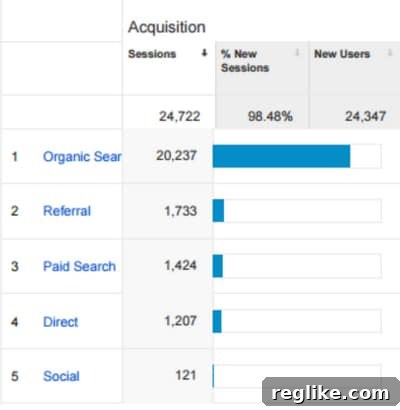
This revelation is perplexing for several reasons. The primary value proposition of a typo domain lies precisely in its ability to capture “type-in” traffic – users making a slight error when attempting to navigate to the intended, correctly spelled domain. If the thousands of visitors weren’t arriving via type-ins, where were they coming from? Potential explanations could include:
- Direct Links: The domain might have been shared on social media, forums, or through email campaigns, leading to direct clicks rather than organic type-ins.
- Specific Search Queries: While searching for “Pokeymon Go” in Google typically autocorrects to “Pokemon Go,” a direct search for “PokeymonGo.com” does indeed bring up the site as a top result. If a significant number of users were specifically searching for the full domain name, this could account for some direct traffic, although it is less common for a new, unknown site.
- Bot Traffic or Referrals: In some instances, reported traffic can be inflated by bots, crawlers, or even misconfigured analytics. Additionally, traffic from unexpected referral sources could be miscategorized or originate from less reputable sites.
- Misinterpretation of Data: The raw numbers might represent hits or page views rather than unique visitors, or the “minutes after going live” claim might not align with the actual data shown for a longer period.
The absence of type-in traffic makes the initial claim of immediate, thousands of visitors highly suspect for a newly launched typo domain. It forces potential buyers to dig deeper into the data and consider the true source and sustainability of such traffic, as artificially inflated numbers can lead to poor investment decisions.
The Double-Edged Sword: Opportunities and Risks of Typo Domains
The case of PokeymonGo.com perfectly illustrates the inherent dual nature of typo domains: they present both tantalizing opportunities and severe, often overlooked, risks.
The Lure of Accidental Traffic:
For entrepreneurs, the appeal is clear. A typo domain can provide:
- Instant Audience: The potential to capture a portion of a massive existing audience, even if by accident.
- Monetization Potential: Traffic can be monetized through advertising, affiliate marketing, or lead generation.
- Resale Value: Large companies might be willing to purchase typo domains to protect their brand and prevent dilution or misuse.
The Perilous Path: Trademark Infringement and Legal Ramifications:
However, the risks associated with typo domains, especially those leveraging trademarked terms, are substantial. As Elliot Silver rightly pointed out, “Pokemon is a trademark of Nintendo.” This is not a minor detail; it’s a critical legal landmine. Registering or using a domain name that is confusingly similar to an existing trademark, particularly for commercial gain, can lead to serious consequences:
- Cease and Desist Letters: Trademark holders like Nintendo are vigilant in protecting their intellectual property. They can issue legal notices demanding the immediate cessation of the domain’s use.
- UDRP Actions: The Uniform Domain-Name Dispute-Resolution Policy (UDRP) is a mechanism for trademark owners to recover domain names from registrants who are cybersquatting. If a complainant proves that a domain name is identical or confusingly similar to their trademark, the registrant has no legitimate interest in the domain, and the domain was registered and used in bad faith, the domain can be transferred.
- Lawsuits and Damages: In more severe cases, trademark owners can pursue legal action, seeking damages for trademark infringement, dilution, and unfair competition. The cost of defending such a lawsuit can be astronomical, far outweighing any potential profits from the typo domain.
- Brand Reputation: For the buyer, acquiring such a domain could immediately damage their reputation as an ethical business owner.
While Nintendo might not aggressively pursue every single newly registered domain containing “Pokemon,” the risk escalates significantly if a typo domain gains substantial popularity or is used in a way that directly misleads consumers or harms the trademark owner’s brand. The more successful PokeymonGo.com became in attracting visitors, the higher the likelihood of it catching the attention of Nintendo’s legal department.
Beyond the Hype: Responsible Domain Investing in a Dynamic Landscape
The saga of PokeymonGo.com serves as a powerful reminder of the speculative nature of domain investing and the importance of ethical and legal considerations. While the digital landscape offers immense opportunities for innovation and wealth creation, it also demands diligence, foresight, and respect for intellectual property rights.
For aspiring domain investors and online entrepreneurs, the lesson is clear: true value lies not just in capturing fleeting traffic from trends or typos, but in building sustainable, value-driven online assets. This involves:
- Thorough Trademark Research: Always conduct comprehensive trademark searches before registering domain names to avoid legal pitfalls.
- Legitimate Content and Services: Focus on creating unique, valuable content or providing genuine services that attract and retain users organically.
- Ethical Practices: Build a brand based on transparency and trust, rather than relying on deceptive practices like typosquatting.
- Verifying Data: When evaluating domain acquisitions, scrutinize all traffic claims and analytics data with a critical eye, looking for inconsistencies and red flags.
- Long-Term Vision: Invest in domains and online businesses with a long-term vision, focusing on sustainable growth rather than quick flips driven by temporary fads.
In conclusion, the auction for PokeymonGo.com encapsulates the thrilling yet treacherous world of domain speculation that emerged from the Pokémon Go phenomenon. While the promise of thousands of visitors from a typo domain can be enticing, the reality of legal risks, particularly trademark infringement, casts a long shadow. Ultimately, success in the digital realm, especially when riding the coattails of massive cultural trends, hinges on a delicate balance between entrepreneurial zeal and responsible, legally compliant practices.