
The Enduring Power of .COM: Why Domain Choice Remains Critical for Online Success
In the vast and ever-expanding digital landscape, the choice of a domain name is far more than a mere technicality; it’s a foundational pillar of a brand’s online identity and a significant factor in its accessibility and success. While a plethora of new generic top-level domains (gTLDs) have emerged in recent years, attempting to diversify the internet’s address book, the venerable .com domain continues to hold an unparalleled psychological and practical advantage. This deeply ingrained user habit presents one of the most substantial hurdles for any entity attempting to build a prominent online presence on a non-.com domain, particularly within the United States market.
The core of this challenge lies in simple human behavior. When an internet user attempts to recall or guess a website’s address, their fingers instinctively drift towards typing “.com.” This automatic assumption means that countless individuals seeking a specific site, even if it officially resides on a .net, .org, or a newer gTLD, will inevitably append “.com” to their search queries or direct navigations. This widespread tendency can lead to significant “domain leakage” – a phenomenon where intended traffic for one domain inadvertently lands on another. A compelling illustration of this principle, and its profound financial implications, comes from the story of HealthCare.com.
HealthCare.com: A Masterclass in Capitalizing on .COM Dominance
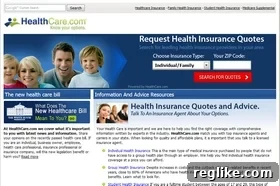
The narrative surrounding HealthCare.com offers a powerful, albeit somewhat ironic, lesson in the strategic value of a premium .com domain. As reported by VentureBeat, the owners of HealthCare.com found themselves in an enviable position following the tumultuous launch of HealthCare.gov. In late 2013, the United States government initiated the online healthcare exchange under the Affordable Care Act (ACA), directing millions of citizens to HealthCare.gov for information and enrollment. However, many Americans, accustomed to the pervasive .com suffix for commercial and informational websites, instinctively sought HealthCare.com.
This widespread user confusion proved to be a goldmine for HealthCare.com. Jose Vargas, the discerning owner of HealthCare.com, articulated the immediate and dramatic impact to VentureBeat: “We generated over 100,000 quote requests in October, and since HealthCare.gov launched the site traffic has increased 10 times.” This astonishing surge in engagement wasn’t due to a massive advertising campaign or superior SEO on their part; it was almost entirely a direct consequence of the public’s default assumption that a major government initiative would naturally reside on a .com address. The traffic “leaked” directly from the government’s official portal, driven by a deeply ingrained behavioral pattern.
Vargas’s foresight extended beyond just the primary .com domain. Understanding the nuances of user perception, he also secured and developed Healthcare.org and Healthcare.net. The strategy proved equally shrewd, particularly for Healthcare.org. While not generating the same commercial volume as its .com counterpart, Healthcare.org also experienced a remarkable spike in traffic, soaring from negligible numbers to approximately 60,000 visitors overnight. This suggests that users, while defaulting to .com, might also associate .org with non-profit or governmental entities, thus extending the leakage benefit to related TLDs that align with public service perceptions. This multi-domain strategy not only captured more of the misdirected traffic but also solidified Vargas’s control over key online real estate in the healthcare sector.
The financial commitment made by Vargas underscores the immense value placed on such a prominent domain: he reportedly purchased HealthCare.com for over $2 million. This substantial investment was clearly justified by the subsequent traffic and revenue generation, demonstrating that in the digital age, a premium domain name is not merely an expense but a strategic asset capable of yielding extraordinary returns, especially when a government’s online presence inadvertently creates a massive funnel of misdirected traffic.
The Broader Implications for Non-.com Domains and Digital Strategy
While the HealthCare.com saga is a testament to the unparalleled advantage of a well-chosen .com domain, it also highlights the persistent uphill battle faced by non-.com domains. For most businesses, organizations, or individuals launching a website today, choosing a non-.com domain requires a significantly more robust and sustained marketing effort to educate the audience and overcome the pervasive .com habit. New gTLDs such as .tech, .app, .store, .io, or even country-code TLDs like .co (for Colombia, but often used globally by startups) offer niche branding opportunities and greater availability of desirable names. However, they consistently contend with lower brand recall and a higher propensity for users to accidentally type .com, potentially redirecting traffic to competitors or non-existent sites.
The success of a non-.com domain typically hinges on several factors: an incredibly strong brand identity that transcends the domain suffix, targeted marketing campaigns that explicitly communicate the correct URL, a very specific niche audience that is digitally savvy, or a geographical relevance that makes a ccTLD intuitive (e.g., .london for a London-based business). Without these mitigating factors, the “typo traffic” phenomenon can be a significant drag on a site’s reach and effectiveness, forcing greater expenditure on advertising to compensate for the natural discoverability advantage of a .com.
A Government’s Costly Oversight: The Medicaid.com Fiasco
The saga of HealthCare.com also serves as a stark reminder, and perhaps an indictment, of critical domain management oversights. All the more reason why the United States government made a profound and costly mistake by allowing Medicaid.com to expire and subsequently fall into private hands. Medicaid, a crucial social health care program for low-income Americans, is a cornerstone of the nation’s healthcare system. Losing control of its most intuitive .com domain was an unforced error with serious implications.
The lapse of Medicaid.com into private ownership presents a multi-faceted problem. Firstly, it creates potential for public confusion and misdirection, similar to the HealthCare.com scenario, but with the added risk of vital public health information being compromised or redirected for commercial gain. Citizens seeking information about their Medicaid benefits might unwittingly land on a privately owned site that could be selling products, providing inaccurate information, or even engaging in predatory practices. Secondly, it undermines public trust in governmental digital stewardship. If a government cannot maintain control over its most critical online assets, what does that signal about its broader competence in the digital realm? Lastly, retrieving such a domain once it’s in private hands can be an arduous and expensive legal battle, often costing far more than the simple renewal fees that were initially overlooked.
This incident underscores the critical importance of robust domain portfolio management, not just for private corporations but especially for governmental bodies and public service organizations. Domains representing vital public services should be treated as national digital infrastructure, requiring meticulous oversight, multi-year renewals, and proactive protection against expiry or malicious acquisition.
SEO Considerations and the Enduring Value of .COM
From an SEO perspective, Google officially states that the specific top-level domain (TLD) does not directly influence search rankings. In theory, a well-optimized .net or .org site should rank equally with a comparably optimized .com site. However, this technical neutrality often belies the practical realities of user behavior and brand authority, which *do* impact SEO indirectly. A highly memorable .com domain benefits from greater direct navigation, higher brand recall, and increased user trust. These factors translate into more direct traffic, lower bounce rates, and more branded searches, all of which send positive signals to search engines and contribute to overall SEO performance.
The HealthCare.com case illustrates this perfectly: while the site itself might not have been inherently more SEO-optimized than HealthCare.gov, the sheer volume of organic, direct, and “typo” traffic it received undoubtedly boosted its authority and visibility in search results over time. This organic gravitation towards .com, driven by decades of internet history and user habit, means that for many businesses, a .com domain remains the most efficient and effective pathway to building a strong and easily discoverable online presence.
Conclusion: Navigating the Digital Domain Landscape
The story of HealthCare.com, set against the backdrop of the government’s Medicaid.com lapse, provides a potent reminder of the enduring significance of domain names, particularly the omnipresent .com. While the internet continues to evolve and new TLDs offer creative branding opportunities, the deeply ingrained user habit of defaulting to .com remains a powerful, often overlooked, force in digital success. For businesses, securing the most intuitive .com domain is often a non-negotiable strategic imperative, a foundational investment that can drastically reduce marketing costs and enhance organic reach.
For governments and public service entities, the lesson is even more critical: domain names representing vital public services are not mere URLs but essential conduits of information and trust. Their diligent management and protection are paramount to ensuring public access, preventing misinformation, and maintaining digital integrity. In a world where online presence is synonymous with existence, understanding and respecting the power of the domain name is fundamental to building a resilient, accessible, and successful digital future.