
Bespoke.com: The Ongoing Saga of a Premium Domain Facing Unfounded Cybersquatting Claims
In the dynamic world of domain names, disputes are not uncommon. However, the recurring attempts by various entities to acquire the highly valuable, generic domain name Bespoke.com without fair compensation highlight a fundamental misunderstanding of domain ownership and trademark law. This article delves into the persistent legal challenges faced by the owner of Bespoke.com, examining the intricate details of cybersquatting accusations, the nuances of the Anticybersquatting Consumer Protection Act (ACPA), and the inherent value of premium, dictionary-word domain names.
The Genesis of a Domain Dispute: Acquiring Bespoke.com
The story begins in 2014 when Garth Piesse, a seasoned domain investor, legitimately acquired the domain name Bespoke.com for a sum of $18,805 through an expired domain name auction. This acquisition was a standard practice in the domain aftermarket, where valuable, often generic, domain names become available due to previous owners letting them lapse. Piesse, like many investors, recognized the inherent value of a short, memorable, and generic .com domain that directly corresponds to a dictionary word. At the time, he likely anticipated the potential for future interest in such a premium asset but perhaps did not foresee the wave of legal challenges that would follow.
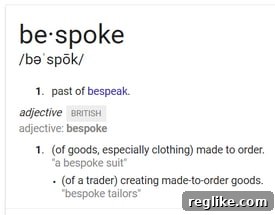
The term “bespoke” itself is a powerful and versatile word, widely used to describe custom-made, tailor-made, or personalized goods and services across various industries, from fashion and automotive to software and travel. Its broad applicability makes it a highly desirable domain name, signifying quality and customization. Owning Bespoke.com offers unparalleled branding opportunities for any business operating in a custom-oriented market, making it a truly valuable digital asset.
The First Strike: A UDRP Complaint Fails
Not long after Piesse’s acquisition, the first legal challenge emerged. A Swiss company, also operating under a “Bespoke” brand, filed a UDRP (Uniform Domain-Name Dispute-Resolution Policy) complaint against Piesse. The UDRP is an administrative procedure established by ICANN (Internet Corporation for Assigned Names and Numbers) to resolve disputes regarding the registration of domain names alleged to be abusive registrations of trademarks.
For a complainant to succeed in a UDRP case, they must generally prove three elements:
- The domain name is identical or confusingly similar to a trademark in which the complainant has rights.
- The registrant (domain owner) has no rights or legitimate interests in respect of the domain name.
- The domain name has been registered and is being used in bad faith.
In the case against Bespoke.com, the Swiss company’s complaint ultimately failed. This outcome was predictable, primarily because “Bespoke” is a generic dictionary word. While a company can certainly acquire trademark rights in a generic term when it has achieved “secondary meaning” in a specific context (i.e., consumers associate the generic term with that specific company’s goods or services), a generic term by its very nature makes it difficult to prove bad faith registration by a domain investor. Piesse acquired a generic word, not a specific trademark. The UDRP panel likely found that Piesse had a legitimate interest in the domain as a generic term and that his acquisition was not in bad faith to target a specific trademark.
The Current Battle: A U.S. Federal Lawsuit
Despite the clear precedent set by the UDRP decision, Piesse now faces a more substantial legal challenge: a cybersquatting lawsuit filed in U.S. federal court by a Louisiana-based company, Bespoke LLC. This new legal action highlights a persistent misunderstanding of cybersquatting and domain investing within certain business circles.
The Plaintiff’s Claims and Background
The plaintiff, Bespoke LLC, established in 2013, specializes in marketing custom tours in New Orleans. According to the lawsuit, the company discovered Piesse’s ownership of Bespoke.com after inquiring about purchasing the domain name through a Uniregistry Market landing page. Piesse, as the domain owner, responded with an asking price of $8.5 million. This price, while significant, reflects the high market value of a premium, generic, single-word .com domain. However, Bespoke LLC viewed this as an attempt to “hold the name hostage” and subsequently filed their lawsuit, accusing Piesse of cybersquatting.
The lawsuit explicitly states:
Upon information and belief, Defendant routinely and regularly engages in similar
activities and ploys. http://whois.domaintools.com/piesse.com indicates Piesse is associated with
about 39,330 domain names.
This statement, intended to paint Piesse as a serial cybersquatter, inadvertently strengthens his position as a legitimate domain investor. Owning a large portfolio of domain names is typical for professional domain investors and brokers, a distinct and established business model. It suggests a diversified portfolio strategy rather than a targeted infringement campaign against specific trademarks.
Misunderstanding the Anticybersquatting Consumer Protection Act (ACPA)
The plaintiff’s lawsuit proceeds to characterize the ACPA in a manner that fundamentally misrepresents its intent and application:
In enacting the Anticybersquatting Consumer Protection Act of 1999 (“ACPA”), 15 U.S.C.
§ 1125(d), Congress recognized and condemned the growing practice in which a “Cybersquatter,”
often through the use of a computer program that buys up a name as soon as it becomes available,
buys multiple domain names (typically for a retail price well under $100 each) and then holds the
names hostage, and attempts to re-sell them (often, as here, with the assistance of a broker) at an
inflated price to a company or individual with a legitimate interest in or use for the domain name.
This interpretation of the ACPA is critically flawed. While the ACPA was indeed enacted to combat cybersquatting, it specifically targets registrations made with a “bad-faith intent to profit from a trademark.” The key element missing from the plaintiff’s characterization is the crucial requirement of trademark infringement and bad faith. The ACPA is not designed to force legitimate domain owners to sell generic domain names at below-market rates to companies who simply desire them.
What is True Cybersquatting? A Legal Perspective
To understand why the Bespoke LLC lawsuit is unlikely to succeed, it’s essential to grasp the true definition of cybersquatting under the ACPA. The Act aims to prevent individuals from registering domain names that are confusingly similar to existing trademarks with the specific intent to profit by selling the domain back to the trademark owner or by diverting traffic meant for the trademark owner. Crucially, the domain name must be registered, trafficked in, or used with a “bad-faith intent to profit.”
The ACPA outlines several factors a court may consider in determining whether a person has a bad-faith intent, including:
- The trademark or other intellectual property rights of the person.
- The extent to which the domain name consists of the legal name of the person or a name otherwise commonly used to identify that person.
- The person’s prior use, if any, of the domain name in connection with the bona fide offering of any goods or services.
- The person’s bona fide noncommercial or fair use of the mark in a site accessible under the domain name.
- The person’s intent to divert consumers from the mark owner’s online location to a site accessible under the domain name that could harm the goodwill of the mark owner, either for commercial gain or with the intent to tarnish or disparage the mark.
- The person’s offer to transfer, sell, or otherwise assign the domain name to the mark owner or any third party for financial gain without having used, or having an intent to use, the domain name in the bona fide offering of any goods or services, or the person’s prior conduct indicating a pattern of such conduct.
- The person’s provision of material and misleading false contact information when applying for the registration of the domain name.
- The person’s registration or acquisition of multiple domain names that the person knows are identical or confusingly similar to marks of others that are distinctive at the time of registration of such domain names, without regard to the goods or services of the parties.
- The extent to which the mark incorporated in the person’s domain name registration is or is not distinctive and famous.
When applying these factors to Garth Piesse’s acquisition and ownership of Bespoke.com, it becomes evident that a claim of bad faith is tenuous at best. Piesse acquired a generic dictionary word, not a specific trademark. His extensive portfolio suggests legitimate domain investing, not a targeted attempt to infringe on a small, local business’s emerging mark. The act of offering a domain for sale at a high price, especially a premium generic domain, is a legitimate business practice and does not, in itself, constitute bad faith under ACPA, particularly when the domain name is generic and was not registered specifically to target the complainant’s trademark.
The Value of Generic Domain Names and Domain Investing
The $8.5 million asking price for Bespoke.com, while steep, is reflective of the premium nature of such a domain. Generic, one-word .com domains are scarce digital real estate. They offer instant brand recognition, enhanced credibility, and significant SEO advantages. Businesses often pay substantial sums for these assets because they understand the long-term value and competitive edge they provide. The domain market operates on principles of supply and demand, where highly desirable assets command high prices.
Domain investing, the practice of acquiring, holding, and selling domain names for profit, is a legitimate industry. Investors purchase domains they believe will appreciate in value, much like real estate or stocks. Conflating this legitimate business model with cybersquatting misunderstands the core tenets of both domain law and intellectual property law.
Indeed, the previous UDRP complaint against Bespoke.com serves as powerful evidence that the domain name holds significant intrinsic value beyond any single potential buyer. It demonstrates that multiple entities perceive value in this generic term, further reinforcing the legitimacy of Piesse’s asking price and his ownership. It underscores that his interest is in the generic value of the word, not in leveraging a specific trademark.
Conclusion: A Case of Misdirected Legal Action
The lawsuit brought by Bespoke LLC against Garth Piesse appears to be another instance where a company, rather than paying market value for a desirable generic domain name, resorts to legal action based on a misinterpretation of anti-cybersquatting laws. The core issue revolves around the distinction between legitimate domain investing in generic terms and bad-faith registration of trademarked terms.
Piesse acquired Bespoke.com legitimately, at auction, and the term itself is a common dictionary word. His willingness to sell it for a substantial sum is consistent with the valuation of premium generic domains in the aftermarket, not an act of extortion or trademark infringement. The previous UDRP loss for a similar claim further solidifies the position that ownership of Bespoke.com by Piesse is legitimate.
This ongoing dispute serves as a crucial reminder for businesses seeking to acquire desirable domain names: understand the legal framework. While intellectual property rights are paramount, they do not automatically grant ownership over generic dictionary words already legitimately owned by others. Engaging in legal battles without a strong basis in fact or law can be costly and ultimately unproductive, as the domain market continues to recognize and reward the value of premium, generic digital assets.