
Video Game Giant EA Fails to Win SSX.com Domain in UDRP Dispute
Electronic Arts’ SSX.com Domain Name Challenge Unsuccessful
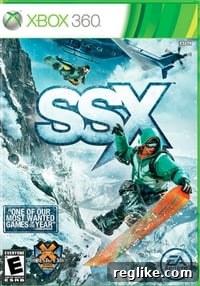
In a significant decision for both brand owners and domain name investors, video game publishing behemoth Electronic Arts (EA) has been unsuccessful in its attempt to acquire the domain name SSX.com through the Uniform Domain-Name Dispute-Resolution Policy (UDRP). The dispute, which unfolded as EA prepared to launch a highly anticipated reinvention of its popular SSX snowboarding video game franchise, highlights the complexities of online brand protection and the nuanced interpretation of “bad faith” in domain registration.
The core of the issue revolved around the domain SSX.com, a name intrinsically linked to EA’s beloved extreme sports game series. While EA was gearing up for its game release, the domain name was in the hands of Abstract Holdings International LTD, a firm that acquired it as part of a substantial domain name portfolio. This case underscores the careful balance UDRP panels must strike between protecting established trademarks and upholding the rights of legitimate domain registrants and investors.
The Genesis of the Dispute: A Prized Domain and a Portfolio Purchase
The domain name SSX.com was acquired by Abstract Holdings International LTD last October as part of a significant transaction involving a $200,000 domain name portfolio. Such portfolio purchases are common in the domain investing world, where companies acquire hundreds or thousands of domain names, often with the intent to develop them, sell them, or simply hold them as speculative assets. At the time of the purchase, the SSX video game reinvention was likely already in development or announced, making the domain particularly valuable for a brand like EA.
For a brief period following its acquisition, SSX.com was “parked,” a common practice where undeveloped domains display advertisements to generate revenue from pay-per-click (PPC) clicks. Crucially, these ads were related to video games, a fact that would become central to EA’s bad faith allegations. EA, undoubtedly monitoring domain names related to its upcoming release, swiftly identified this usage as infringing on its brand rights and immediately initiated a UDRP complaint.
EA’s Stance: Allegations of Bad Faith Usage and Registration
Electronic Arts’ primary argument rested on the contention that Abstract Holdings International LTD had both registered and used the SSX.com domain name in bad faith. The brief period during which the domain was parked with video game-related advertisements served as EA’s key piece of evidence. From EA’s perspective, this act demonstrated a clear intent to capitalize on the goodwill and recognition associated with their SSX trademark, thereby constituting bad faith usage and, by extension, bad faith registration.
In UDRP cases, proving both bad faith registration *and* bad faith use is a critical hurdle for complainants. EA aimed to convince the arbitration panel that the registrant’s actions—parking the domain with targeted ads—were not merely an innocent act but rather a deliberate attempt to profit from EA’s intellectual property, thus fulfilling the criteria for a UDRP transfer.
The Registrant’s Defense: Admitting Use, Denying Registration Bad Faith
In response to EA’s accusations, Abstract Holdings International LTD offered a nuanced defense. The registrant candidly admitted to the brief, infringing pay-per-click usage of the domain. This admission was a strategic move, acknowledging a temporary lapse in judgment or an oversight in managing their domain portfolio. However, the registrant vehemently denied that the domain was *registered* in bad faith. Their argument emphasized that the SSX.com domain was acquired as part of a large, diverse portfolio purchase, without specific knowledge or intent to target EA’s particular trademark at the time of registration.
This distinction between bad faith *use* and bad faith *registration* is paramount in UDRP proceedings. A registrant might inadvertently use a domain in a way that infringes on a trademark, but if they can demonstrate that the initial registration was not undertaken with the specific intent to target that trademark, or to unfairly profit from it, they may still prevail. The registrant’s legal team, led by domain name attorney Zak Muscovitch, expertly navigated this critical legal distinction.
The National Arbitration Forum Panel’s Deliberation
The dispute was heard by a three-person panel at the National Arbitration Forum (NAF), a leading UDRP provider. Their role was to meticulously examine the evidence and arguments presented by both parties against the backdrop of the UDRP’s stringent requirements. To succeed, EA needed to prove three elements: (1) the domain name was identical or confusingly similar to its trademark, (2) the registrant had no rights or legitimate interests in the domain name, and (3) the domain name was registered *and* was being used in bad faith.
Failure to Establish Prima Facie Bad Faith Registration
The NAF panel ultimately determined that Electronic Arts did not establish a prima facie case of bad faith registration. This finding was a major blow to EA’s complaint. The panel’s reasoning shed light on the limitations of what can be expected from domain name registrants, particularly those engaged in large-scale portfolio acquisitions:
The EA allegations of bad faith in part are based upon the lack of due diligence conducted by retailers of domain names like Respondent. EA would seem to require that entities like Respondent conduct an international search for relatively obscure trademarks in order to determine whether a name is a registered mark. The Panel is not willing to go so far, as discussed below.
Still, and particularly in this case, the Respondent is treading on thin ice. A fair reading of its pleadings reveals that Respondent made absolutely no attempt to examine its purchases for domain names which were also trademarks. Again, here, at least one “generic” string of three letters has been trademarked and is perhaps a common law mark of a number of business and other entities in a number of lines of business all around the world. Given the ease of searches using the common tools of the Internet, how much is it to ask of a retailer like Respondent to do a little extra work?
The panel explicitly rejected EA’s implied demand that domain investors perform exhaustive international trademark searches for every single domain acquired, especially for “relatively obscure trademarks.” They acknowledged the impracticality and undue burden such a requirement would place on registrants, particularly for generic-looking names or acronyms that might coincidentally align with a brand. This part of the ruling is significant, as it sets a precedent against overly broad expectations of registrant due diligence at the point of initial registration.
However, the panel did not entirely absolve the registrant. The phrase “treading on thin ice” highlights the panel’s concern regarding Abstract Holdings’ admitted lack of any attempt to vet their portfolio for existing trademarks. While not enough to meet the high bar of “bad faith registration,” it suggests a cautionary note for domain investors. The panel pointed out the ease of conducting basic online searches, implying that a minimal level of diligence could prevent future disputes, especially for short, seemingly “generic” strings like “SSX” that could represent various entities globally.
Establishing Rights or Legitimate Interests
Beyond the bad faith argument, the NAF panel also found that the domain registrant, Abstract Holdings International LTD, had successfully established rights or legitimate interests in the SSX.com domain name. This is the second crucial element in a UDRP complaint. While the specifics of how Abstract Holdings demonstrated these interests are not detailed in the provided excerpt, such arguments typically revolve around evidence of bona fide offerings, common use of the name, or legitimate noncommercial uses prior to the dispute.
For a three-letter acronym like “SSX,” it’s plausible that the registrant could argue its generic nature, or perhaps present evidence of intent to develop the domain for purposes unrelated to Electronic Arts’ video game. The panel’s finding here further solidified the registrant’s position, indicating that their ownership and potential future use of the domain were deemed legitimate under UDRP policy, independent of EA’s specific trademark.
Implications for Brand Owners and Domain Investors
This UDRP decision carries significant implications for both brand owners like Electronic Arts and professional domain investors. For brand owners, it serves as a reminder that while the UDRP is a powerful tool, it has its limits. Simply owning a trademark does not automatically grant rights to every corresponding domain name, especially when the domain was registered prior to the trademark holder’s direct claims or without specific intent to target their brand.
For domain investors and portfolio holders, the ruling offers a degree of protection against overly aggressive trademark enforcement, particularly when domains are acquired in bulk. However, the panel’s “treading on thin ice” comment is a critical caution. It reinforces the idea that while exhaustive international searches might not be mandated, a basic level of due diligence to identify obvious trademark conflicts can mitigate risks and prevent costly legal battles. The ease of internet searches means that ignorance of a prominent mark might not always be a sufficient defense, especially if the domain is later used in a targeted way.
The successful defense mounted by Abstract Holdings International LTD was expertly orchestrated by domain name attorney Zak Muscovitch of The Muscovitch Law Firm. This highlights the importance of specialized legal counsel in navigating the intricate landscape of domain name disputes, where a nuanced understanding of UDRP policy can be the difference between victory and loss.
Conclusion: A Win for Domain Rights, A Lesson for All
In conclusion, Electronic Arts’ challenge to reclaim SSX.com ultimately failed, leaving the domain in the hands of Abstract Holdings International LTD. This case is a testament to the UDRP’s design, which aims to prevent clear-cut cybersquatting while also protecting the legitimate rights of domain owners. It reaffirms that the burden of proof for bad faith registration and use lies firmly with the complainant and that a brief, albeit infringing, use may not be enough to overturn a legitimate, non-bad faith registration.
The SSX.com dispute serves as an important case study, reminding businesses that proactive domain acquisition and continuous monitoring are essential for brand protection in the digital age. Simultaneously, it instructs domain investors on the fine line between legitimate investment and potential trademark infringement, emphasizing that while “due diligence” might not mean a global trademark search for every three-letter domain, some level of awareness can go a long way.