
The curious case of CM.com: a domain name deleted yet unobtainable. This digital enigma highlights the complex rules governing the internet’s most coveted two-character domain names and the sometimes opaque policies of registries and registrars.
The Digital Purgatory of CM.com: Why a Deleted Two-Letter Domain Remains Unobtainable
In the vast and ever-shifting landscape of the internet, domain names are more than just addresses; they are valuable digital real estate, often holding immense strategic importance. Among the most prized are two-character .com domains, highly sought after for their brevity, memorability, and unparalleled branding potential. However, a peculiar case has emerged concerning CM.com, a domain that, despite being deleted and showing as unregistered in public databases, remains stubbornly unavailable for anyone to claim. This perplexing situation delves into the intricate mechanisms of domain name management, the profound power of registries, and the often-overlooked agreements that dictate who controls these valuable digital assets.
Unraveling the Mystery: CM.com’s Apparent Deletion
The journey into CM.com’s peculiar status begins with a routine check that often yields surprising results. If one were to visit a popular domain lookup service like DomainTools and search for CM.com, the Whois information would present a striking picture: the domain appears to be completely unregistered. Typically, for a domain of such inherent value, especially a highly coveted two-character .com address, this status would immediately signal an open opportunity for potential registrants worldwide.
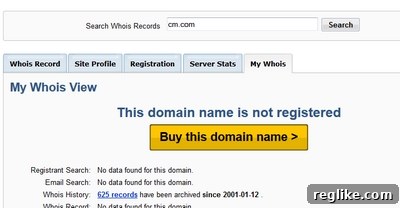
Yet, the initial surprise quickly gives way to confusion. Any subsequent attempt to register CM.com through a standard domain name registrar is met with a consistent and frustrating message: the domain is simply not available. It’s a paradox – publicly marked as unregistered, yet privately rendered unattainable. This stark inconsistency immediately raises critical questions about the domain’s true status and the underlying, non-obvious reasons for its inaccessibility, prompting a deeper investigation into the hidden layers of domain name governance.
A Storied Past: From Registration to Sudden Deletion
CM.com wasn’t always in this state of digital limbo. Records indicate that the domain had a remarkably long and stable history of continuous registration, dating all the way back to 1997. For over a decade and a half, it was an active and presumably utilized internet address, a constant presence in the digital landscape. Its registration continued without interruption until at least the middle of 2013, suggesting a consistent commitment from its former owners to maintain its presence. The abrupt and unexpected change in its status, transitioning from an actively registered domain to a deleted state, yet without becoming available for new registration, marks the pivotal beginning of its journey into this truly unique “purgatory.” This sudden shift, defying the usual lifecycle of domain names, is a central piece of the puzzle.
The Registrar’s Hand and the “SPAMSHUTDOWN” Clue
Further investigation into CM.com’s background reveals an intriguing and highly significant detail pointing directly towards the manner of its deletion. Although the domain was reportedly renewed through 2020, its status changed dramatically well before that expiration date. The key clue lies in the nameserver information associated with the domain: at some point, the registrar actively assigned the nameserver `NS1.SPAMSHUTDOWN.COM` to the domain. This is an exceptionally unusual occurrence. While nameservers typically point to the servers hosting a website, the very name `SPAMSHUTDOWN.COM` strongly suggests a deliberate intervention by the registrar itself, rather than a standard configuration choice by a domain owner.
This proactive action by the registrar indicates that they actively “put the kibosh on the domain,” effectively terminating its active status, rather than allowing it to simply expire due to non-renewal. Such an intervention is rare and often occurs when a domain is flagged for severe policy violations, consistent misuse, or perhaps even legal issues that necessitate immediate action. While the exact reasons for the registrar’s unilateral decision are not publicly detailed, the presence of the `SPAMSHUTDOWN` nameserver is an undeniable and strong indicator of a punitive or protective action. This suggests a measure taken by the registrar to prevent the domain from being used, despite its existing renewal status, fundamentally altering its path from a passive expiration to an active and enforced termination, which then set the stage for its subsequent unavailability.
The Regulatory Framework: Why Two-Character Domains Are Special
To fully grasp why CM.com remains locked away from public registration, one must delve deeply into the highly specialized rules and regulations governing two-character .com domain names. These particular domains hold an exceptionally unique and privileged status within the internet’s vast naming architecture, primarily due to their extreme scarcity and immense intrinsic value. There are only 676 possible two-letter combinations (from AA to ZZ), and a maximum of 1,296 total two-character combinations (including numbers, e.g., 00-99, 0A-9Z, A0-Z9, AA-ZZ). This severely finite supply, coupled with persistently high demand from businesses and investors alike, makes them extraordinarily valuable assets, often trading for significant sums in the secondary market and considered prime digital real estate.
Verisign and ICANN: The Guardians of the .com Registry
Seeking definitive clarity on CM.com’s fate required reaching out to the highest authority for .com domains: Verisign. As the exclusive registry operator for the prestigious .com top-level domain (TLD), Verisign holds immense responsibility. It is tasked with maintaining the central, authoritative database of all .com domain names and rigorously implementing the comprehensive policies set forth in its agreements with the Internet Corporation for Assigned Names and Numbers (ICANN), the global non-profit organization that coordinates the internet’s naming systems. Their role is crucial in maintaining the stability and security of the .com namespace.
Verisign, in response to inquiries regarding CM.com’s unusual status, promptly directed attention to a critical and often-overlooked document: Appendix 6 of the 2012 registry agreement between Verisign and ICANN. This particular appendix contains specific, highly consequential provisions that unequivocally clarify the current status of CM.com and shed definitive light on precisely why it cannot be re-registered by anyone.
Deciphering Appendix 6: The Reservation Clause Explained
Appendix 6 of the Verisign-ICANN agreement includes a pivotal and often misunderstood clause that reads: “all two-character labels must be reserved from initial (non-renewal) registration.” This succinct yet powerful statement is the absolute crux of the CM.com mystery, providing the definitive answer to its unavailability. It introduces a fundamental and critical distinction between existing registrations and entirely new ones, especially when it comes to the highly sought-after two-character domain names.
Let’s meticulously break down what this crucial clause explicitly means:
- “All two-character labels”: This phrase unambiguously refers to domains like CM.com, encompassing every single possible combination of two letters, two numbers, or a letter and a number. The rule applies broadly across this highly valuable category.
- “Must be reserved”: This signifies a mandatory action. These specific domain labels are to be held back by the registry; they are absolutely not to be made available for general public registration or re-registration under normal circumstances. They are in a state of indefinite suspension from the public domain pool.
- “From initial (non-renewal) registration”: This is the most critical and defining qualifier. It means that while existing owners of *already registered* two-character domains are unequivocally permitted to continue using, renewing, or transferring them, any *new* attempt to register such a domain – specifically, one that has not been continuously and actively registered – is strictly prohibited. If a two-character domain expires or is deleted, it cannot be picked up again as a “new” registration.
The strategic intent behind this stringent rule is multi-faceted and deeply rooted in the long-term management of the .com namespace. It likely aims to prevent potential land rushes and speculative frenzies over these scarce resources, ensure a more controlled and equitable distribution of these prime assets, and potentially mitigate certain types of abuse historically associated with highly valuable digital properties. Furthermore, it allows for the graceful and controlled winding down of certain two-character domains if their current owners decide to relinquish them, without immediately opening them up to a chaotic speculative market or potential misrepresentation by new registrants. This policy effectively creates a barrier to entry for any two-character domain that loses its registered status.
CM.com’s Predicament: From Active Registration to “Initial Registration” Status
Applying the strictures and specific definitions of Appendix 6 directly to CM.com’s unique situation unequivocally reveals why it remains in its current, unobtainable state. The domain was undeniably once registered, falling squarely under the “already registered” category for many years. However, once it was deleted – whether voluntarily by a previous owner (though this is unlikely given its value) or, as strongly suspected, through an intervention by its registrar – its status fundamentally and irreversibly changed. Even though it had been continuously registered since 1997 and renewed through 2020, its deletion effectively wiped its registration history clean in the context of this specific rule.
Crucially, any new attempt to acquire CM.com now constitutes an “initial registration” in the eyes of the registry. Because CM.com is, by definition, a two-character label, and any new attempt to register it would be classified as an “initial registration” rather than a renewal or transfer of an existing registration, it falls squarely under the reservation clause of Appendix 6. Consequently, it cannot be registered by anyone, regardless of its previous registration history or how long it was previously held by its former owners. It has thus transitioned from an actively managed domain into a permanently reserved, effectively unobtainable status, at least under the current, stringent registry policies and agreements. This makes CM.com an enduring testament to the power of these often-unseen regulations.
A Rare Occurrence: The Untypical Fate of a Valuable Domain
The fate of CM.com is, by all accounts, an extremely rare and highly unusual occurrence within the sophisticated domain industry, especially concerning a domain of such inherent and significant value. Two-letter .com domains are universally considered premium, blue-chip assets, consistently fetching high prices in both private sales and highly competitive public auctions. It is exceptionally uncommon for such a valuable domain to simply “disappear” from active circulation without a clear, established, and often lucrative path for its re-acquisition or transfer to another interested party.
The Typical Lifecycle of an Expiring Premium Domain
Normally, when a highly valuable domain name, particularly a short .com, approaches its expiration date, a well-established and often elaborate process kicks in. Registrars and domain aftermarket platforms are acutely aware of the substantial value these assets hold and have developed sophisticated mechanisms to capitalize on them. Instead of simply letting them expire and return to the vast public pool of available domains:
- Redemption Period: After the initial expiration date, domains typically enter a redemption grace period (RGP), which usually lasts around 30 days. During this critical window, the original owner has a final opportunity to renew their domain, albeit often at an elevated or penalty fee. This provides a safety net for accidental non-renewal.
- Pending Delete: If the domain is not renewed during the RGP, it then transitions into a “pending delete” status. This phase typically lasts for approximately 5 days, during which the domain is effectively slated for deletion from the registry but is not yet fully released.
- Auction and Backorder Systems: Crucially, for premium domains, before or during the pending delete phase, registrars and specialized domain marketplaces often facilitate auctions or direct transfers. They might list the domain on their own internal auction platforms or partner with major domain aftermarket providers. This sophisticated system ensures that the domain’s underlying value is realized, either by the registrar (through a successful auction) or by facilitating a sale to a highly interested party. Furthermore, many astute domain investors place “backorders” for such domains, hoping to catch them immediately upon their deletion from the registry, often through specialized drop-catching services.
- Proactive Transfer/Sale: In many cases, registrars might even proactively contact the expiring domain’s owner to offer assistance in selling or transferring the domain before it fully expires. This is a common practice to maximize its potential value for all parties involved, including the registrar who might earn a commission.
The undeniable fact that CM.com bypassed this entire lucrative and standard process strongly suggests that its deletion was not a standard expiration or a voluntary non-renewal by an owner simply letting it go. The registrar’s active intervention, unambiguously flagged by the `SPAMSHUTDOWN` nameserver, strongly implies a more forceful, and perhaps punitive, action. This makes the CM.com scenario even more unique and perplexing, suggesting reasons beyond simple abandonment or an owner’s oversight, pointing instead to a deliberate and enforced removal.
Speculating on the “Why”: Beyond Standard Expiration
Given the deeply entrenched industry protocols and the immense value of a two-letter .com domain, the singular fate of CM.com invariably invites significant speculation regarding the precise reasons behind its forced deletion and subsequent reservation:
- Severe Policy Violation: The most probable and widely accepted reason for such a dramatic registrar intervention is a severe violation of acceptable use policies, the registrar’s terms of service, or even specific legal requirements (e.g., persistent involvement in spamming, phishing attempts, severe trademark infringement, or other illicit online activities). The `SPAMSHUTDOWN` nameserver is a powerful piece of evidence that strongly supports this theory.
- Legal Mandate or Court Order: It is entirely plausible that a court order, a government directive, or a law enforcement agency mandate compelled the domain’s deletion and subsequent reservation to prevent its further use or potential re-use for harmful purposes.
- Internal Error or Unique Policy Interpretation: While less likely for such a high-value asset, it’s a remote possibility that an unusual internal process, an egregious human error, or a highly specific, perhaps one-off, interpretation of policy could have led to such an outcome.
- Proactive Abuse Prevention: Even if the original owner wasn’t the direct perpetrator, the registrar might have intervened to prevent the domain from being used in a harmful manner in the future, perhaps due to a compromise of the domain, or a potential, imminent threat. This could lead to a strategic decision to indefinitely reserve it from new registration as a preventative measure.
Whatever the specific catalyst, CM.com’s peculiar journey unequivocally highlights the significant and often unseen power vested in both domain registrars and the .com registry (Verisign) to manage, and in some extraordinary cases, unilaterally restrict access to, even the most valuable and coveted digital assets in the global internet landscape.
Implications and Lessons Learned from the CM.com Enigma
The extraordinary case of CM.com serves as a fascinating and cautionary case study with several profound implications for domain name owners, shrewd investors, and indeed, anyone with a vested interest in the governance and operational mechanisms of the internet’s naming system.
Firstly, it underscores the critical and often-underestimated importance of thoroughly understanding not just the basics, but also the more nuanced registry and registrar policies. While most domain owners rightly focus on renewal dates and fundamental terms of service, the deeper regulatory framework, particularly for special and highly valuable categories like two-character domains, can have profound, unexpected, and often irreversible effects. Ignorance of these intricate policies can lead to utterly unexpected and permanent consequences, even for well-maintained domains.
Secondly, it vividly illustrates the unique and highly protected status of short, high-value domain names. ICANN and Verisign, through robust agreements like Appendix 6, have deliberately established sophisticated safeguards that treat these domains distinctly differently from standard, longer registrations. This differentiated approach aims to effectively manage inherent scarcity, prevent speculative excesses that could destabilize the market, and potentially reserve certain labels for future strategic use by the internet community, even if the immediate reason for such a reservation isn’t always immediately apparent to the public.
Thirdly, the case dramatically highlights the significant and sometimes discretionary power wielded by domain registrars. While they primarily act as intermediaries between domain owners and the registry, they possess the inherent authority to take decisive and impactful action against domains that are found to violate their terms of service, acceptable use policies, or legal mandates. This power, when exercised, can fundamentally alter the destiny of a domain, regardless of its market value, its previous history, or the owner’s intentions, by enforcing a deletion and preventing subsequent re-registration.
Conclusion: A Digital Anomaly in a Regulated Landscape
The saga of CM.com is far more than just a simple story of a deleted domain; it serves as an insightful window into the intricate, often opaque, and highly regulated world of internet governance. What initially appears as a straightforward case of an unregistered domain quickly transforms into a complex interplay of historical registration, decisive registrar intervention, and stringent regulatory clauses originating from global authorities like ICANN and the powerful registry operator, Verisign.
CM.com’s deletion by its registrar, followed by its permanent reservation under the little-known but powerful Appendix 6, creates a unique and enduring anomaly in the highly competitive domain space. It demonstrates unequivocally that even the most coveted and valuable pieces of digital real estate can be rendered unobtainable, not merely by an owner’s choice to let it expire, but by the direct enforcement of specific, sometimes obscure, rules and policies governing the very structure and integrity of the internet’s naming system. This rare and fascinating occurrence serves as a powerful and lasting reminder of the hidden depths and nuanced policies that profoundly shape the digital world we navigate every single day, ultimately turning a simple two-letter address into a compelling symbol of regulatory power and digital scarcity.