
Aruba, Jamaica, ooh I wanna take ya…to a significant domain name dispute.
In the modern digital landscape, a domain name is far more than a simple web address; it functions as a critical cornerstone of brand identity, a powerful marketing tool, and a vital gateway for public engagement. For businesses, artists, and organizations alike, securing the right domain name and protecting it from unauthorized use is paramount. This crucial principle is currently at the forefront of a compelling Uniform Domain-Name Dispute-Resolution Policy (UDRP) case, spotlighting the iconic American band, The Beach Boys, and a tribute act that has long utilized a closely associated web address.
Brother Records, Inc., the entity entrusted with managing and safeguarding the extensive intellectual property of The Beach Boys – a name that instantly evokes images of sun-drenched beaches, surfing culture, and harmonious melodies – has formally initiated a cybersquatting complaint. The subject of this legal action is the domain name BeachBoys.org, which is currently operated by a prominent tribute band. This development serves as a vivid reminder of the persistent challenges faced by intellectual property owners in their efforts to defend their brands across the vast and often complex digital realm.
The Contending Parties: A Clash Between Legacy and Homage
On one side of this intriguing dispute stands Brother Records, Inc., the official corporate body that meticulously oversees and protects the venerable legacy, trademarks, and copyrights of The Beach Boys. This organization bears the responsibility of ensuring that the band’s renowned name, its timeless musical compositions, and all associated branding elements are not exploited in a manner that could confuse consumers, dilute the distinctive strength of their brand, or unfairly profit from their deeply established reputation.
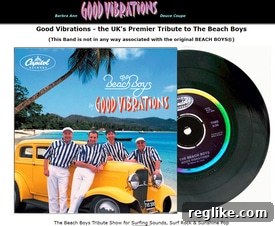
On the opposing side is “Good Vibrations,” a tribute band proudly positioned as “UK’s Premier Tribute to The Beach Boys.” For many years, this dedicated group has passionately celebrated the enduring music of The Beach Boys, performing their classic hits for appreciative audiences throughout the United Kingdom. Their online presence, which serves as their primary digital hub for concert schedules, band biographies, and fan interactions, has historically been anchored by the domain name BeachBoys.org. Through this platform, the band connects with a loyal fan base who cherish their faithful renditions of the original group’s beloved tracks.
Unpacking the UDRP: Navigating Domain Name Disputes
The Uniform Domain-Name Dispute-Resolution Policy (UDRP) is an internationally recognized arbitration framework designed specifically to resolve conflicts arising from the registration and use of domain names. It offers a streamlined administrative alternative to traditional court litigation, providing a more efficient and typically less costly pathway for trademark holders to reclaim domain names that infringe upon their established rights. To successfully prevail in a UDRP complaint, the complainant, in this instance Brother Records, Inc., must conclusively demonstrate three fundamental elements:
- The disputed domain name is either identical or confusingly similar to a trademark in which the complainant holds legitimate rights.
- The current registrant of the domain name (Good Vibrations) possesses no inherent rights or legitimate interests with respect to that domain name.
- The domain name has been registered and is being actively used in “bad faith” by the registrant.
Each of these criteria will be subjected to rigorous scrutiny by the UDRP panel, which will meticulously weigh the established trademark rights of The Beach Boys against the tribute band’s prolonged use of the domain and the precise nature of their online activities.
Prior Engagements: A Glimpse into Pre-Dispute Communication
Adding an intriguing layer to this case is the indication that the two parties involved may have had prior interactions before the formal UDRP complaint was lodged. Earlier this year, Good Vibrations proactively took steps to clarify its identity online. The tribute band prominently displayed a clear disclaimer on its website, unequivocally stating that it is “not affiliated with the original band.” This action strongly suggests that there may have been earlier communications, possibly an informal demand or request from Brother Records, Inc., which prompted the tribute band to publicly disclaim any official connection. While such a disclaimer can, in some intellectual property disputes, act as a mitigating factor, its ultimate effectiveness in a UDRP proceeding, particularly concerning the crucial “confusingly similar” and “bad faith” criteria, will ultimately rest with the UDRP panel’s careful assessment.
The Enigma of Delayed Action: A Two-Decade Standoff
Perhaps one of the most perplexing aspects of this particular dispute is the significant timeline involved. Historical records preserved by the Internet Archive’s Wayback Machine reveal that the tribute band has been consistently utilizing the domain name BeachBoys.org since as far back as 2002. This means the domain has been in active operation under the tribute band’s control for nearly two decades. The substantial duration of this usage prompts a critical question: why has Brother Records, Inc. only now decided to pursue action against this specific domain name? This prolonged delay could be open to various interpretations.
Firstly, it is important to note that trademark holders are not always legally compelled to act immediately upon discovering potential infringement. While prompt enforcement is generally advisable to prevent the erosion of trademark rights – a legal concept often referred to as “laches” in some judicial contexts, though UDRP panels typically do not strictly apply laches – various strategic factors can influence the timing of enforcement actions. It is conceivable that the tribute band’s online presence only recently achieved a level of prominence sufficient to capture the attention of Brother Records, Inc.’s brand monitoring efforts, or perhaps the perceived potential for consumer confusion or brand dilution gradually intensified over time. Alternatively, a shift in legal strategy, the initiation of a new intellectual property enforcement campaign, or heightened scrutiny of online intellectual property assets could all explain the delayed filing. Nevertheless, this extensive period of inaction will undoubtedly be a key point of discussion and careful consideration throughout the UDRP proceedings, potentially impacting the panel’s final decision.
Trademark Rights Versus Legitimate Interests: The Tribute Band’s Predicament
The core legal challenge in this UDRP case centers on whether Good Vibrations, functioning as a tribute band, can convincingly demonstrate a “legitimate interest” in the domain name BeachBoys.org. While tribute bands generally operate within a somewhat ambiguous legal framework, often performing copyrighted music under specific public performance licensing agreements, their use of an artist’s trademarked name within a domain name presents a distinct legal challenge. A legitimate interest in a domain name typically arises if the registrant:
- Has genuinely used, or made demonstrable preparations to use, the domain name in connection with a bona fide offering of goods or services.
- Has become commonly known by the domain name, even in the absence of formal trademark rights.
- Is making a legitimate noncommercial or fair use of the domain name, without any intent for commercial gain that could mislead consumers or divert traffic deceptively.
For Good Vibrations, the argument for legitimate interest would likely hinge on their identity as a tribute band and the perception that their performances fall under a form of artistic expression or homage. However, the direct use of “BeachBoys.org” without any clear qualifying terms (such as “tribute,” “band,” or “fan site”) could be interpreted as an attempt to directly leverage the original band’s reputation, potentially leading visitors to mistakenly believe it is the official website or an officially endorsed entity. This inherent ambiguity is precisely the kind of complex issue that UDRP panels are tasked with carefully evaluating and resolving.
The Element of Bad Faith: Unpacking Intent and Consequences
The third and frequently most challenging element to establish in a UDRP dispute is “bad faith.” This requires demonstrating that the domain name was not only registered but is also being actively used with the deliberate intention to mislead, disrupt, or unfairly profit from the complainant’s established trademark. Common examples of bad faith include registering a domain primarily to sell it at an inflated price to the trademark owner (a practice known as domain parking), preventing a trademark owner from reflecting their mark in a corresponding domain name, or employing a domain to intentionally disrupt a competitor’s business operations.
Within the specific context of a tribute band, bad faith could be argued if the domain name was registered with the primary objective of attracting internet users for commercial gain, specifically by generating a likelihood of confusion with the complainant’s trademark regarding the source, sponsorship, affiliation, or official endorsement of the website. The fact that the tribute band eventually implemented a disclaimer could be interpreted in two ways: it might serve as evidence against an ongoing intent of bad faith, or conversely, it could suggest an implicit acknowledgment of the prior potential for confusion. The UDRP panel will meticulously scrutinize the entirety of the circumstances surrounding both the initial registration of the domain and its subsequent usage, including any concrete evidence of commercial benefit derived from the confusingly similar domain name.
Broad Implications for Tribute Bands and IP Holders
This UDRP case carries far-reaching implications for both intellectual property rights holders and tribute bands across the globe. For IP owners like Brother Records, Inc., it powerfully reinforces the critical importance of vigilant brand monitoring and the implementation of proactive enforcement strategies. Allowing a domain name that directly incorporates a trademark to persist for an extended duration, even if used by a tribute act, can significantly complicate future enforcement efforts, potentially establishing a precedent that could be exploited by other infringers. This case serves as a stark and timely reminder that effective digital rights management is an continuous and demanding process requiring unwavering attention and consistent action.
For tribute bands, this dispute vividly highlights the delicate balance they must maintain between celebrating an artist’s enduring legacy and inadvertently infringing upon their legal rights. While performing an artist’s music may fall under specific performance licensing agreements, the unauthorized use of a trademarked name in a domain or on merchandise can easily trigger significant legal liabilities. Best practices for tribute bands, particularly within the digital sphere, should encompass:
- Selecting domain names that clearly differentiate them from the original artist (e.g., “GoodVibrationsTributeBand.com” or “TheBeachBoysTributeUK.org”).
- Implementing clear, conspicuous, and unambiguous disclaimers on their websites and across all social media profiles, explicitly stating no official affiliation with the original artist or their management.
- Proactively seeking expert legal counsel to fully comprehend the intricate nuances of intellectual property law as they directly pertain to their specific activities and online presence.
This case could very well establish a significant benchmark, potentially influencing how other similar disputes are adjudicated in the future and possibly prompting a broader wave of domain name adjustments within the vibrant tribute band community.
Safeguarding Your Digital Identity: Essential Lessons for Everyone
The BeachBoys.org dispute offers invaluable lessons that extend far beyond the confines of the music industry. For any business, brand, or individual maintaining a significant online presence, robust domain name protection is absolutely paramount. Key takeaways and strategic considerations include:
- Proactive Registration: Beyond securing your primary domain, strategically registering variations, common misspellings, and relevant top-level domains (TLDs) can effectively prevent instances of cybersquatting and widespread brand confusion.
- Consistent Monitoring: Implement a regular and thorough monitoring regimen across the internet for any unauthorized use of your brand name in domain registrations, social media handles, and various forms of online content. Specialized tools and services are available to automate and streamline this crucial process.
- Swift Action: While there may occasionally be strategic justifications for a delay, generally, taking prompt and decisive action against infringing domain names and content significantly strengthens your legal standing and minimizes potential, long-term damage to your brand reputation.
- Expert Legal Engagement: Engage with qualified intellectual property legal experts who can provide comprehensive advice on holistic brand protection strategies and effectively represent your interests in formal dispute resolution mechanisms such as the UDRP.
In an era where online identity is inextricably linked with brand value, disputes like the one involving BeachBoys.org serve as potent reminders of the intricate complexities and fundamental necessities of digital rights management. The eventual outcome of this case will undoubtedly be closely observed by intellectual property lawyers, brand managers, and tribute bands alike, shaping the future landscape of online intellectual property enforcement.
Conclusion: A Defining Moment in Digital Brand Protection
The UDRP dispute surrounding BeachBoys.org transcends a mere battle over a website address; it represents a significant intersection of cherished music legacy, evolving digital identity, and the nuanced realm of intellectual property law. Brother Records, Inc.’s decisive action to pursue the domain, despite the tribute band’s nearly two decades of continuous use, emphatically underscores the enduring commitment of brand owners to diligently protect their valuable assets from potential dilution and unauthorized commercial exploitation. Conversely, it casts a revealing spotlight on the often-precarious position of tribute bands who, while honoring musical icons, must meticulously navigate the intricate legal frameworks governing trademark usage.
As the UDRP panel meticulously deliberates on the presented evidence, carefully weighing critical factors such as the confusing similarity of the domain name, the tribute band’s asserted legitimate interests, and the crucial element of bad faith, its ultimate decision will undoubtedly contribute meaningfully to the continually evolving jurisprudence of domain name disputes. Irrespective of the specific verdict, this case stands as a powerful testament to the critical and growing importance of digital brand protection in our increasingly interconnected world. It strongly urges all online entities, ranging from multinational corporations to local fan groups, to thoughtfully consider their digital footprint and to ensure that their online presence aligns seamlessly with both legal requirements and ethical best practices, thereby safeguarding creative legacies and fostering unwavering consumer trust.