
Unveiling GoDaddy’s “Ad” Label: A Deep Dive into Sponsored Domain Search Results
In the ever-evolving landscape of digital real estate, transparency in search results is paramount. GoDaddy, a global leader in domain registration, has been at the forefront of this discussion by testing a new “ad” designation within its domain name search results. This initiative marks a significant step towards clarifying how certain domain suggestions rise to prominence, influenced not solely by organic relevance but also by strategic marketing agreements.
For several months, GoDaddy has been carefully implementing and observing the impact of this “ad” label. This designation primarily applies to domain search results where the placement or visibility has been influenced by a registry paying to “bump up” their specific top-level domain (TLD) or a domain under their purview. This practice is a direct response to the increasing competition within the domain market, particularly with the proliferation of hundreds of new TLDs vying for attention and adoption.
The introduction of the “ad” label serves a crucial purpose: to provide greater clarity to users. It draws a parallel to the “premium” label that has long been affixed next to aftermarket domains, which are typically high-value domains listed for sale by private sellers. While both labels signify a non-organic factor influencing a domain’s presentation, the “ad” label specifically targets domains whose higher ranking or prominent display is a direct result of a paid promotional arrangement with the TLD registry itself, rather than a secondary market valuation.
Understanding these distinctions is vital for anyone looking to secure their online identity. When a user searches for a domain, they are often presented with a myriad of options, ranging from traditional .com and .net extensions to niche-specific new gTLDs like .tech, .shop, or .xyz. The new “ad” label aims to help users discern which of these options are organically relevant or available versus those that have received a marketing push.
Here’s an example of how such a label might appear in GoDaddy’s interface, indicating a sponsored placement:
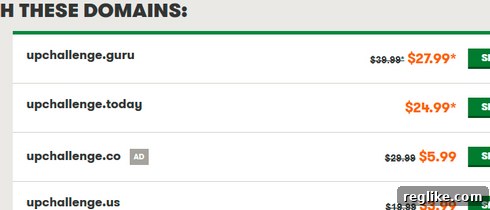
The Dynamics Behind Sponsored Domain Search Results
The practice of registries paying for increased visibility is not entirely new in the digital advertising realm, but its formalization within domain search results by a major player like GoDaddy signals a maturing marketplace. With hundreds of new top-level domain names fighting for shelf space in a crowded digital landscape, more and more registries are recognizing the necessity of paying for placement. This competitive environment pushes registries to seek innovative ways to ensure their extensions are discovered by potential registrants.
GoDaddy, known for its strategic foresight in the domain industry, has indeed been a pioneer in this area. The company holds a number of patents for slotting search results in an Adwords-like manner for top-level domains. These patents underscore GoDaddy’s long-term vision of developing a sophisticated, scalable system where TLD registries can bid for advantageous placement in search queries, much like businesses bid for ad placements on Google Search.
This system allows registries to directly influence their TLD’s visibility for certain keywords or search patterns. For instance, a registry managing .tech might pay to have its extension prominently displayed when users search for tech-related domain names. This mechanism provides registries with a powerful marketing tool, helping them cut through the noise and reach their target audience more effectively. However, it also places a greater responsibility on the registrar to ensure transparency for the end-user.
Why Transparency Matters: User Trust and Informed Decisions
The decision to explicitly label sponsored domain results as “ad” is a positive step towards enhancing user trust and enabling more informed decision-making. In an era where consumers are increasingly aware of how search algorithms and marketing efforts can shape their choices, clear labeling becomes indispensable. Without such designations, users might mistakenly assume that all prominently displayed domain suggestions are purely organic recommendations, based solely on availability or inherent relevance.
By clearly marking these results, GoDaddy empowers users to distinguish between:
- Organic Results: Domains that appear based on their availability, general popularity, or direct search query match.
- Premium Domains: High-value domains listed in the aftermarket, often reflecting significant investment or brand potential, sold by third-party sellers.
- Sponsored “Ad” Results: Domains whose visibility is enhanced due to a paid agreement with the respective TLD registry.
This differentiation is critical for individuals and businesses embarking on their domain name search journey. It allows them to factor in whether a domain is being promoted for commercial reasons when assessing its suitability and perceived value. For instance, a small business owner might prefer an organically available .com if possible, but might consider a sponsored .biz or .shop if it aligns perfectly with their brand and they understand the context of its promotion.
The Evolution of the Domain Name Market: From Scarcity to Abundance
The proliferation of new generic Top-Level Domains (gTLDs) over the past decade has fundamentally reshaped the domain name market. Historically dominated by a handful of familiar extensions like .com, .org, and .net, the internet now boasts hundreds of specific, niche, and geographically relevant TLDs. This explosion of choice was designed to foster innovation, provide more relevant branding opportunities, and alleviate the scarcity of desirable names under older extensions.
However, this abundance has also created new challenges. For registries launching these new TLDs, the primary hurdle is discoverability. How do you make potential registrants aware of .app, .dev, .store, or .xyz when .com remains the default in most people’s minds? This is where marketing agreements and sponsored placement come into play. Registries invest in these arrangements to ensure their TLDs don’t get lost in the vast digital ocean, thereby increasing their chances of adoption and sustained growth.
GoDaddy, as a major registrar and marketplace, plays a pivotal role in this ecosystem. By providing a platform for sponsored results, they facilitate the visibility of these new extensions, helping registries reach a broader audience. Simultaneously, by labeling these results, they uphold their responsibility to maintain a transparent and trustworthy search experience for their millions of users worldwide.
Navigating Your Domain Name Search with Confidence
For users seeking to register a domain name, the presence of “ad” labels necessitates a slightly more discerning approach. Here are some best practices to ensure you make an informed decision:
- Understand the Labels: Familiarize yourself with “ad” and “premium” designations. An “ad” means a registry is promoting it; “premium” means a third party is selling a high-value existing domain.
- Prioritize Your Needs: Determine what is most important for your brand or project. Is it the widely recognized .com, a niche-specific gTLD, or a geo-specific extension?
- Explore Beyond the First Page: Don’t limit your search to the initial suggestions. Scroll down and explore all available options, including those that might not be overtly promoted.
- Consider Alternatives: If your ideal .com isn’t available, evaluate how a new gTLD could benefit your brand. Sometimes a specific TLD like .io for tech or .blog for content creators can be more impactful than a compromised .com.
- Assess Value vs. Cost: While sponsored domains are often just standard registration prices, premium domains can be significantly more expensive. Weigh the long-term value against the initial investment.
- Read Reviews and Research: Before committing to a less common TLD, do a quick search to understand its general reputation and suitability for your use case.
The move by GoDaddy to explicitly label sponsored domain results is a sign of a maturing and increasingly transparent domain name market. It acknowledges the commercial realities of promoting new TLDs while simultaneously empowering users with the knowledge to make better choices. As the digital landscape continues to expand, such clear distinctions will become even more crucial in helping individuals and businesses establish their online presence effectively and confidently.
Ultimately, whether a domain result is organic, premium, or sponsored by an “ad” label, the most important factor remains its relevance and suitability for your specific needs. GoDaddy’s initiative, therefore, serves as a valuable tool for domain seekers, offering a clearer lens through which to view the vast array of choices available in today’s dynamic domain name ecosystem. It promotes a more informed and empowered user experience, ensuring that digital identity decisions are made with complete awareness of the underlying factors influencing their presentation.