
The Alarming Trend: Spammers Ruthlessly Exploit Cheap New Domain Names
The digital landscape is constantly evolving, bringing with it both innovation and new challenges. One persistent threat to internet integrity is spam, and a recent report sheds light on how malicious actors are adapting their tactics. It reveals a disturbing pattern: spammers are increasingly drawn to the affordability of certain new top-level domain (TLD) options, leveraging their low cost to fuel widespread abuse campaigns.
Spammers operate on a simple, yet highly effective, principle: volume and speed. Their business model relies on churning through an immense quantity of domain names. As soon as a domain becomes compromised, sees its email deliverability plummet, or gets blacklisted, they simply abandon it and move on to the next. This constant rotation of digital identities allows them to evade detection and continue their illicit activities with minimal interruption.
This relentless domain cycling strategy perfectly explains the insights presented in Architelos’ June NameSentry Abuse Report. The report, a crucial resource for understanding the state of domain abuse, offers a stark visualization of this problem:
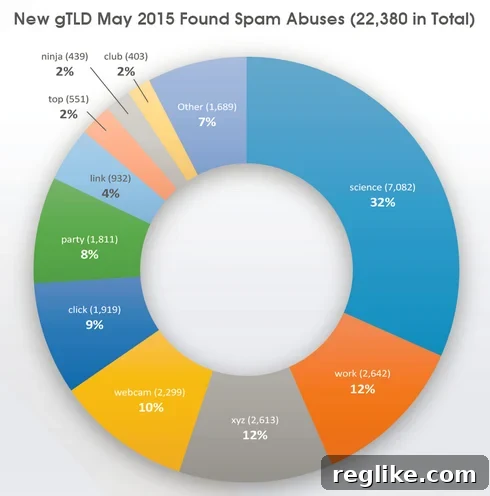
While the image itself displays specific data, the overarching conclusion drawn from the analysis is clear and concerning: the bulk of improper use associated with new top-level domain names is directly attributed to spam. More significantly, the chart highlights precisely which of these new TLDs are experiencing the most severe levels of abuse. Upon closer inspection, a distinct pattern emerges that directly correlates with spammers’ economic motivations.
The Undeniable Link Between Affordability and Abuse
A striking observation from the Architelos NameSentry report is the common thread running through the most abused new TLDs: they are, without exception, among the cheapest options available on the market. In fact, many of the domain names prominently featured on this chart could, at the time of the report, be acquired for as little as $2 or even less through various registrars, often as part of limited-time promotional offers. This stark pricing difference is not a mere coincidence; it is a critical factor in the calculus of mass spam operations.
For a spammer who needs to register, say, 1,000 new domains within a single week to sustain their campaigns, the cost per domain becomes an enormous consideration. Paying $2 per domain instead of $8 translates into a substantial saving of $6,000 for that batch alone. When scaled up to thousands or even tens of thousands of domains over a longer period, these savings become staggering, directly impacting the profitability and sustainability of large-scale spamming enterprises. This economic incentive drives spammers to gravitate towards the most inexpensive TLD options, turning promotional pricing into an unwitting facilitator of cyber abuse.
The Evolution of Domain Names and the Emergence of New TLDs
The introduction of hundreds of new generic top-level domains (gTLDs) by ICANN in recent years was hailed as a significant expansion of the internet’s naming system. Beyond the traditional .com, .org, and .net, these new TLDs promised increased choice, greater branding opportunities, and specialized online identities for businesses and individuals alike. Domains like .xyz, .top, .online, .site, .club, and many others rapidly became available, offering registrants a wider array of options to express their digital presence.
While this expansion brought many benefits, it also inadvertently created new avenues for malicious activity. The sheer volume of new domains, coupled with varying registration policies and pricing strategies, presented an unprecedented opportunity for cybercriminals. Spammers, always on the lookout for weak points in the system, quickly identified the potential of cheap new TLDs to serve as disposable assets for their nefarious campaigns.
Why Spammers Prioritize Volume Over Longevity
The core objective of a spam campaign is to send out a vast number of unsolicited messages in the shortest possible time. To achieve this, spammers require a continuous supply of fresh, untainted domain names and IP addresses. Here’s why:
- Blacklisting: Email service providers (ESPs) and security filters are constantly identifying and blacklisting domains and IP addresses associated with spam. Once a domain is blacklisted, its email deliverability drops to near zero, rendering it useless for further spamming.
- Campaign Lifespan: Individual spam campaigns often have a very short effective lifespan. Spammers know their domains will eventually be caught, so they plan for rapid deployment and quick disposal.
- Evasion Tactics: By constantly cycling through new domains, spammers make it harder for security professionals to track their operations and implement effective countermeasures. Each new domain represents a fresh attempt to bypass filters.
In this high-volume, low-longevity model, the cost of each individual domain name is paramount. A higher cost per domain would significantly eat into a spammer’s profit margins, making their operations less viable. Hence, the appeal of TLDs that can be acquired for minimal expense is overwhelming.
The Broader Impact of Domain Abuse Fuelled by Cheap TLDs
The widespread abuse of cheap new TLDs for spamming has far-reaching consequences that extend beyond irritating junk mail. It poses significant threats to internet users, legitimate businesses, and the overall integrity of the online ecosystem.
Threats to Internet Users
- Malware and Phishing: Many spam campaigns are not just about unwanted advertisements. They often serve as conduits for distributing malware, ransomware, and sophisticated phishing attacks designed to steal personal information, login credentials, or financial data.
- Scams and Fraud: Cheap domains are frequently used to host fraudulent websites, impersonate legitimate services, or propagate various online scams, preying on unsuspecting users.
- Erosion of Trust: A constant barrage of malicious or unwanted emails makes users more wary of legitimate communications, leading to missed important messages and a general distrust of online interactions.
Damage to Businesses and Brands
- Brand Impersonation: Cybercriminals often use similar-looking domains (typosquatting) or register domains with brand names on new TLDs to launch phishing attacks that mimic legitimate businesses, damaging brand reputation and leading to customer confusion and loss of trust.
- Increased Security Costs: Businesses must invest more in advanced email filtering, threat intelligence, and brand protection services to defend against these evolving threats, adding to their operational expenses.
- Reduced Email Deliverability: The overall increase in spam originating from certain TLDs can inadvertently affect the deliverability of legitimate emails from those same TLDs, even for law-abiding businesses.
Strain on the Internet Ecosystem
- Resource Exhaustion: The sheer volume of spam consumes significant network resources, from bandwidth to server processing power, impacting the efficiency and speed of the internet.
- Security Burden: Internet service providers (ISPs), email providers, and security researchers are constantly battling this deluge of malicious traffic, diverting resources from other important security initiatives.
- Policy Challenges: The decentralized nature of domain registration and the global scale of the internet make it challenging to implement consistent and effective abuse prevention policies across all registries and registrars.
Combating Domain Name Abuse: A Collaborative Responsibility
Addressing the problem of spam originating from cheap new TLDs requires a concerted and collaborative effort from various stakeholders across the internet ecosystem. No single entity can solve this issue alone; a multi-faceted approach is essential.
Role of Registries and Registrars
- Enhanced Abuse Monitoring: Registries (organizations managing TLDs) and registrars (companies selling domain names) must implement more robust and proactive abuse monitoring systems. This includes leveraging AI and machine learning to detect suspicious registration patterns and content.
- Stricter Enforcement of Policies: Abusers often thrive where policies are lax or enforcement is inconsistent. Registries and registrars need to enforce their acceptable use policies vigorously, including prompt investigation and suspension of domains reported for abuse.
- “Know Your Customer” Initiatives: Implementing stronger identity verification processes during domain registration can deter anonymous spammers and make it harder for them to acquire domains in bulk under false pretenses.
- Collaboration and Information Sharing: Sharing threat intelligence about new spamming tactics and compromised domains among registrars and with security organizations can help in collective defense.
Enhancing Email and Network Security Measures
- Advanced Spam Filtering: Email service providers must continue to refine and deploy sophisticated spam filtering technologies, using behavioral analysis, reputation scoring, and content analysis to block malicious emails before they reach inboxes.
- Email Authentication Protocols: Widespread adoption and enforcement of email authentication standards like SPF (Sender Policy Framework), DKIM (DomainKeys Identified Mail), and DMARC (Domain-based Message Authentication, Reporting & Conformance) are crucial. These protocols help verify the authenticity of email senders and prevent spoofing.
- Threat Intelligence Sharing: Security vendors, researchers, and government agencies should enhance their cooperation in sharing threat intelligence to identify and disrupt spam networks and botnets.
Empowering Users and Businesses
- User Education: Ongoing public awareness campaigns are vital to educate users about the dangers of spam, phishing, and online scams. Emphasizing critical thinking before clicking on suspicious links or opening attachments is key.
- Brand Monitoring Services: Businesses, especially those with established brands, should utilize brand monitoring services that track domain registrations across all TLDs to identify and act on potential brand impersonation attempts.
- Reporting Mechanisms: Making it easier for users and businesses to report spam and domain abuse to relevant authorities, registrars, and security organizations is crucial for swift action.
Conclusion: An Ongoing Battle for a Safer Internet
The Architelos NameSentry report serves as a stark reminder that the fight against internet abuse is a continuous one. The clear correlation between the affordability of new TLDs and their exploitation by spammers highlights a critical vulnerability in the domain ecosystem. While the expansion of the domain space offers undeniable benefits, it also necessitates heightened vigilance and more robust protective measures.
The challenge lies in striking a balance between fostering an open, accessible internet and implementing safeguards that deter malicious actors without stifling legitimate innovation. As long as economic incentives drive spammers, the demand for cheap, disposable domains will persist. Therefore, a collective commitment from registries, registrars, security providers, and users is paramount to build a more resilient and trustworthy online environment. Only through sustained collaboration and proactive measures can we hope to mitigate the pervasive threat of spam and ensure a safer internet for all.
You can view the entire NameSentry report for detailed insights into the state of domain abuse and further analysis here (PDF).