
Capital One’s Grand Ambitions: Beyond Capital One Arena to D.C. Stadium Naming Rights?
The landscape of corporate sponsorship in professional sports is ever-evolving, with naming rights deals becoming a cornerstone of brand visibility and strategic marketing. Following the initial buzz surrounding Capital One’s acquisition of naming rights for what was formerly known as the Verizon Center in Washington D.C., new revelations suggest that the financial services giant might be harboring even grander aspirations for sports venue branding within the nation’s capital. This article delves into the intriguing details of Capital One’s extensive domain registrations, exploring the possibility that their strategic vision extends far beyond just one prominent arena, potentially encompassing other iconic D.C. sports facilities like Nationals Park or even a broader portfolio of venues.
Initially, news broke regarding Capital One’s proactive registration of several domain names, strongly indicating their intent to secure the naming rights for the Verizon Center. This move, which ultimately led to the venue being rebranded as Capital One Arena, marked a significant corporate investment in the heart of Washington D.C.’s sports and entertainment scene. Such an agreement not only provides massive exposure for the brand but also deeply intertwines Capital One with the cultural fabric of the city, home to the NBA’s Washington Wizards, the NHL’s Washington Capitals, and other major events. The successful transition of the Verizon Center to Capital One Arena cemented the company’s commitment to the D.C. metropolitan area and its vibrant sports community.
The Unveiling of Broader Ambitions: New Domain Registrations Emerge
While the Capital One Arena deal captured headlines, a deeper dive into recent domain registration activity by the company suggests that their strategic playbook might include more than just one flagship venue. The registration of an array of new domain names, specifically incorporating terms like “park” and “stadium,” opens up a fascinating discussion about the true scope of Capital One’s long-term branding strategy in Washington D.C. These registrations aren’t merely extensions of the Capital One Arena branding; they represent a distinct category of potential venues.
The registered domains are a clear indication of a forward-thinking, comprehensive strategy. Here is a list of the domain names that piqued curiosity and ignited speculation:
cap1park.comcap1stadium.comcapital1park.comcapital1stadium.comcapitalone-park.comcapitalone-stadium.comcapitalonepark.comcapitaloneparkdc.comcapitalonestadium.comcapitalonestadiumdc.comcaponepark.comcaponestadium.com
The sheer volume and variety of these registrations, encompassing variations with “cap1,” “capital1,” and “capone,” alongside the generic “park” and “stadium” identifiers, suggest a deliberate strategy to cover all bases. The inclusion of “DC” in some of these domains further solidifies the focus on the nation’s capital, removing any doubt about the geographical target of these potential branding initiatives. This comprehensive approach hints at a meticulously planned effort to explore every viable opportunity for significant brand placement within the D.C. sports landscape.
Exploring Potential Targets: Nationals Park and Other D.C. Venues
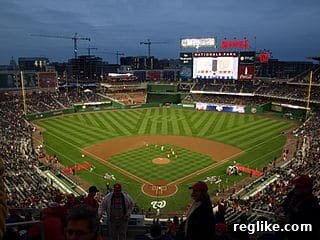
With the Capital One Arena deal firmly in place, the immediate question arising from these new domain registrations is: which other D.C. sports venues could be on Capital One’s radar? The most prominent candidate that comes to mind for a “park” or “stadium” naming rights deal in Washington D.C. is undoubtedly Nationals Park. Home to the MLB Nationals, Nationals Park is a state-of-the-art baseball stadium that hosts millions of fans annually. Securing naming rights for such a high-profile venue would be a monumental achievement, placing the Capital One brand front and center during Major League Baseball’s entire season, from spring training through the playoffs.
Nationals Park: A Prime Opportunity for Brand Exposure
Nationals Park currently operates without a corporate naming rights sponsor, a situation that many in the sports industry view as a significant untapped opportunity. The chance to align with a successful MLB franchise, especially one that has seen recent World Series glory, offers unparalleled brand visibility. A “Capital One Park” or “Capital One Stadium” for the Nationals would not only enhance the company’s local presence but also project its brand image to a national audience through televised games and widespread media coverage. The economic benefits for the Nationals and the city, coupled with the brand amplification for Capital One, make this a highly attractive proposition for both parties involved.
Beyond Nationals Park: The Broader D.C. Sporting Landscape
While Nationals Park stands out as the most obvious target, the generic nature of “stadium” and “park” domains leaves room for other interpretations. For instance, in 2017 when this news first emerged, there was also speculation about RFK Stadium. At that time, RFK Stadium was still operational and hosted D.C. United of Major League Soccer. While D.C. United has since moved to Audi Field (which opened in 2018), and RFK Stadium itself has largely been demolished, the historical context of its mention highlights the broader consideration of *any* significant sports complex. Could Capital One be eyeing a future development project, perhaps a new multi-sport complex, or even smaller, community-focused sports parks under a broader branding initiative? The expansive list of domains suggests a strategic foresight that accounts for various possibilities, not just existing structures.
The Defensive Play: Protecting the Brand
While the idea of Capital One pursuing multiple major naming rights deals in the same city is undeniably bold and strategically clever—especially given their presence as a major employer and corporate citizen in the D.C. metro area—it’s crucial to consider an alternative, more conservative explanation for these domain registrations: a defensive strategy. In the digital age, companies frequently register a multitude of domain names that bear any resemblance to their brand or potential future initiatives. This practice serves several critical purposes:
- Brand Protection: Preventing cybersquatters or competitors from acquiring similar domain names and potentially confusing consumers or tarnishing the brand’s image.
- Future Flexibility: Ensuring that if the company decides to pursue a new product, service, or even a naming rights deal years down the line, the corresponding domain names are already secured. This avoids costly acquisition efforts later on.
- Controlling the Narrative: After the initial news broke about the Verizon Center, Capital One might have anticipated speculation and proactively secured related domains to manage any future announcements or market perceptions.
Given the media attention generated by the initial Verizon Center story, it’s entirely plausible that Capital One adopted a comprehensive defensive posture. Registering variations of “Capital One Park” and “Capital One Stadium” could simply be a prudent measure to protect their newly established identity in the D.C. sports market, rather than a definitive declaration of intent for a second major naming rights acquisition. It’s a common and wise business practice to safeguard intellectual property and digital real estate, especially when a brand is making significant public moves.
The Strategic Rationale Behind Corporate Naming Rights
Regardless of whether these domains represent offensive expansion or defensive protection, the broader context of corporate naming rights remains highly relevant. For companies like Capital One, investing in stadium and arena naming rights offers a multifaceted approach to marketing and brand building:
- Immense Brand Visibility: The company name is prominently displayed on the venue, across media, and in everyday conversation, creating ubiquitous brand recall.
- Community Engagement: Naming rights deals often come with community outreach programs, local sponsorships, and events that foster goodwill and deeper connections with residents.
- Targeted Demographics: Sports venues attract specific demographics, allowing brands to target their audience effectively, whether it’s families, young professionals, or high-net-worth individuals.
- Prestige and Association: Aligning with successful sports teams and state-of-the-art facilities elevates a brand’s prestige and associates it with positive attributes like excitement, achievement, and community spirit.
- Differentiation from Competitors: In competitive industries like financial services, a major naming rights deal can significantly differentiate a brand from its rivals, making it stand out in the marketplace.
- Employee Morale and Recruitment: Such high-profile local involvement can also boost employee morale and aid in recruitment efforts, as employees take pride in their company’s visible community contributions.
For the sports franchises and venues, naming rights provide crucial revenue streams that support team operations, facility maintenance, and future investments. It’s a symbiotic relationship where both the corporation and the sports entity benefit significantly from the partnership.
Capital One’s Deep Roots in the D.C. Metropolitan Area
Capital One’s strategic focus on Washington D.C. is not coincidental. Headquartered in McLean, Virginia, just a short distance from the nation’s capital, Capital One has a substantial presence and deep roots in the D.C. metropolitan area. This regional connection makes any investment in D.C. sports venues particularly resonant. Sponsoring sports complexes in the capital allows Capital One to reinforce its identity as a vital local employer and community partner, strengthening its ties with its customer base and workforce in the region. It’s a shrewd move for a company to cement its brand identity within its primary operational footprint, turning local loyalty into a significant competitive advantage.
The Future of Capital One’s Sporting Empire in D.C.
As the speculation continues, the question remains: are these “park” and “stadium” domain registrations merely a defensive measure to safeguard Capital One’s brand after its successful acquisition of the former Verizon Center’s naming rights, or do they indeed signal a much bolder, expansive strategy to dominate the sports venue branding landscape in Washington D.C.?
Only time will tell the true intent behind these intriguing domain registrations. However, one thing is clear: Capital One has established itself as a major player in the D.C. sports scene, and its future moves will undoubtedly be watched with keen interest by sports fans, business analysts, and competitors alike. Whether it’s one arena or an entire portfolio of venues, Capital One’s commitment to branding within the capital is a testament to the power and strategic value of corporate sponsorships in modern sports.