
Elevate Your Domain Monetization: Google AdSense for Domains Unveils Enhanced Self-Service Templates
In the dynamic world of domain management and online real estate, optimizing parked domains for both immediate monetization and future sales is a crucial task for domain owners. Google AdSense for Domains has long been a significant player in helping owners generate revenue from their undeveloped or temporarily unused domain names. A recent and highly anticipated update to its self-service system is set to empower domain owners even further, offering unprecedented control over the visual presentation and transactional potential of their domains.
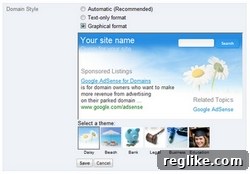
Taking Control: The New Template Selection System for Parked Domains
For many years, Google AdSense for Domains has diligently worked behind the scenes, continually testing various design templates and visual layouts for parked pages. While these tests aimed to maximize ad performance and user engagement through A/B testing with diverse imagery and structures, domain owners previously had no direct influence over which specific templates were ultimately displayed on their domain names. This often left owners wondering if their domains were presenting the most relevant or appealing interface to visitors.
The introduction of the new self-service system marks a pivotal shift. Now, domain owners are granted the power to select a template for their domain names directly, bringing a new level of customization and strategic control to their domain portfolio. This feature is a game-changer for those who wish to align their parked pages more closely with the domain’s theme, potential usage, or target audience, moving beyond a purely automated selection process.
The available templates are thoughtfully categorized to cater to a wide range of domain types and purposes. Users can choose from:
- Generic Templates: These are versatile designs, such as the example “Daisy” template, suitable for general-purpose domains or those without a highly specific niche. They offer clean layouts designed to present ads effectively while maintaining a professional appearance.
- Category Templates: For domains falling into specific industries or sectors, dedicated category templates are now available. These include options tailored for banking, legal services, education, and business, among others. Such specialized templates are invaluable for enhancing the relevance of the parked page. By presenting a design theme congruent with the domain’s implied industry, domain owners can potentially improve user experience, reduce bounce rates, and increase click-through rates on relevant advertisements. A banking domain, for instance, would benefit significantly from a template that evokes trust and financial themes, even if it’s currently parked.
Beyond these graphical options, a text-only lander remains a viable choice. This minimalist approach can be effective for certain types of traffic or if the primary goal is sheer ad visibility without visual distractions. Google, leveraging its vast data analytics and machine learning capabilities, still recommends allowing the system to intelligently select the version that performs best for specific domain names. This recommendation underscores the power of Google’s algorithms to optimize for performance, suggesting a balanced approach where manual selection can be informed by or complement automated insights.
Beyond Monetization: Signaling Your Domain is For Sale
Monetization through advertising is one key aspect of managing parked domains, but for many domain owners, the ultimate goal is to sell the domain itself. The self-service system now seamlessly integrates this crucial function, allowing domain owners to place a prominent “for sale” notice directly on their domain names. This simple yet powerful addition transforms parked pages from mere ad revenue generators into active sales conduits.
The benefits of this feature are multi-faceted:
- Increased Visibility: Potential buyers who land on a parked domain will immediately see that it is available for purchase, eliminating the need to search through WHOIS records or external marketplaces. This direct notification streamlines the buying process significantly.
- Passive Sales Channel: Domain owners can effectively turn every visit to their parked domain into a potential sales inquiry without active marketing efforts. The page itself becomes a silent salesperson, working 24/7.
- Improved Buyer Experience: For those actively seeking to acquire a domain, stumbling upon a clearly marked “for sale” page is a much more positive experience than encountering a generic parked page with no indication of availability. It reduces friction and frustration for interested parties.
- Integration with Existing Monetization: The “for sale” notice can coexist with advertising, allowing domain owners to generate revenue while simultaneously seeking a buyer. This ensures that the domain remains productive during its sales cycle.
This integration reflects a deeper understanding from Google of the comprehensive needs of domain owners, moving beyond purely ad-centric monetization to encompass the broader domain lifecycle, including acquisition and divestment.
Optimizing for Success: Google’s Recommendations and Best Practices
While the new customization features are undoubtedly a welcome enhancement, Google’s recommendation to “let the system select which version works best for their domain names” is not to be overlooked. This advice is rooted in Google’s unparalleled ability to analyze vast amounts of data, user behavior, and ad performance metrics. Their sophisticated algorithms can often identify optimal template configurations that lead to higher engagement and better ad revenue than manual selection alone, especially for a large portfolio of diverse domains.
Best practices for domain owners leveraging these new tools would involve a strategic blend of manual control and automated optimization:
- Start with Smart Defaults: For domains without a clear niche or where performance is paramount, consider adhering to Google’s automated template selection initially. Monitor performance closely.
- Categorize Strategically: For domains with clear industry relevance (e.g., a finance domain, an education portal), actively select a category-specific template. This can significantly improve the contextual relevance of the page and the ads displayed.
- Test and Iterate: Even with Google’s recommendations, domain owners can perform their own simple A/B tests. Try a specific template for a period, then switch to a different one (or back to Google’s auto-selection) and compare key metrics like revenue per impression or click-through rates.
- Utilize the “For Sale” Feature Wisely: If a domain is truly intended for sale, ensure the “for sale” notice is active. Consider adding clear contact information or a link to a dedicated landing page for inquiries to streamline the sales process.
- Regular Review: The domain landscape evolves. Periodically review your parked domain templates and “for sale” statuses. A domain that was generic yesterday might acquire new relevance today, warranting a template update.
The Evolving Landscape: AdSense for Domains vs. Dedicated Parking Platforms
While these customization features represent a significant step forward for Google AdSense for Domains, the article rightly points out that “the number of templates and graphics still pales in comparison to what most Google Adsense for Domains partners (e.g. Sedo) offer to clients.” This observation highlights an important distinction in the domain parking ecosystem.
Dedicated domain parking platforms like Sedo, NameMedia, or DomainNameSales.com (now part of GoDaddy) have built their entire business around optimizing parked pages. Their core competency lies in providing advanced tools, a much broader array of customizable templates, sophisticated bidding mechanisms, integrated domain marketplaces, and often, more granular control over ad types and layouts. These platforms often invest heavily in user interface design, specialized analytics, and direct brokerage services, making them a one-stop shop for domain investors.
Google AdSense for Domains, on the other hand, operates within the broader Google ecosystem, primarily focusing on ad serving and monetization. Its strength lies in its vast advertiser network, advanced ad matching technology, and seamless integration with other Google services. While it provides excellent baseline monetization, its primary objective isn’t to be a full-fledged domain management platform with all the bells and whistles of dedicated services.
The gap in customization options reflects these differing business models and focuses. However, Google’s recent updates indicate a clear effort to bridge some of these gaps, making AdSense for Domains a more competitive and user-friendly option for a wider segment of domain owners, particularly those who prefer Google’s integrated approach or manage smaller portfolios without needing the full suite of advanced parking tools.
Driving Value: SEO and User Experience on Parked Domains
The new template selection and “for sale” features also have indirect but significant implications for Search Engine Optimization (SEO) and overall user experience (UX) for parked domains. While parked domains are not typically optimized for organic search rankings in the traditional sense, a well-presented parked page can still contribute positively to a domain’s perceived value and prevent negative signals.
- Enhanced User Experience: A relevant and visually appealing template creates a better first impression for visitors. This can lead to lower bounce rates and increased time on page, even if the primary interaction is with ads or a “for sale” notice. A good UX ensures that visitors don’t immediately abandon the page, which search engines might interpret as a sign of low quality.
- Relevance and Context: By selecting category-specific templates, domain owners improve the contextual relevance of the page. This helps search engines understand the potential topic of the domain, and while it won’t necessarily rank a parked page, it contributes to a cleaner semantic profile for the domain itself.
- Clear Call to Action: The “for sale” notice serves as a clear call to action. From an SEO perspective, clear CTAs improve user engagement and can reduce confusion, contributing to a more positive user experience.
- Reduced Negative Signals: A professional-looking parked page, even with ads, is preferable to a broken page, a generic server error, or a poorly designed placeholder. Such issues can negatively impact a domain’s reputation over time, especially if it ever goes live with full content.
These features help transform a potentially dead-end page into a purposeful landing page, whether that purpose is ad revenue generation or facilitating a domain sale. This proactive management of parked domains is critical in maintaining the value and integrity of a domain portfolio.
The Future Outlook for Domain Monetization
The continuous evolution of platforms like Google AdSense for Domains highlights the ongoing innovation in the domain aftermarket. As internet real estate becomes ever more valuable, the tools available to domain owners for maximizing their assets will continue to advance. We can anticipate further enhancements, potentially including more granular control over ad placement, deeper integration with domain marketplaces for sales, and even more sophisticated AI-driven template optimization.
These updates reinforce the idea that even an undeveloped domain holds inherent value and can actively contribute to a portfolio through intelligent monetization and clear communication regarding its availability. Domain owners who embrace these self-service capabilities will be better positioned to extract maximum value from their parked domains, whether through sustained ad revenue or through a timely and profitable sale.
In conclusion, Google AdSense for Domains’ latest update, granting domain owners the ability to select templates and prominently display “for sale” notices, marks a significant stride towards empowering users. It offers a more tailored, strategic, and efficient approach to managing and monetizing parked domain names, blending Google’s algorithmic prowess with enhanced user control for a truly optimized domain experience.