
Mastering Automated Domain Appraisals: A Smart Domainer’s Guide to Unlocking Value
In the dynamic world of digital assets, domain names stand out as unique and valuable pieces of online real estate. Their valuation, however, has always been a complex art, often debated even among seasoned experts. The advent of automated domain appraisal tools has introduced a fascinating, yet frequently misunderstood, dimension to this challenge. While often criticized for their perceived inaccuracies, smart domain investors understand that these tools, when wielded strategically, can be incredibly powerful assets in their arsenal. This comprehensive guide will explore how you can leverage automated domain appraisals to your advantage, transforming raw data into actionable insights and profitable decisions.
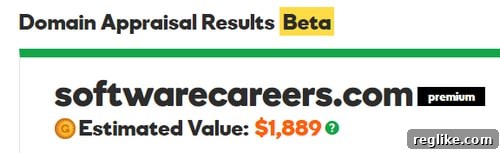
The introduction of automated systems, such as the one GoDaddy released to the public, sparked considerable discussion and, in some cases, outright skepticism within the domaining community. Many professionals initially disagreed with the valuations provided, highlighting the inherent difficulty of quantifying the worth of a digital asset programmatically. Unlike tangible assets, domain names are unique; their value can be profoundly influenced by market trends, buyer specific needs, brand potential, and even the negotiating prowess of the buyer and seller.
Despite these challenges, automated appraisals offer immense value to domain name investors who know how to interpret and apply their data. Dismissing powerful tools like GoDaddy’s or Estibot’s out of hand is akin to leaving valuable data – and potential profits – on the table. By adopting a nuanced approach, you can transform these seemingly imperfect systems into indispensable resources for both buying and selling domain names. Let’s delve into the strategic methods for effectively utilizing automated appraisals.
The Foundational Principles of Interpreting Automated Appraisals
Before diving into specific tactics, it’s crucial to understand the fundamental philosophy behind using automated appraisal tools. They are not crystal balls, but rather sophisticated data processors designed to provide a starting point for your domain valuation journey.
1. Appraisals are Data Points, Not Definitive Answers
This is perhaps the most critical principle for any domain investor to grasp. No appraisal, automated or expert, should ever be taken as the final, absolute truth regarding a domain’s value. Domain valuation is inherently subjective, influenced by a multitude of factors that even the most advanced algorithms struggle to fully comprehend. An automated appraisal is a calculated estimate based on a vast dataset of historical sales, keyword popularity, domain length, TLD, and other quantifiable metrics. It serves as an excellent starting point for further investigation and negotiation, providing a range rather than a fixed price. Even seasoned domain valuation experts often arrive at differing figures, underscoring the nuanced nature of this market. Your role as an investor is to critically evaluate this data point within the broader context of the market and your specific investment goals.
2. Always Review the Rationale Behind the Valuation
Many automated appraisal platforms, including GoDaddy’s and Estibot, don’t just present a number; they provide a rationale explaining how that number was reached. This “why” behind the valuation is often more valuable than the number itself. GoDaddy typically presents this information in clear, plain English, highlighting factors like comparable sales, keyword value, and brandability. Estibot, on the other hand, often provides a more data-rich breakdown, including search volume, CPC (cost per click), presence on other TLDs, and other statistical indicators.
Understanding this rationale is crucial because it allows you to identify strengths and weaknesses in the appraisal’s logic. For instance, if Estibot indicates that your .com domain name also has registrations in .net and .org, that’s a strong indicator of demand and perceived value across different TLDs. Conversely, sometimes the rationale can be fundamentally flawed. Consider a domain I once ran through GoDaddy’s tool, which contained a specific three-number and one-letter sequence. The appraisal was significantly lower than its eventual sale price because GoDaddy’s algorithm compared it to generic domains with similar numerical/letter patterns. However, my domain represented a highly specialized financial term from the tax code, a nuance that an automated system couldn’t easily recognize. Such instances highlight the importance of human oversight; these tools are powerful, but they lack human intuition and contextual understanding. Always scrutinize the underlying data and assumptions.
3. Leverage Comparative Sales (Comps) as a Goldmine
Regardless of whether you agree with the precise valuation an automated appraisal provides, the comparative sales data (comps) presented alongside it can be an absolute goldmine. These comps offer real-world examples of similar domains that have recently sold, providing concrete evidence of market demand and pricing trends. Even if the overall appraisal figure seems off, the related sales can be invaluable for determining a fair market value and strengthening your negotiation position.
For example, if you’re evaluating a domain like AtlantaBodyshop.com and the appraisal includes KansasCityBodyshop.com as a comp, you have powerful data. If a potential buyer tries to argue that your asking price is too high, you can confidently point to the successful sale of a geographically similar domain, like KansasCityBodyshop.com, especially if its sale price was higher. This provides tangible proof that your expectations are not outlandish. GoDaddy, in particular, often excels in providing highly relevant comparative sales, likely due to its unparalleled access to vast amounts of domain sales data. Analyzing comps meticulously allows you to build a robust case for your domain’s value, transforming subjective opinion into data-backed assertions during sales discussions.
Strategic Applications for Buying and Selling Domain Names
Beyond simply understanding how these tools work, the real power of automated appraisals lies in their strategic application during your domain investment activities.
4. Utilize Automated Appraisals to Your Advantage When Buying
Many domain investors share the sentiment that automated appraisals often lean towards conservative or even low valuations. If this is your perception, then you have a distinct advantage when you’re on the buying side of a transaction. This strategy is particularly effective when dealing with less experienced sellers who may trust prominent platforms like GoDaddy without further verification.
I’ve personally used this tactic with great success. In one instance, I purchased a domain from a seller who, on their own initiative, used GoDaddy’s appraisal system. The tool provided a reasonable, albeit slightly conservative, valuation which they used as their baseline. Recognizing this, I submitted an offer that was approximately 60% of the GoDaddy appraisal value, and it was accepted. The seller felt confident in the sale because they had a widely recognized third-party validation. Consumers generally trust established brands like GoDaddy, and this trust can be a powerful psychological lever in your negotiations. When approaching a potential acquisition, consider suggesting an automated appraisal to the seller or conducting one yourself to gauge their potential expectations. This can provide you with crucial insights for formulating a compelling offer, often allowing you to acquire valuable assets at a favorable price point.
5. Identify Outliers and Optimize Your Domain Portfolio
One of the most powerful, yet often overlooked, applications of automated appraisals is for portfolio management and discovery. Every six months, I make it a point to run my entire domain portfolio through a bulk appraisal checker, such as Estibot’s. My primary objective isn’t to get definitive valuations for all my domains, but rather to identify outliers – domains whose value might have unexpectedly shifted, or “diamonds in the rough” that I may have overlooked during initial screening.
Automated appraisals are remarkably adept at flagging domains that have experienced a surge in perceived value. Perhaps another company has recently registered the .net and .org versions of your .com, indicating increased interest in the brand. Maybe search volumes for a specific keyword within your domain have dramatically spiked due to emerging market trends or technological advancements. Or perhaps there’s been a flurry of recent comparable sales in a niche related to your domain, signaling growing demand. These tools can highlight such changes, prompting you to investigate further. This proactive approach helps prevent valuable assets from being neglected or, worse, inadvertently dropped. Running your domains through a bulk checker before their renewal date is an essential step; it ensures you’re not letting go of a domain that has unexpectedly appreciated in value, allowing you to either hold onto it, actively market it, or strategically let it expire if it truly holds no future promise. It’s an effective way to keep your finger on the pulse of your entire investment portfolio, ensuring you’re maximizing its potential.
Advanced Strategies for Maximizing Appraisal Insights
To further enhance your use of automated appraisals, consider integrating these advanced techniques:
- Cross-Referencing Multiple Tools: Don’t rely on just one appraisal service. Use GoDaddy, Estibot, NamePros, and others to get a broader range of valuations and compare the different rationales and comparable sales they present. This multi-tool approach provides a more comprehensive perspective.
- Tracking Historical Data: If an appraisal tool offers historical data or allows you to save appraisal reports, track how the estimated value of your domains changes over time. This can reveal growth trends or declines, helping you make informed decisions about when to sell or hold.
- Integrating Market Context: Always overlay automated data with real-world market intelligence. Are there new industries emerging? Is there a sudden interest in a specific keyword or technology? Automated tools are backward-looking (based on past sales); human insight provides a forward-looking perspective.
- Enhancing Keyword Research: Use the keyword data and search volume metrics provided by appraisal tools to refine your keyword research for new domain acquisitions or to identify development opportunities within your existing portfolio.
Conclusion: Embrace the Imperfection for Perfect Profit
In conclusion, the debate around automated domain appraisals often centers on their perceived lack of precision. While it’s true that they are not always “spot on,” to dismiss them entirely is to ignore a powerful resource. Automated domain appraisal tools like GoDaddy’s and Estibot’s are built on vast datasets and sophisticated algorithms that provide invaluable insights into market trends, comparative sales, and potential value drivers. They are not designed to replace human judgment but rather to augment it, offering a data-driven foundation for your investment decisions.
For the savvy domain investor, these tools are indispensable for identifying acquisition opportunities, negotiating effectively, and optimizing portfolio performance. By understanding their strengths, acknowledging their limitations, and employing them strategically, you can transform these seemingly imperfect systems into a significant competitive advantage. Embrace the data, apply your expertise, and watch as automated appraisals help you unlock greater value and profitability in your domain investing journey.