
The digital landscape is in a constant state of flux, with search engines like Google continuously refining how information is presented to users. In an ongoing effort to enhance user experience, particularly on mobile devices, Google has introduced significant alterations to its search results display. One such pivotal change involves the replacement of traditional domain names with more user-friendly site names and informative breadcrumbs within the search engine results pages (SERPs).
This evolution underscores a broader shift in how users perceive and interact with search results, moving towards a more intuitive, brand-centric, and contextually rich environment. Understanding these changes is crucial for website owners, SEO professionals, and anyone invested in digital visibility. What might appear as a minor aesthetic tweak on the surface has profound implications for branding, trust, and how content is discovered in an increasingly mobile-first world.
Google’s Evolving SERPs: From Domains to Brand Names
Google’s commitment to optimizing the mobile search experience has driven many of its recent updates. This specific transformation, which began rolling out several years ago, fundamentally alters the visual architecture of search results. Instead of merely displaying the raw URL, Google now dynamically showcases a site’s chosen name alongside a clear breadcrumb navigation path.
Initially, this site name replacement was observed primarily in the U.S. market, while the introduction of breadcrumbs was a global rollout. The change marked a strategic move away from simply identifying a website by its technical address (the domain) to recognizing it by its established brand or identity (the site name). This subtle yet powerful distinction aims to provide immediate clarity to users about the source of the information, fostering a more trustworthy and recognizable search ecosystem.
For example, a search result that might have previously shown “example.com/blog/article-title” could now display “Example Blog > Articles > Article Title.” This shift not only cleans up the visual presentation but also offers users a quicker understanding of where they are heading within a website’s structure before they even click.
Here’s an example of how this transformation manifests:
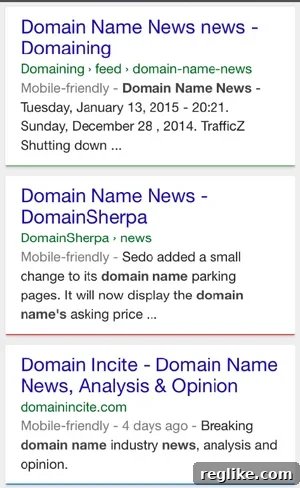
In the illustration above, domains such as “domaining.com” are no longer the primary identifier; instead, they are replaced by “Domaining.” Similarly, “DomainSherpa.com” becomes “DomainSherpa.” This direct visual representation of a brand rather than a URL string facilitates quicker recognition and builds immediate credibility with the user. While Google’s algorithm has become remarkably sophisticated in identifying these site names, there are instances where it might not perfectly interpret a site’s intended name, occasionally defaulting to the full domain or an incomplete brand name. This highlights the ongoing need for webmasters to provide explicit signals to Google about their preferred site identity.
The Rationale Behind the Change: User Experience and Trust
Google’s motivations behind these substantial adjustments are multifaceted, but they consistently circle back to enhancing the user experience, especially for the ever-growing mobile audience. Small screens demand efficiency and clarity, and a lengthy URL string often fails to deliver on these fronts. By prioritizing site names and breadcrumbs, Google addresses several key objectives:
Improved Readability and Aesthetics
On mobile devices, screen real estate is at a premium. Replacing a potentially long and complex URL with a concise site name and a simple breadcrumb path significantly improves the visual cleanliness and readability of search results. This makes it easier for users to quickly scan and understand the results, reducing cognitive load.
Enhanced Trust and Brand Recognition
Users naturally gravitate towards brands they recognize and trust. Seeing a familiar site name directly in the search results offers immediate reassurance and helps users make more informed decisions about which links to click. It shifts the focus from a technical web address to a human-readable brand, fostering a stronger connection between the user and the content source. This is particularly relevant in an era where misinformation and phishing attempts are prevalent; a clear brand name can act as an initial layer of verification.
Better Context and Navigation
Breadcrumbs provide invaluable navigational context. They show users where the specific page fits within the larger website structure, helping them understand the hierarchy of information. This not only aids in decision-making before clicking but also sets expectations for what users will find once they land on the page. For instance, “Electronics > Smartphones > Samsung” is far more informative than just a generic product page URL.
Alignment with Semantic Search
These changes are also indicative of Google’s broader move towards semantic search, where the engine aims to understand the meaning and context of queries and content, rather than just matching keywords. By displaying site names and breadcrumbs, Google is presenting information in a more semantically rich way, mirroring how humans naturally categorize and refer to online resources.
Implications for Website Owners and SEO
While the user benefits are clear, these changes carry significant implications for website owners, SEO strategists, and branding experts. The shift from domain-centric identification to brand-centric identification reshapes strategies for online presence and visibility.
The Evolving Role of Domain Names
The original concern that this move “devalues domain names” holds some truth in the context of SERP display. While an excellent, memorable domain name remains crucial for direct navigation, email branding, and overall online identity, its prominence within Google’s mobile search results has diminished. This subtly pushes webmasters to focus more on their overarching brand identity rather than solely relying on an exact-match domain (EMD) for search visibility. A strong, brandable domain is still an asset, but its perceived weight in the initial SERP impression has been rebalanced against the site’s brand name.
Prioritizing Site Names
Website owners must now pay close attention to how Google identifies their “site name.” Google typically infers this from various sources, including:
- Schema.org Markup: Specifically, the `WebSite` schema, where you can explicitly define your site’s name.
- HTML Title Tags: The text within your `
- Open Graph (`og:site_name`): Meta tags used by social media platforms can also provide signals.
- Google My Business/Knowledge Panel: For businesses, this can be a strong signal.
- Common Usage: Google’s algorithms are sophisticated enough to deduce popular or commonly used names for a website.
Ensuring consistency across these signals is paramount. If Google picks up an incorrect or undesirable site name, it can confuse users and dilute brand recognition. Webmasters should proactively guide Google by implementing appropriate structured data.
Leveraging Breadcrumbs for SEO and UX
Breadcrumbs are not just for aesthetics; they are powerful SEO tools. Properly implemented breadcrumbs, typically using `BreadcrumbList` schema markup, offer several benefits:
- Enhanced User Navigation: They provide a clear path for users to navigate back to higher-level pages, improving overall site experience and reducing bounce rates.
- Internal Linking: Breadcrumbs create a logical internal linking structure, distributing link equity across related pages and helping search engine crawlers understand your site’s hierarchy.
- Rich Snippets: When marked up correctly, Google can display these breadcrumbs directly in the SERPs as rich snippets, offering users more context and making your listing more appealing.
- Sitemaps for Humans: They essentially act as a mini-sitemap on every page, making complex sites easier to understand for both users and search engines.
A well-structured website with logical breadcrumbs will naturally perform better in this new environment.
The Ascendancy of Branding
This change unequivocally puts a greater emphasis on branding. A strong, memorable, and consistently applied brand name is now more critical than ever. Websites need to invest in clear branding, consistent messaging, and a recognizable online identity that transcends the mere domain name. This includes everything from logo design to brand voice and overall online reputation.
Building Trust and Authority
In an increasingly competitive and often dubious online world, trust is a valuable commodity. A clearly presented brand name in search results, supported by contextual breadcrumbs, helps to build this trust. It signifies professionalism and legitimacy. Sites that appear generic or inconsistent in their naming might struggle to gain the same level of user confidence.
Addressing Potential Challenges and Concerns
While the benefits of these changes are significant, the initial concerns raised in the original article about “spoofing names” and Google’s accuracy remain relevant points of discussion.
Preventing Spoofing and Misrepresentation
The fear that malicious actors could exploit the site name feature to impersonate reputable brands is a legitimate one. If Google solely relied on a self-declared name without verification, it could lead to phishing and brand erosion. However, Google’s systems are designed to be robust. They combine various signals, including official brand registrations, common usage, content authority, and structured data, to verify a site’s identity. While no system is entirely foolproof, Google invests heavily in preventing such manipulation, constantly refining its algorithms to distinguish between legitimate brand names and deceptive spoofs. Webmasters should still report any instances of misuse they encounter.
Google’s Accuracy and Implementation
As noted, there have been observations where Google might not perfectly pick up the desired site name. This often occurs when explicit signals are missing or conflicting. For instance, if a website’s `
Best Practices for Webmasters in the Evolving SERP Landscape
To thrive in Google’s new search environment, webmasters should adopt a proactive approach, focusing on clear branding and technical excellence.
- Implement Schema.org Markup: Explicitly define your site name using `WebSite` structured data and your breadcrumb navigation using `BreadcrumbList` markup. This is the most direct way to communicate your preferences to Google.
- Choose a Clear and Consistent Site Name: Ensure your preferred site name is concise, recognizable, and used consistently across your website, social media profiles, and any other online properties.
- Develop a Logical Site Structure: A clear, hierarchical site structure is fundamental for both user navigation and effective breadcrumb implementation. Ensure your internal linking reflects this hierarchy.
- Prioritize Mobile-Friendliness: Given that these changes are primarily driven by mobile user experience, maintaining a fast, responsive, and mobile-friendly website is non-negotiable.
- Monitor Google Search Console: Regularly check GSC for any issues related to structured data, and review how your site appears in search results to catch any inconsistencies in site name or breadcrumb display.
- Focus on Branding: Beyond technical SEO, invest in a strong overall brand identity. A recognizable brand name and reputation will naturally perform better in a search landscape that prioritizes brand presence.
The Future of Search: Intuitive and Brand-Centric
Google’s move to replace domain names with site names and breadcrumbs is not an isolated incident but part of a larger, ongoing trend towards a more intuitive, user-friendly, and semantically rich search experience. As search technology continues to evolve, we can expect even greater emphasis on understanding user intent, providing direct answers, and presenting information in the most digestible format possible. For webmasters, this means a continuous adaptation towards creating high-quality content within a clear, trusted, and well-branded online presence.
Ultimately, these changes underscore a critical message: while technical SEO remains vital, the human element – brand recognition, user trust, and a seamless user experience – is increasingly at the forefront of Google’s ranking considerations. By embracing these shifts, website owners can ensure their content not only ranks well but also resonates effectively with their target audience in an ever-changing digital world.