
The Unraveling of a Domain Empire: Sedo’s Q3 Collapse and IONOS’s Strategic Retreat Amidst Google’s AdSense Overhaul
In a stark reminder of the volatile nature of the digital advertising landscape and the immense power wielded by tech giants, IONOS (IOS.F), a prominent European web hosting and cloud provider, recently announced its intention to sell its Sedo unit. This revelation sent ripples through the domain industry, signifying a dramatic turning point for a company long considered a cornerstone of domain monetization and trading. The decision to divest comes on the heels of a devastating financial performance in the third quarter, directly attributed to profound changes orchestrated by Google (NASDAQ: GOOG) regarding its AdSense for Domains program. What appeared to be a promising year for Sedo rapidly transformed into a challenging period, underscoring the delicate balance businesses maintain when their core operations rely heavily on third-party platform policies.
Sedo’s Pivotal Role in the Domain Ecosystem and the Allure of Traffic Arbitrage
For decades, Sedo has stood as a formidable entity within the domain name industry. Renowned globally, it offers a comprehensive suite of services encompassing domain parking, domain monetization, and a robust domain aftermarket for buying and selling premium domain names. A significant pillar of Sedo’s revenue model, especially in recent years, has been its involvement in traffic arbitrage. This business model, while often lucrative, operates on a straightforward premise: acquiring web traffic at a low cost and subsequently monetizing it at a higher rate through advertisements displayed on parked domains.
At the heart of this strategy was Google’s AdSense for Domains (AfD) program. AfD allowed domain owners and parking companies like Sedo to display contextually relevant advertisements on their undeveloped or “parked” domain names. When a user typed in an unused domain or clicked on a link leading to one, they would be greeted with a page of ads generated by Google’s AdSense network. For arbitrageurs, the goal was to purchase traffic (e.g., through cheap pay-per-click campaigns) that would then lead to these parked domains, where users, presumably interested in the advertised products or services, would click on Google’s ads, generating revenue. This dynamic created a vibrant, albeit sometimes controversial, niche within the digital advertising realm, allowing for the monetization of millions of undeveloped domain assets globally.
Google’s Strategic Shift: Prioritizing Quality Over Quantity
Google’s decision to wind down AdSense for Domains was not sudden but rather a culmination of an evolving strategy focused on improving ad quality, user experience, and combating perceived abuses within its advertising network. The AfD program, while effective for monetizing vast numbers of parked domains, had inherent challenges. Often, parked pages offered minimal unique content, leading to a less-than-optimal user experience. Furthermore, the very nature of traffic arbitrage, while legitimate when executed ethically, sometimes blurred lines regarding traffic sources and the true intent of users, potentially leading to lower quality clicks for advertisers.
The gradual sunsetting of AfD signaled Google’s clear intention to pivot towards more content-rich environments and higher-quality ad placements. Its successor or alternative, the Related Ads for Content (RSOC) product, was designed to integrate ads more seamlessly into existing web content, aiming for greater contextual relevance and a superior experience for the end-user. This strategic reorientation by Google demanded significant adaptation from businesses that had built their revenue streams around the AfD framework. Sedo, like many others in the domain parking industry, faced the imperative challenge of transitioning its extensive portfolio of parked domains and its arbitrage clients to this new paradigm.
A Promising Start and a Precipitous Fall: Sedo’s Q1/Q2 vs. Q3
The initial phases of this transition appeared promising for Sedo. Data released by the company revealed an impressive 73% year-over-year revenue growth in the first half of 2025. This indicated that Sedo had, for a period, seemingly navigated the complex shift from AdSense for Domains to the new Related Ads for Content (RSOC) product with considerable success. Industry observers and investors alike might have concluded that Sedo possessed the agility and technological capability to adapt its business model, moving its clientele and its own extensive inventory of domains onto Google’s newer, more content-centric advertising solutions. This strong performance suggested an effective strategy for maintaining, if not accelerating, its growth trajectory despite the seismic shifts occurring within Google’s ad ecosystem.
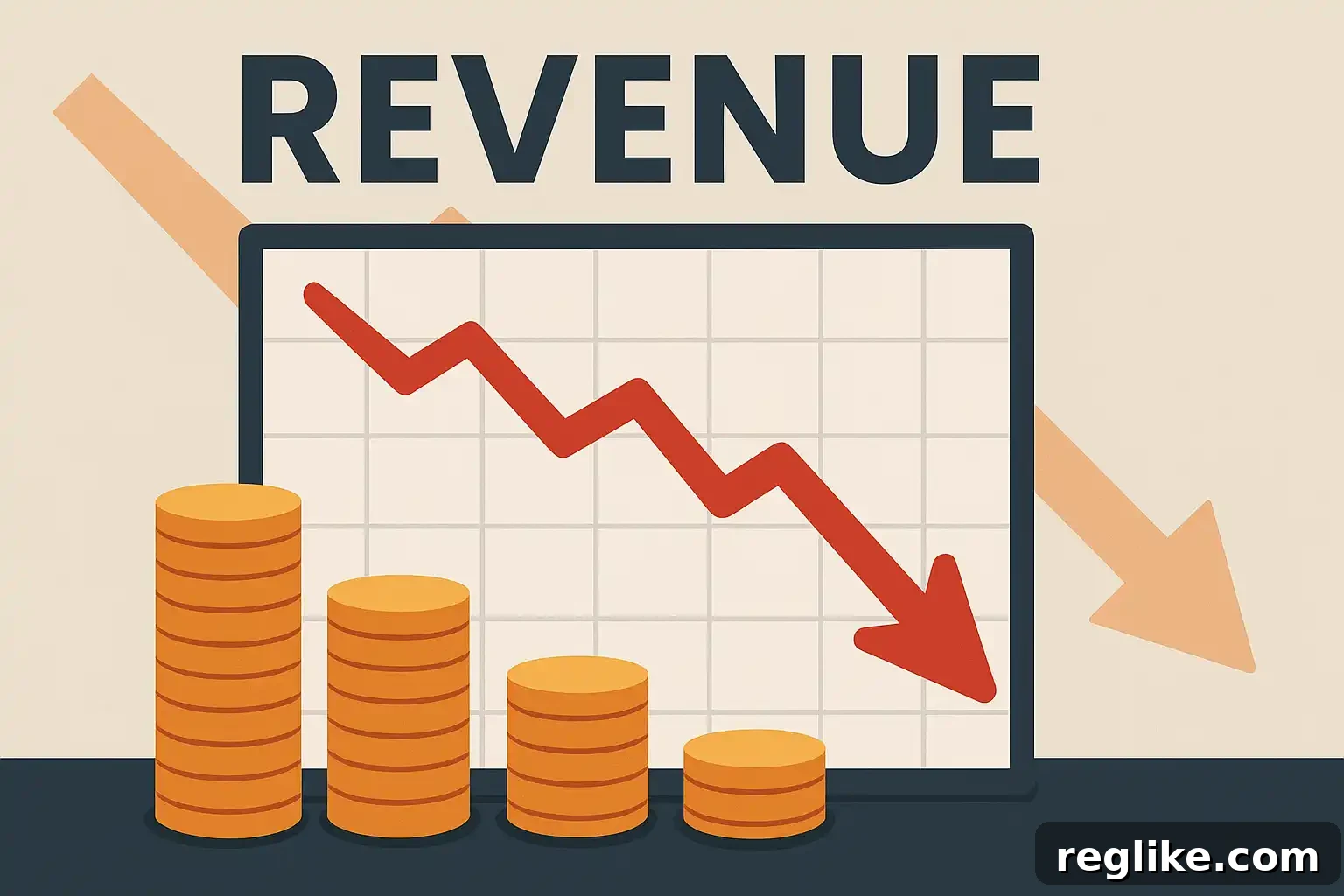
However, the third quarter of 2025 painted a drastically different, indeed alarming, picture. Sedo’s revenue plummeted by a staggering 66% year-over-year. From a robust €80.2 million in Q3 2024, the company’s revenue crashed to a mere €27.5 million in the most recent quarter. This dramatic reversal underscores the profound impact of Google’s policy enforcements, demonstrating how quickly market conditions can change when a key platform partner alters its operational guidelines. The initial success proved to be a temporary reprieve, concealing deeper vulnerabilities within Sedo’s business model that became painfully evident as Google’s transition reached its final, most impactful stages.
The Double Blow: Two Critical Google Actions in Q3
Sedo’s catastrophic Q3 performance can be attributed to a confluence of two pivotal actions undertaken by Google during that period, which collectively delivered a devastating blow to the company’s domain monetization efforts.
1. The Final Curtain Call for AdSense for Domains Advertisers
The first significant event was Google’s decision to finally opt-out the last remaining batch of advertisers from the legacy AdSense for Domains program. While other domain parking companies had reported only modest revenue declines leading up to this point, Sedo’s situation proved markedly different and far more severe. This disparity highlights Sedo’s continued, and perhaps underestimated, reliance on the AfD product. Even as Sedo diligently worked to transition many of its key arbitrage clients to the newer RSOC product, a substantial portion of its domain portfolio, particularly the millions of “non-arbitrage” domains parked on its platform, remained heavily dependent on the older AfD system. These non-arbitrage domains often represent generic keywords or undeveloped web properties held for future use or resale, and their monetization through AfD was a simpler, more passive process than integrating them into the more complex, content-focused RSOC framework. The complete withdrawal of advertisers from AfD effectively severed a major, irreplaceable revenue stream for these domains, leaving a significant void that RSOC was either unable or insufficient to fill immediately.
2. New Policy Enforcements for Related Ads for Content (RSOC)
Adding to Sedo’s woes, Google simultaneously implemented new policy changes to its Related Ads for Content (RSOC) product. While the exact details of these changes were not fully disclosed by Google, their impact on Sedo was undeniably substantial. These policy updates likely targeted aspects such as the quality of traffic sources, the relevance of displayed ads to the content (even minimal content on parked pages), or potentially adjusted payout rates for specific types of impressions or clicks deemed less valuable. Google’s overarching goal with such policy revisions is to enhance the integrity and effectiveness of its advertising network, ensuring a higher return on investment for advertisers and a better experience for users. For companies like Sedo, which facilitate a vast number of ad impressions across a wide array of domains, even subtle shifts in policy or algorithm can have amplified effects on revenue generation. Stricter quality controls or re-evaluation of traffic types previously deemed acceptable could have suddenly rendered significant portions of Sedo’s RSOC-monetized traffic unviable or considerably less profitable.
Financial Strain and IONOS’s Strategic Retreat
The dual impact of these Google changes sent shockwaves through Sedo’s financial structure. The precipitous 66% decline in revenue directly translated into immense pressure on profitability. Despite the severe downturn, Sedo managed to “almost break even” on an EBITDA (Earnings Before Interest, Taxes, Depreciation, and Amortization) basis. This narrow escape from outright losses was largely attributed to the stable performance of its domain aftermarket business, which involves facilitating the buying and selling of domain names. The aftermarket segment operates on a different revenue model, primarily commission-based, and is less directly exposed to the immediate fluctuations of Google’s advertising policies. However, the fact that some of Google’s changes occurred mid-quarter suggests that the true extent of the business deterioration might be even greater, with the full impact likely to be reflected in subsequent quarters. The narrow EBITDA margin hints at a core monetization business that is now severely under stress, if not operating at a significant loss.
In response to this critical financial performance and the uncertainty surrounding Sedo’s future profitability in the current advertising landscape, parent company IONOS made the strategic decision to put the unit up for sale. This move is not merely about divesting a struggling asset; it’s a calculated financial maneuver. By classifying Sedo as a “Discontinued Operation” in its overall reporting, IONOS can effectively wall off Sedo’s financial losses and volatility from its main operational results. This separation allows IONOS to present a clearer, healthier financial picture of its core web hosting and cloud businesses to investors, preventing the drag of Sedo’s challenges from negatively impacting IONOS’s stock price and overall market perception. It signals a refocus on core competencies and a desire to shed non-performing assets that no longer align with the parent company’s long-term strategic vision.
Broader Industry Implications and the Future of Domain Monetization
Sedo’s predicament serves as a potent case study for the entire domain parking and monetization industry. It underscores the inherent risks of building business models heavily reliant on the policies and platforms of dominant technology companies like Google. The demise of AdSense for Domains and the tightening of RSOC policies are not isolated incidents but rather part of a broader trend where platforms prioritize user experience and ad quality, often at the expense of older, less-curated monetization methods.
For domain owners, particularly those holding large portfolios of undeveloped domains, the landscape has irrevocably changed. The days of effortless, passive income from simply parking a domain appear to be fading fast. The industry is being pushed towards more sophisticated monetization strategies, including:
- Content Development: Building out even minimal, high-quality content sites on parked domains to better qualify for RSOC or other content-based ad networks.
- Lead Generation: Transforming parked pages into lead capture forms for specific industries.
- Affiliate Marketing: Directing traffic to relevant affiliate offers rather than generic ads.
- Direct Sales/Leasing: Focusing more on the inherent value of the domain name for sale or lease.
The challenges faced by Sedo indicate that the future of domain monetization will demand greater creativity, more active management, and a deeper understanding of evolving digital advertising ecosystems. Companies that fail to innovate and diversify their revenue streams beyond dependence on single platform policies risk facing similar existential threats. The sale of Sedo, therefore, is not just a corporate transaction; it’s a powerful signal to the domain industry to adapt or face obsolescence in an ever-evolving digital economy. The next chapter for Sedo, under new ownership, will undoubtedly be a test of how a legacy domain business can reinvent itself in a post-AdSense for Domains world.