
Revolutionizing Domain Sales: How Sedo’s WHOIS Verification Enhances Marketplace Integrity
The vast and dynamic world of domain names represents a significant digital asset class, constantly shifting hands in a global marketplace. From startups securing their online identity to seasoned investors building extensive portfolios, the buying and selling of domain names is a vibrant industry. However, this bustling environment is not without its challenges, one of the most persistent being the accidental mislisting or “phantom sale” of domains that are no longer owned by the seller.
This common issue can lead to considerable frustration for both prospective buyers and unwitting sellers, undermining trust and efficiency within the domain ecosystem. Imagine investing time and effort into negotiating a deal, only to discover the seller lost ownership of the domain months ago. Conversely, sellers might find themselves repeatedly responding to offers for assets they no longer possess, a clear drain on their valuable time and resources. It’s a problem stemming largely from the sheer volume of domains managed by individuals and businesses, coupled with the often-disjointed nature of domain management workflows.
The Pervasive Problem of Phantom Domain Sales
The lifecycle of a domain name is complex, involving registration, renewal, potential expiration, and eventual transfer or deletion. Domainers, individuals or companies that invest in domain names, often manage portfolios spanning hundreds or even thousands of distinct domains. In this high-volume environment, it’s remarkably easy for certain administrative tasks to fall through the cracks. When a domain name expires, is renewed by another party after dropping, or is successfully sold and transferred to a new owner, the previous owner’s online sales listings are not always immediately updated. This oversight is rarely intentional but is a byproduct of the demanding pace of domain trading and the lack of universal, automated sync between registrars and sales platforms.
Consequently, many of us who frequently interact with the domain market have encountered this phenomenon firsthand. It’s not uncommon to receive an enthusiastic offer for a domain name that has long since left our portfolio, or to spend time researching and submitting an offer for a domain advertised on a marketplace, only to be informed that the listed seller no longer holds the rights to it. This creates a ripple effect of inefficiency: buyers waste time pursuing unavailable assets, sellers waste time clarifying ownership, and the overall transaction flow is impeded. Such incidents, while often accidental, erode confidence and can slow down the otherwise rapid pace of digital asset exchange.
Sedo’s Innovative Approach to Marketplace Integrity
Recognizing this widespread issue, leading domain marketplaces are continually striving to implement smarter, more robust solutions to enhance transparency and prevent such accidental mislistings. Sedo, a prominent player in the domain trading landscape, has introduced a particularly intelligent feature designed to directly address this problem. This innovation acts as a crucial safeguard, significantly reducing the occurrence of accidental sales of unowned domains and fostering greater confidence within its marketplace.
The feature in question integrates real-time WHOIS record verification into the seller’s workflow, specifically when responding to an offer on one of their listed domains. While the exact duration of its existence isn’t widely publicized, its impact on user experience is undeniable. For many, like myself, it’s a welcome discovery that underscores a commitment to refining the selling process and bolstering marketplace reliability. This thoughtful addition demonstrates Sedo’s proactive stance on maintaining a clean and trustworthy platform for all its users.
Here’s how this smart feature works: Upon receiving an offer for a domain listed for sale on Sedo, the system dynamically pulls and displays the current WHOIS record associated with that domain. This immediate access to verifiable ownership information empowers the seller with an instant confirmation of their current hold on the asset. It makes it incredibly straightforward to ascertain whether they still legitimately own the domain name before proceeding with any negotiations or sale finalization. This proactive step helps to preempt situations where a seller might inadvertently attempt to sell a domain they no longer possess, saving everyone involved valuable time and preventing potential misunderstandings. It transforms a potential point of failure into a moment of clarity and confirmation.
While no single feature can completely eliminate malicious actors who intentionally attempt to defraud buyers by “selling” domains they know they don’t own, Sedo’s WHOIS verification significantly curbs the far more common problem of accidental mislistings. It acts as a preventative measure, a digital safety net that catches oversights before they evolve into frustrating dead ends for potential buyers. This focus on preventing human error through intelligent system design is a hallmark of a mature and user-centric marketplace, prioritizing user experience and transactional security.
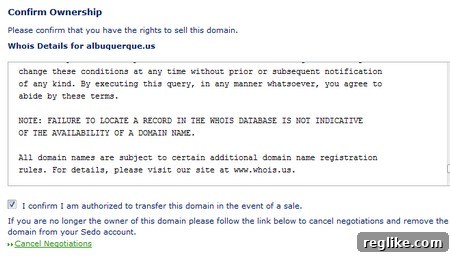
The image above illustrates this vital “Sedo confirmation” in action, providing a clear visual cue that enhances the seller’s ability to verify ownership efficiently. This transparency at a critical juncture in the sales process is invaluable, offering peace of mind and reducing the likelihood of costly errors or disputes.
Beyond Verification: Sedo’s Commitment to Marketplace Quality
Sedo’s integration of real-time WHOIS verification is just one facet of its broader, ongoing efforts to enhance the integrity and efficiency of its domain marketplace. The platform has been actively implementing various measures to clean up its listings and ensure a high-quality trading environment. These initiatives include, but are not limited to, scanning WHOIS records for deleted or expired domains and proactively removing stale or invalid listings. Such continuous monitoring and algorithmic checks are essential in a market where domain statuses can change rapidly, often without immediate notification to all relevant parties.
The WHOIS database itself serves as the cornerstone of domain ownership verification, providing publicly accessible information about a domain’s registrant, administrative contact, technical contact, and registration/expiration dates. While changes in privacy regulations, such as GDPR, have impacted the public visibility of some personal data in WHOIS records, the underlying principle of verifying domain ownership through designated data points remains critical. Marketplaces like Sedo navigate these complexities by leveraging available data and direct integrations to ensure the accuracy required for secure transactions, adapting to evolving legal and privacy frameworks.
By proactively auditing listings and providing sellers with immediate ownership verification tools, Sedo reduces the number of “ghost” listings, improving the signal-to-noise ratio for buyers. This commitment not only streamlines the purchasing process but also builds a stronger foundation of trust, encouraging more legitimate transactions and fostering a healthier domain trading ecosystem for all participants. It demonstrates a dedication to not just facilitating sales, but to ensuring the quality and reliability of those sales.
Best Practices for a Seamless Domain Trading Experience
While marketplaces like Sedo are innovating to make domain trading safer and more efficient, both buyers and sellers play a crucial role in maintaining the integrity of the market. Adopting best practices can significantly reduce issues and ensure a smoother experience for everyone involved. Active participation and diligence from both sides of a transaction are key to a robust and trustworthy marketplace.
For Domain Sellers:
- Regular Portfolio Audits: Periodically review your entire domain portfolio. Cross-reference your internal records with your registrar accounts and marketplace listings to ensure everything is up-to-date and accurately reflected across all platforms.
- Immediate Delisting: As soon as a domain is sold, transferred, or allowed to expire, promptly remove its listing from all active marketplaces and sales platforms. Don’t rely solely on automated systems to catch everything immediately; manual verification is often the safest bet.
- Leverage Marketplace Tools: Make full use of features like Sedo’s WHOIS verification. These tools are specifically designed to prevent errors, protect your reputation as a seller, and streamline your selling process.
- Maintain Accurate Records: Keep meticulous records of all your domain transactions, including purchase dates, sale dates, transfer confirmations, and buyer information. This is invaluable for dispute resolution, portfolio management, and tax purposes.
- Understand Expiration Policies: Be fully aware of your registrar’s expiration and renewal policies to avoid inadvertently losing domains you intend to keep or sell.
For Domain Buyers:
- Conduct Due Diligence: Even on reputable platforms, it’s wise to perform your own preliminary WHOIS checks before making a significant offer or committing to a purchase. This adds an extra layer of verification and can identify discrepancies.
- Utilize Reputable Marketplaces: Stick to well-established and trusted domain marketplaces known for their security features, buyer protections, and transparent processes. Avoid platforms with unclear policies or a history of disputes.
- Be Wary of “Too Good To Be True” Deals: While bargains exist, extreme discounts on highly desirable domains can sometimes be a red flag. Such situations warrant further investigation into the domain’s ownership, history, and legitimacy to avoid potential scams.
- Communicate Clearly: Maintain clear and professional communication with sellers throughout the negotiation process, asking pertinent questions about the domain’s history, traffic, and the transfer process. Clarity prevents misunderstandings.
- Understand Transfer Procedures: Familiarize yourself with the domain transfer process, including any required authorization codes (EPP codes) and timelines, to ensure a smooth transition of ownership.
The Future of Domain Marketplaces: Towards Greater Transparency and Automation
The evolution of features like Sedo’s WHOIS verification points towards a future where domain marketplaces are even more sophisticated, transparent, and automated. Continuous advancements in technology, including AI-driven monitoring, advanced data analytics, and potentially blockchain-based ownership records, could further streamline verification processes and enhance security. The overarching goal is to minimize friction, eliminate ambiguity, and build an environment where buyers and sellers can transact with utmost confidence and efficiency.
Industry-wide collaboration and the development of unified standards for domain status updates across registrars, marketplaces, and escrow services would also greatly contribute to a more seamless ecosystem. Such standardization could reduce the instances of outdated listings and ensure real-time accuracy across the board. As the digital economy continues to grow, the importance of reliable domain trading platforms will only increase, making ongoing innovation a critical imperative for all market participants to meet the demands of a dynamic digital landscape.
Conclusion: A Smarter Marketplace for All
Sedo’s implementation of real-time WHOIS verification when responding to domain offers is more than just a minor update; it’s a significant step towards a more reliable and efficient domain marketplace. By directly addressing the common problem of accidental “sales” of unowned domains, Sedo enhances trust, saves time for both buyers and sellers, and contributes to the overall health of the domain trading ecosystem.
This commitment to intelligent system design, coupled with proactive marketplace clean-up efforts, sets a high standard for platform integrity. It demonstrates a clear understanding of the challenges users face and a dedication to providing practical, effective solutions. As the domain market continues to expand and evolve, such features become indispensable, underscoring the value of diligence, transparency, and leveraging sophisticated tools to ensure a smooth and secure experience for everyone involved in the fascinating world of domain names.