
Unlocking London’s Digital Identity: A Retrospective Look at the .London Domain Launch
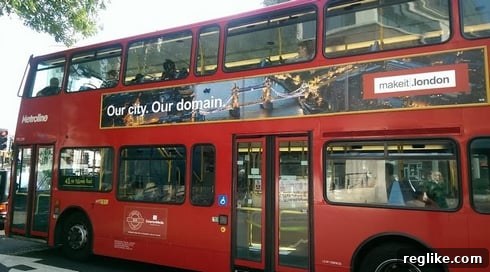
In the vibrant and ever-evolving landscape of the internet, the launch of new Top-Level Domains (TLDs) marks significant milestones in how communities and businesses establish their online presence. Among these, city-specific domains, or geoTLDs, hold a special place, offering a unique opportunity to digitally brand a location. The .London domain, launched with considerable anticipation, represents a pioneering effort to create a distinct digital space for one of the world’s most iconic cities. Its introduction was not merely another addition to the internet’s naming system; it heralded a novel approach to domain registration, emphasizing both local priority and global accessibility.
The period surrounding its initial launch, particularly the “London Priority Period,” was a critical phase that reshaped how businesses and individuals connected with the capital online. This crucial window, which concluded on July 31, 2014, was designed to be fundamentally different from typical domain rollouts. To delve deeper into the intricacies of this innovative launch, we reflect on insights shared by Antony Van Couvering, then CEO of Minds + Machines (now part of CentralNic Group), a key player in the .London domain’s operational management. His perspective illuminated the strategic decisions that defined the .London domain’s philosophy, setting a precedent for future geoTLDs.
Navigating the .London Priority Period: A Unique Registration Model
One of the most distinctive aspects of the .London domain launch was its multi-tiered Priority Period. Unlike many domain launches that typically sequence distinct “Sunrise,” “Landrush,” and “General Availability” phases, .London implemented a simultaneous approach, offering an integrated system that balanced various stakeholder interests. This innovative structure aimed to provide a fair and equitable opportunity for a diverse range of applicants, from global brands to local residents. The simultaneous execution of the Sunrise, Londoner Priority, and Landrush phases, culminating on that pivotal deadline in July 2014, required a meticulously defined set of rules to determine applicant precedence.
Antony Van Couvering elaborated on the underlying philosophy: “The idea is to give priority to people in London, but be open to everyone. To give Londoners priority over people from outside London, and to give people with rights to a name priority over those who don’t.” This statement succinctly captures the dual objective: fostering a strong local identity while acknowledging London’s global character. The system was designed to address potential conflicts by establishing a clear hierarchy for domain allocation during this initial, highly competitive phase. Anyone could apply during the London Priority Period, which spanned from April 29 to July 31, 2014, but the ultimate allocation of names followed a precise order of precedence:
- Sunrise Registration: This phase held the highest priority, specifically catering to trademark holders. If an applicant possessed a registered trademark that matched the desired domain name, their application would generally supersede all others. This mechanism is standard in domain launches, designed to protect intellectual property rights and prevent cybersquatting.
- London Resident with Matching Rights: Following Sunrise registrations, priority shifted to individuals or organizations residing in London whose desired domain name either matched a registered trademark (for businesses/organizations) or a variation of their personal name (for individuals). This tier acknowledged both local connection and legitimate interest.
- London Resident without Matching Rights: The next priority level was granted to London residents whose applied-for domain name did not necessarily match a trademark or personal name but still demonstrated a genuine connection to the city. This broadened the scope for locals to acquire relevant and desirable .London domains, fostering a sense of community ownership.
- Applicants Outside London: Finally, applicants residing outside of London were given the last priority. While still able to apply during the Priority Period, their applications would only be successful if no higher-priority applicant sought the same domain name. This ensured that local interest was predominantly served before opening up to the wider global audience.
A crucial element in maintaining the integrity and fairness of this elaborate system was the rigorous validation process. As Van Couvering emphasized, “Both an applicant’s address and their claim of rights is validated by a dedicated team. That’s an expense, but one we think is well worth it.” This meticulous verification ensured that applicants genuinely met the criteria for their claimed priority level, preventing fraudulent claims and upholding the spirit of the launch. The comprehensive set of rules and validation criteria were made publicly available, demonstrating transparency and allowing all potential registrants to understand the guidelines thoroughly. The official rules, providing detailed insights into the London Priority Period, were accessible online via a downloadable PDF document, serving as an invaluable resource for applicants and stakeholders alike. Ultimately, in cases of multiple applications for the same domain, the definitive order of allocation remained consistent: rights holders first, then Londoners, and finally, all other eligible registrants.
An Open Metropolis, A Global Domain: .London’s Inclusive Philosophy
The strategic decision to adopt an inclusive approach for .London, contrasting with the more geographically restrictive model seen in other geoTLDs like .NYC, became a defining characteristic of its launch. While .NYC mandated a strict residency requirement for all registrations, ensuring that only individuals or entities physically located within New York City could obtain a .NYC domain, .London opted for a nuanced path. After the initial priority phase for Londoners, the domain would become open to everyone, regardless of their physical location. This choice sparked considerable discussion and highlighted a fundamental difference in how city identities could be translated into digital spaces.
Van Couvering eloquently explained the rationale behind .London’s approach: “Precisely because what makes a Londoner is not simply geography. If someone is born in London, is he or she a Londoner? What if they work in London? Furthermore, London is a global city and is open to people from all over the world.” This perspective underscores the complex, multifaceted nature of what it means to be connected to London. The city is a melting pot of cultures, a global financial hub, a center for arts and innovation, and a major tourist destination. Its identity transcends mere physical boundaries, encompassing historical ties, economic contributions, and cultural affiliations from across the globe. By designing a system that offered priority to residents but ultimately opened its doors to a wider audience, .London aimed to reflect this inherent openness and global appeal.
This inclusive philosophy resonated with the city’s reputation as a welcoming, international metropolis. It acknowledged that many individuals and businesses worldwide have strong connections to London, whether through historical legacy, trade partnerships, cultural exchange, or personal admiration. Limiting access exclusively to physical residents might have alienated a significant portion of the global community that genuinely identifies with London and contributes to its global standing. The .London domain’s strategy thus positioned it not just as a local identifier, but as a global symbol of connection to one of the world’s leading cities, fostering a broader digital ecosystem that truly reflects London’s international character.
Early Triumphs and Community Embrace: A Testament to Organic Growth
The initial phase of the .London launch revealed encouraging signs of success, particularly in the rapid dissemination of information and the genuine enthusiasm from various segments of the London community. When asked about the biggest surprise during this critical period, Van Couvering highlighted the remarkable speed with which awareness spread: “How quickly the word got around. When I travel to London, and I mention what I do, I frequently hear ‘Oh, I heard about that!’ from taxi drivers, waiters, people in pubs.” This anecdotal evidence painted a vivid picture of widespread public engagement, indicating that the .London domain wasn’t just a niche topic for tech enthusiasts or large corporations but had permeated everyday conversations across the city.
A significant factor contributing to this rapid awareness was the strategic involvement of “pioneers” – a diverse group of well-known brands and smaller, local businesses that embraced the .London domain early on. This esteemed list included iconic institutions like Fortnum & Mason, the London Symphony Orchestra, and West Ham United, alongside vibrant smaller enterprises such as The Commitments show in the West End and the All Stars Collective, a group of accomplished musicians. This blend of established giants and burgeoning local talent demonstrated the broad appeal and utility of the new domain, showcasing its relevance across various sectors of London life. The full list of these early adopters, serving as ambassadors for the .London domain, was readily available online, further amplifying its visibility and credibility.
What truly distinguished the .London launch, and contributed to its early success, was the genuine, organic nature of its growth. Van Couvering proudly noted the “really great distribution of applications across all walks of London life,” and expressed excitement that .London was poised to become “one of the larger TLDs without resorting to huge discounting or buying up our own names, as has been rumored in other TLDs.” This was a crucial point, as the domain industry has often seen TLDs artificially inflate registration numbers through aggressive discounts or self-acquisition. The fact that .London achieved significant traction through authentic interest and diverse applications underscored its intrinsic value and strong resonance with its target audience. This organic embrace by the people who live and work in London was, in Van Couvering’s view, the ultimate measure of success, validating the innovative launch strategy and inclusive philosophy.
The Future of London’s Digital Identity: Ambitious Goals and Lasting Impact
Looking beyond the initial launch phase, the vision for the .London domain was clear and ambitious: to establish it as the preeminent online address for anyone or any business connected to London. When queried about the long-term aspirations, Van Couvering articulated this goal succinctly: “The goal is to have .london be the first choice for a domain name for anyone or any business with a connection to London. We think that’s achievable.” This aspiration speaks to a desire to transcend mere alternative status and become the primary digital identifier for London-centric entities, fostering a stronger sense of local pride and global recognition online.
Achieving “first choice” status entails numerous benefits. For businesses, a .London domain name can enhance local search engine optimization (SEO), making it easier for customers within London to discover them. It provides an immediate geographical context, signaling local relevance and building trust with a London-based clientele. For individuals, it offers a distinct way to express their connection to the city, whether they are artists, entrepreneurs, or simply proud residents. Moreover, in a crowded digital landscape dominated by generic .com addresses, a .London domain stands out, offering a memorable and meaningful web address that instantly communicates identity and location.
The long-term impact of geoTLDs like .London extends beyond individual registrations. They contribute to the broader digital branding of cities, creating a coherent online ecosystem that supports local economies, promotes tourism, and strengthens civic identity. As the internet continues to decentralize and specialize, city domains offer a powerful tool for community building and digital sovereignty. The .London domain, with its forward-thinking launch strategy and commitment to both local priority and global openness, has laid a robust foundation for becoming an indispensable part of London’s digital future, truly embodying the spirit of a global city in the digital age. Its continued growth and adoption will undoubtedly solidify its position as a cornerstone of London’s online presence for years to come.