
Unveiling the Dynamics of Domain Disputes: Insights from GigaLaw’s Quarterly UDRP Report
In today’s interconnected digital landscape, a brand’s online presence is paramount. Protecting intellectual property, particularly domain names, has become a critical challenge for businesses worldwide. The Uniform Domain Name Dispute Resolution Policy (UDRP) stands as a vital mechanism for resolving disputes over domain names, offering a streamlined process for trademark holders to reclaim domains used in bad faith. However, understanding the complex trends and outcomes within the UDRP system can be daunting. With multiple approved providers overseeing these disputes, obtaining a comprehensive, aggregated view of UDRP decisions is essential for accurate analysis and strategic planning.
The UDRP ecosystem is inherently fragmented. Currently, there are five ICANN-approved dispute resolution service providers: the World Intellectual Property Organization (WIPO), the National Arbitration Forum (Forum), the Czech Arbitration Court (CAC), the Asian Domain Name Dispute Resolution Centre (ADNDRC), and the Arab Center for Dispute Resolution (ACDR). Each of these providers operates independently, handling a significant volume of cases. This decentralization means that trends observed with one provider may not necessarily reflect the broader landscape of domain name disputes. Without a consolidated data source, legal professionals, brand owners, and industry observers struggle to form a complete and accurate picture of UDRP activity. This challenge underscores the immense value of aggregated data, which provides invaluable insights into the overall health and direction of domain dispute resolution.
The Indispensable Role of GigaLaw’s Domain Dispute Digest
Fortunately, a crucial resource bridges this information gap. Doug Isenberg, through his renowned law firm GigaLaw, publishes a quarterly Domain Dispute Digest. This meticulously compiled report aggregates data from all five UDRP providers, offering an unparalleled and clear perspective on the intricate workings of the UDRP system. The Digest transforms disparate statistics into an easily digestible format, enabling stakeholders to grasp the collective trends, success rates, and evolving nuances of domain name disputes globally. This consolidated approach is vital for anyone seeking to understand the true dynamics of online brand protection and cybersquatting enforcement.
Doug Isenberg: A Leading Voice in UDRP
The credibility and depth of the Domain Dispute Digest are largely attributed to the extensive expertise of its author, Doug Isenberg. Widely recognized as a leading authority in domain name law, Isenberg’s qualifications are exceptional. Not only does he skillfully represent complainants in UDRP proceedings, advocating for trademark rights, but he also serves as a panelist for all approved UDRP providers. This unique dual role grants him a profound understanding of the UDRP from both sides of the dispute—from the perspective of a brand owner seeking to enforce rights and from that of an independent arbiter evaluating the merits of a complaint. His comprehensive experience ensures that the GigaLaw Digest is not merely a collection of numbers but a thoroughly analyzed and insightful report reflecting the real-world complexities of domain name disputes.
Key Insights from GigaLaw’s Q2 UDRP Report (April, May, June)
The latest Q2 report from GigaLaw offers several compelling takeaways, covering decisions published during April, May, and June. These findings shed light on current trends in domain name disputes, providing valuable data for brand protection strategies and legal analyses:
- Overall Decision Volume Decreased: The total number of UDRP decisions saw a modest decrease of 2.6% year over year, totaling 2,077 cases. While seemingly small, this dip could indicate various factors, from a slight reduction in new cybersquatting attempts to shifts in filing strategies or even improved preventative measures by trademark holders. Understanding whether this is a temporary fluctuation or the start of a longer-term trend will require continued monitoring in subsequent quarters.
- Significant Drop in Domains Covered: Even more notably, the number of individual domain names covered in these decisions experienced a substantial decline of 39.0% year over year, reaching 3,015 domains. This significant drop suggests that fewer multi-domain complaints were filed or resolved during this period, or perhaps that the average number of disputed domains per case has decreased. This could impact the overall efficiency and resource allocation for UDRP providers and parties involved.
- High Complainant Success Rate Sustained: A defining characteristic of UDRP proceedings has always been the high success rate for complainants. The Q2 report reiterates this trend, with a remarkable 94.2% of all decisions rendered in favor of the complainant. This statistic powerfully underscores the UDRP’s effectiveness as a tool for legitimate trademark owners to combat cybersquatting. It serves as a strong deterrent for those attempting to register domain names in bad faith, knowing that the policy heavily favors rights holders with valid claims.
- WIPO Remains the Dominant Venue: The World Intellectual Property Organization (WIPO) continues to be the most popular and frequently chosen venue for UDRP cases. In Q2, WIPO processed 1,179 decisions, solidifying its position as the global leader in domain dispute resolution. The National Arbitration Forum (Forum) followed with 613 decisions, while the Czech Arbitration Court (CAC) handled 227. WIPO’s prominence can be attributed to its international recognition, extensive panelist pool, and reputation for efficiency and consistency, making it the preferred choice for many global brands.
- Reverse Domain Name Hijacking (RDNH) Cases: During the quarter, twenty decisions were classified as instances of Reverse Domain Name Hijacking (RDNH), accounting for 1.3% of all decisions. RDNH occurs when a trademark owner attempts to use the UDRP process improperly to wrest a domain name from a legitimate registrant. While rare, these findings are crucial as they highlight the policy’s built-in safeguards designed to prevent abusive complaints and protect legitimate domain holders from harassment by overly aggressive brand owners. Tracking RDNH cases helps maintain the integrity and balance of the UDRP system.
- Common gTLDs in Dispute: Beyond the omnipresent .com, the report identifies .shop, .net, and .org as the most common generic Top-Level Domains (gTLDs) involved in UDRP cases. This data is critical for brand owners, indicating which gTLDs are frequently targeted by cybersquatters. While .com remains the primary battleground, the increasing prevalence of disputes involving .shop points to its growing commercial significance and attractiveness to both legitimate businesses and potential infringers. Similarly, .net and .org continue to be common targets due to their established presence and broad recognition.
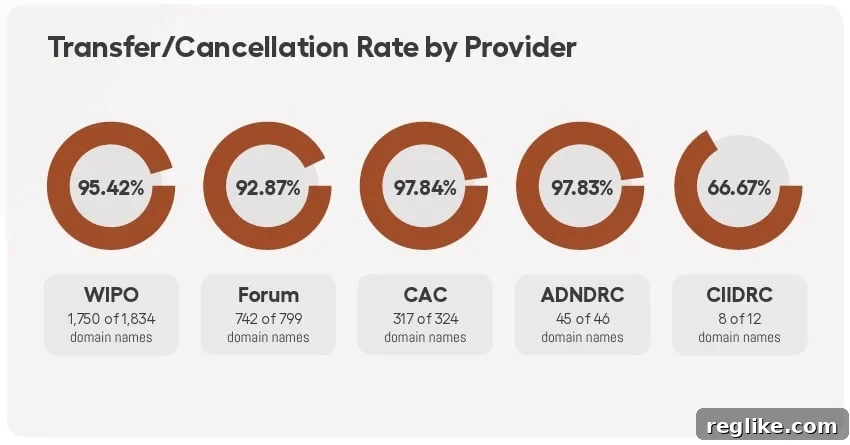
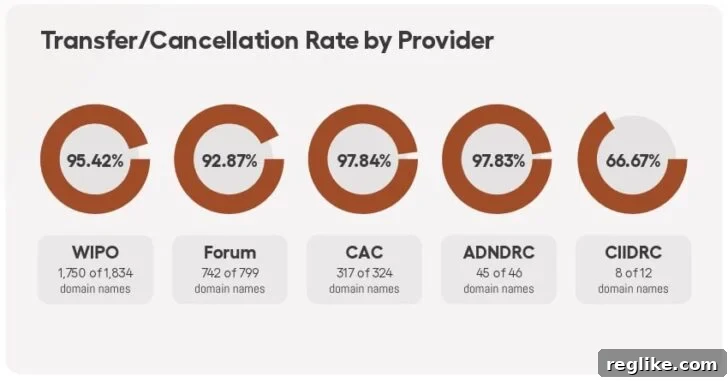
- Forum’s Lowest Transfer Rate Among Major Providers: As highlighted in the accompanying image, the National Arbitration Forum (Forum) recorded the lowest transfer rate among the major UDRP providers in Q2. This statistic invites further investigation, as it could indicate several possibilities. It might reflect differences in the types of cases Forum handles, potentially a higher proportion of cases with less clear-cut evidence of bad faith. Alternatively, it could suggest a unique approach or philosophy among Forum panelists in evaluating transfer requests. For legal professionals, this insight could influence strategic decisions regarding venue selection based on the specific circumstances of a dispute.
The GigaLaw Domain Dispute Digest is more than just a compilation of numbers; it’s a strategic resource that offers unparalleled clarity into the ever-evolving landscape of online brand protection. The detailed analysis provides actionable intelligence for trademark holders, legal counsel, and domain industry professionals. By understanding these trends, businesses can refine their brand protection strategies, allocate resources more effectively, and proactively mitigate risks associated with domain name infringement and cybersquatting. Doug Isenberg’s commitment to transparency and data aggregation through this report is invaluable in an arena where information is often fragmented.
There is a wealth of additional data and deeper insights contained within the full report. For anyone involved in intellectual property, brand management, or domain name disputes, a comprehensive review of the GigaLaw Domain Dispute Digest is highly recommended. Accessing the complete publication provides the nuanced understanding necessary to navigate the complexities of the UDRP and secure your online identity. It is an essential tool for staying informed and ahead in the ongoing battle against online brand abuse.