
Attempted Reverse Domain Name Hijacking Against Noo.com Domain Owner Thwarted by WIPO Panel
In a significant ruling by a World Intellectual Property Organization (WIPO) panelist, a Uniform Domain Name Dispute Resolution Policy (UDRP) case filed against the domain name noo.com has been decisively determined to be an instance of Reverse Domain Name Hijacking (RDNH). This verdict sends a clear message to aggressive trademark holders, emphasizing the importance of thorough due diligence and the protection of legitimate domain name ownership.
Understanding Reverse Domain Name Hijacking (RDNH)
Reverse Domain Name Hijacking, often abbreviated as RDNH, occurs when a complainant initiates a UDRP proceeding in bad faith. This means they attempt to use the UDRP process to unfairly obtain a domain name from its rightful owner, despite knowing or having reason to know that their claim lacks merit. It’s essentially an abuse of the UDRP system, designed to protect domain owners from predatory trademark bullying. A finding of RDNH highlights that the complainant’s actions were an attempt to unlawfully seize a domain name, often to bypass fair market acquisition or to exert undue pressure.
The UDRP policy is intended to provide an efficient and cost-effective means to resolve clear cases of cybersquatting – where someone registers a domain name in bad faith, intending to profit from a trademark they don’t own. However, when complainants, particularly large corporations with substantial resources, initiate disputes without legitimate grounds, it can place an unfair burden on legitimate domain owners. The WIPO panel’s decision in the noo.com case underscores the critical role of RDNH findings in maintaining the integrity and fairness of the domain name dispute resolution system.
The Parties Involved: A Battle Over Digital Identity
The Complainants: Vital Pharmaceuticals and the Noo Fuzion Brand
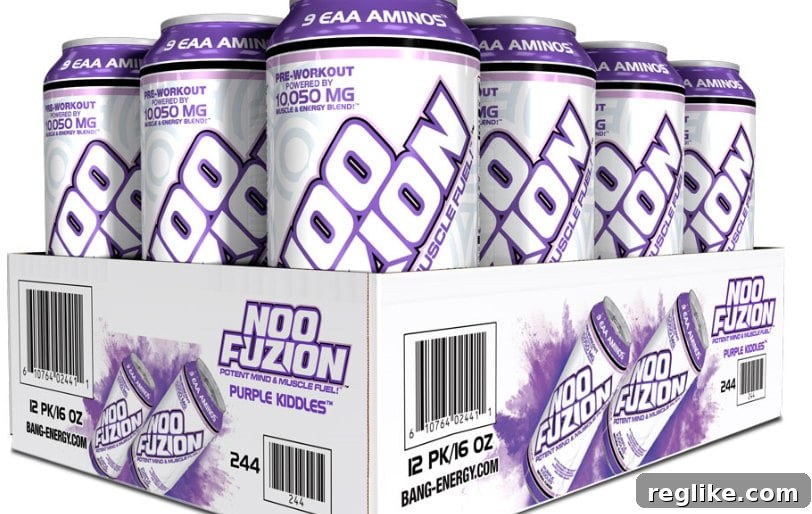
The complainants in this case were JHO Intellectual Property Holdings, LLC and Elite IP Holdings LLC, both represented by Vital Pharmaceuticals, Inc. (VPX), a prominent United States-based company. VPX is a well-known entity in the competitive energy drink market, boasting sales exceeding $1 billion in 2019 and positioning itself as the third-largest energy drink company in the U.S. according to their own complaint. Among their extensive portfolio of beverage brands, VPX markets a line of products under the “Noo” brand, including popular items like “Noo Fuzion.”
Given their significant presence and investment in the “Noo” brand, it was natural for VPX to desire the corresponding exact-match domain name, noo.com. The acquisition of such a domain could provide significant branding advantages, enhance online presence, and prevent potential confusion or competitive threats. However, their pursuit of noo.com ultimately led them down a path that would be criticized by the WIPO panel for its lack of legitimate basis.
The Respondent: Mahad Taheri and the Longevity of Noo.com
On the other side of the dispute was Mahad Taheri, the current owner of the noo.com domain name. Taheri acquired the domain in 2005, a full fifteen years prior to the complainants’ registration of any trademarks incorporating the term “Noo.” This temporal gap proved to be a critical factor in the panel’s eventual decision. Taheri had initially registered noo.com for a legitimate marketing business, demonstrating a clear intent for good-faith use of the domain. Furthermore, he had even taken the proactive step of registering a trademark for the term “Noo” himself, although that trademark subsequently lapsed.
Taheri’s long-standing ownership and prior use of the domain name presented a strong defense against VPX’s claims. His registration was not opportunistic or aimed at exploiting a pre-existing trademark of VPX, simply because VPX’s “Noo” trademarks didn’t exist at the time of his acquisition. This legitimate history is a cornerstone of protecting domain owners from later-arriving trademark claims, provided the domain was not registered or used in bad faith.
The Core of the Dispute: A Domain Name Predating Trademark Rights
Despite the unequivocal historical context surrounding the noo.com domain name, the complainants proceeded to file their UDRP case. Their assertions largely revolved around the claim that the domain name owner had offered to sell the domain for a price they deemed exorbitant – specifically, twice its “actual value.” The complainants cited an “experienced, independent domain name broker” who allegedly valued the domain name at USD 35,000-65,000, contrasting this with the asking price of $150,000.
This argument, however, faced significant challenges within the UDRP framework. Domain valuations can be subjective, and an owner is generally entitled to set their own price, especially for a short, generic, and historically significant domain like “noo.com.” Simply asking for a higher price than what a potential buyer or their broker deems “market value” does not, in itself, constitute bad faith registration or use under the UDRP. Many factors influence a domain’s value beyond a single broker’s estimate, including its age, potential for various uses, and inherent scarcity. For a UDRP case to succeed, the complainant must demonstrate more than just an unsatisfactory negotiation; they must prove that the domain was registered and used in bad faith *specifically targeting* their trademark.
WIPO’s Role and the UDRP Framework
The World Intellectual Property Organization (WIPO) is one of the leading providers of domain name dispute resolution services under the Uniform Domain Name Dispute Resolution Policy (UDRP). The UDRP was established by the Internet Corporation for Assigned Names and Numbers (ICANN) to provide a streamlined process for resolving disputes concerning abusive registrations of domain names (cybersquatting). For a complainant to succeed in a UDRP case and have a domain name transferred, they must cumulatively prove three distinct elements:
- The domain name is identical or confusingly similar to a trademark or service mark in which the complainant has rights.
- The respondent has no rights or legitimate interests in respect of the domain name.
- The domain name has been registered and is being used in bad faith.
The crucial aspect in the noo.com case revolved around the third element: bad faith registration and use. While the first element regarding confusing similarity might have been argued by VPX, they significantly failed on the second and, more definitively, on the third. The timing of the domain registration relative to the trademark acquisition is paramount in determining bad faith. It is exceptionally difficult to prove bad faith registration if the domain was registered years before the complainant even possessed trademark rights.
The Panelist’s Decisive Ruling: A Clear Finding of RDNH
Panelist Christopher Gibson, tasked with adjudicating the dispute, carefully reviewed all submitted evidence and arguments. His findings were unequivocal: the domain noo.com was neither registered nor used in bad faith. In his detailed reasoning for declaring Reverse Domain Name Hijacking, Panelist Gibson penned a clear and compelling summary:
The Panel finds that the facts in this case demonstrate Complainants knew or should have known after reasonable investigation that their claim was baseless and they could not succeed in demonstrating the required three elements of the Policy. Respondent registered the Domain Name approximately 15 years before Complainant acquired trademark rights in its NOO marks, and there is no evidence of bad faith use of the Domain Name during those 15 years, nor evidence of targeting Complainants’ marks even after Complainant acquired rights in them. Moreover, UDRP precedent indicates that entertaining and/or rejecting an offer for sale of a domain name does not, by itself, demonstrate bad faith. And that is the sole evidence Complainants relied upon in this case. For the above reasons, the Panel finds that there has been attempted RDNH in this case.
This statement encapsulates the core weaknesses of the complainant’s case. The 15-year gap between the respondent’s domain registration and the complainant’s trademark acquisition fundamentally undermined any claim of “bad faith registration.” Furthermore, the panel found no evidence of bad faith use by Taheri during that long period, nor any indication that he specifically targeted VPX’s marks. The assertion that a refusal to sell at a lower price or entertaining a sale offer constitutes bad faith was firmly rejected, aligning with established UDRP precedent.
Implications of an RDNH Finding
An RDNH finding is not merely a rejection of a UDRP complaint; it carries significant weight and implications for all parties involved in domain name disputes. For domain name owners like Mahad Taheri, it serves as a robust defense, validating their legitimate ownership and protecting them from unwarranted attempts to seize their assets. It underscores that long-standing, good-faith registration of a domain name provides strong protection against later-developed trademark claims.
For trademark holders, an RDNH finding acts as a stern warning. It highlights the serious consequences of filing a UDRP complaint without proper investigation and legitimate grounds. Such a finding can result in reputational damage for the complainant and may discourage future frivolous filings. It reminds corporations, regardless of their size or market power, that the UDRP mechanism is not a tool for aggressive domain acquisition but rather a remedy for genuine cybersquatting.
Beyond the immediate parties, RDNH findings are crucial for the broader domain name ecosystem. They reinforce the principles of fair play and prevent the UDRP from being exploited. They ensure that domain owners who have legitimately acquired and used their domains are not constantly under threat from powerful entities seeking to expand their digital footprint without fair compensation or legal basis. This case, therefore, contributes to a healthier balance between trademark rights and domain name rights.
Lessons Learned from the Noo.com Case
The noo.com RDNH case offers several vital lessons for both domain name owners and trademark holders contemplating or defending against UDRP actions:
- Thorough Due Diligence is Paramount: Before filing a UDRP complaint, trademark holders must conduct exhaustive research into the domain name’s registration history and the respondent’s use. A failure to do so, as seen here, can lead to an RDNH finding.
- The “First In Time” Principle: Generally, if a domain name was registered legitimately before a complainant acquired trademark rights, proving bad faith registration becomes exceedingly difficult, if not impossible.
- Bad Faith Requires Specific Evidence: Simply desiring a domain name or finding its asking price too high is not evidence of bad faith. Complainants must demonstrate concrete actions by the respondent that clearly indicate registration and use to target or exploit the complainant’s trademark.
- UDRP is Not a Sales Negotiation Tool: The policy is not designed to force domain owners to sell their domains at a price dictated by a potential buyer. Legitimate negotiations outside the UDRP process are the appropriate avenue for such transactions.
- Protection for Legitimate Domain Owners: This case reaffirms that the UDRP provides robust protection for individuals and businesses who have legitimately acquired and used domain names, even against large corporations with significant trademark portfolios.
Conclusion
The WIPO panel’s finding of Reverse Domain Name Hijacking in the noo.com case serves as a powerful reminder of the delicate balance between trademark protection and legitimate domain name ownership. It underscores that while trademark holders have important rights to defend their brands, these rights do not automatically extend to seizing domain names that predate their trademarks or are legitimately held. The decisive ruling in favor of the domain owner, Mahad Taheri, and against the aggressive claims of Vital Pharmaceuticals, Inc., reinforces the integrity of the UDRP process and ensures that it remains a tool for justice against true cybersquatting, rather than a weapon for corporate overreach.