
Researchers uncover an insidious form of online deception: domain names leveraging famous trademarks combined with additional words to trick users and facilitate cybercrime.
Unmasking Combosquatting: A Deep Dive into Sophisticated Domain Name Abuse
In an increasingly complex digital landscape, cybercriminals constantly evolve their tactics, moving beyond simple typos and misspellings to more sophisticated forms of deception. One such cunning strategy, aptly termed “combosquatting,” has been brought into sharp focus by a significant collaborative study. This research sheds light on how malicious actors exploit brand familiarity to create highly convincing, yet illicit, online presences, posing a severe threat to both consumers and established organizations.
Spearheaded by the cutting-edge minds at Georgia Institute of Technology (Georgia Tech), in close partnership with Stony Brook University and London South Bank University, a comprehensive study has been released, delving deep into the phenomenon they define as “combosquatting” within domain names. The critical findings of this extensive research were prominently featured and debated as a central theme during the prestigious Association of Computer Machinery’s Computer and Communications Security (CCS) 2017 conference, held in Dallas. This academic spotlight underscores the growing recognition of combosquatting as a serious and pervasive cyber threat demanding immediate attention from security professionals, brand owners, and policy makers alike.
What is Combosquatting? Distinguishing a New Threat
The research team meticulously defines combosquatting as the strategic combination of a well-known trademark with additional, often innocuous or contextually relevant, words to form a new domain name. This technique results in URLs that appear legitimate at first glance, cleverly designed to capitalize on a user’s trust in a familiar brand. For instance, instead of merely misspelling “bankofamerica,” a combosquatter might register a domain like “bankofamerica-securelogin-portal.com” or “bankofamerica-customer-support.net.” Such domains are crafted to look official and trustworthy, drawing users in under false pretenses.
This method stands in stark contrast to the more commonly understood “typosquatting,” where the domain name is simply a deliberate misspelling or typographical error of a popular brand (e.g., “gogle.com” instead of “google.com”). While typosquatting relies on user error and quick glances, combosquatting leverages a brand’s established identity and reputation, adding a layer of perceived authenticity through the inclusion of descriptive words. This makes combosquatted domains far more insidious and harder for an average user to detect as fraudulent, as they don’t immediately trigger suspicion based on an obvious typo. The nuance in these domain names allows malicious actors to operate under a veil of legitimacy, making detection and mitigation considerably more challenging for both automated systems and human vigilance.
The Malicious Modus Operandi: Exploiting Brand Trust
The study’s findings reveal that these cleverly constructed combosquatted domain names are deployed for a distressing array of malevolent purposes, each designed to exploit unsuspecting users and undermine the integrity of legitimate brands. The most prevalent uses identified include sophisticated phishing campaigns, the distribution of harmful malware, and various forms of affiliate abuse, often involving deceptive advertising and revenue generation schemes. The sheer versatility of combosquatting makes it a preferred tool for cybercriminals seeking to maximize their illicit gains.
In phishing attacks, combosquatted domains serve as the perfect lure. By mimicking official brand websites, they trick users into divulging sensitive information such as login credentials, credit card numbers, and personal data. A user might receive an email seemingly from their bank, urging them to click a link like “yourbank-security-alert.com,” which then leads to a replica website designed to steal their information. The addition of words like “security” or “alert” lends an air of urgency and credibility, making the scam highly effective.
Furthermore, these domains are frequently exploited for malware distribution. Users lured to a combosquatted site might be prompted to download what appears to be a legitimate software update, a required plugin, or even a promotional offer, only to inadvertently install viruses, ransomware, or spyware onto their devices. These malicious programs can then compromise system security, steal data, or even take control of the infected computer, leading to severe financial and privacy consequences.
A particularly insidious use highlighted by the research is affiliate abuse, often manifesting through “zero-click parking.” In this scenario, users are redirected to ad-heavy landing pages or misleading download sites immediately upon entering or clicking on a combosquatted domain, without any direct interaction. These sites generate illicit revenue for the attackers through pay-per-click schemes or by tricking users into downloading unwanted applications. The lead researcher’s personal experience, where typing in one of the study’s identified domains led to precisely such a misleading download site, underscores the tangible and immediate threat posed by this form of abuse, as previously pointed out earlier in the month.
The Deceptive Longevity: Why Combosquatting Endures
One of the most concerning revelations from the study is the alarming persistence of abusive combosquatting domains. Despite the clear harm they inflict on brands and consumers, these domains are infrequently recovered by the affected organizations. The process of detection, reporting, and legal action (such as through UDRP or court orders) is often slow, complex, and resource-intensive, giving cybercriminals ample time to operate and profit from their illicit activities. This low recovery rate creates a fertile ground for sustained malicious campaigns, as attackers face minimal immediate consequences for their actions.
The statistics are stark: a staggering 60% of abusive combosquatting domains remain active and operational for over 1,000 days, which translates to nearly three years. This extended lifespan allows attackers to conduct long-term phishing campaigns, continuously distribute malware, and generate sustained revenue through affiliate fraud. The longevity of these domains also means that the impact on brand reputation is prolonged and cumulative, eroding consumer trust over an extended period. For brands, this represents a continuous battle against a shadow adversary that resurfaces in new forms even after old ones are taken down.
Adding another layer of deceptive legitimacy, a significant number of these abusive domain names utilize SSL (Secure Sockets Layer) certificates. The green padlock icon and “HTTPS” prefix in the browser address bar, traditionally signals of a secure and trustworthy website, are now easily obtained by malicious actors, often for free, through services like Let’s Encrypt. This widespread adoption of SSL by fraudulent sites creates a false sense of security for unsuspecting users, making it even harder to distinguish between a legitimate, secure connection to a brand’s official site and a secure connection to a dangerous, combosquatted one. This trend fundamentally shifts the paradigm of online trust, placing a greater burden on users to look beyond the padlock and scrutinize the full domain name itself.
A Concrete Example of Combosquatting’s Impact
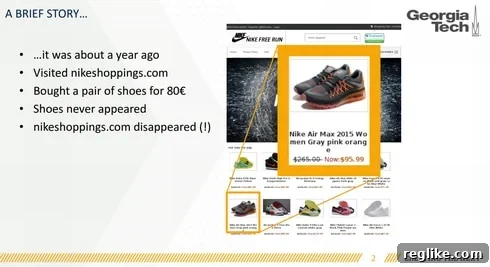
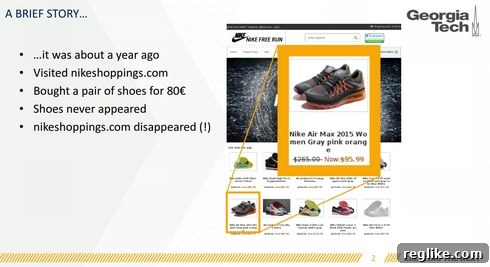
The image above vividly illustrates the tangible impact of combosquatting on consumers and brands. As part of their investigative process, the researchers deliberately engaged with a combosquatted domain that cleverly imitated the renowned athletic brand, Nike. Believing they were interacting with a legitimate online store, the researchers proceeded to purchase a pair of shoes. However, despite the transaction appearing successful on the fraudulent site, the promised merchandise never materialized. This real-world example serves as a potent reminder that combosquatting is not merely an abstract cyber threat but a direct conduit for consumer fraud, financial loss, and severe damage to a brand’s reputation and customer trust. It highlights how easily even knowledgeable individuals can be ensnared by these sophisticated deceptions when a familiar brand name is leveraged in a slightly altered domain.
Mitigating the Threat: Strategies for Defense and Prevention
Given the pervasive nature and deceptive effectiveness of combosquatting, the study proposes a multi-faceted approach to reduce its prevalence and mitigate its impact. These strategies require a collaborative effort between brand owners, domain registrars, and regulatory bodies to create a more secure online environment for everyone.
One primary recommendation involves proactive defensive registrations by brand owners. This strategy entails registering numerous potential combosquatting variations of their trademarks before malicious actors can claim them. While comprehensive, this approach can be incredibly resource-intensive and costly, requiring brands to anticipate and register a vast number of permutations. It also presents a significant challenge in predicting every possible combination that an attacker might conceive. However, for critical brand terms, this can be a vital first line of defense, creating a “digital fence” around key intellectual property.
Perhaps more critically, the study emphasizes the pivotal role of domain registrars. It suggests that registrars implement more stringent measures to prevent domains containing famous trademarks from being registered without robust verification processes. This could involve automated systems designed to flag suspicious registrations, manual reviews for domains incorporating high-profile brand names, or even requiring brand owner authorization for certain registrations. Implementing such safeguards would place a significant responsibility on registrars to act as gatekeepers, filtering out potentially abusive registrations at the source. This approach requires clear guidelines, efficient enforcement mechanisms, and strong industry cooperation to avoid stifling legitimate domain registrations while effectively combating abuse.
Beyond these technical and policy-driven solutions, ongoing vigilance from internet users remains paramount. Educating consumers about the existence of sophisticated threats like combosquatting, encouraging them to scrutinize full URLs, and promoting the use of robust security practices (such as multi-factor authentication and reliable security software) are crucial steps. As cyber threats continue to evolve in complexity, a layered defense strategy involving technological safeguards, policy enforcement, and informed user behavior will be essential in the ongoing battle against domain name abuse.
Conclusion: A Call for Collective Action Against Digital Deception
The comprehensive study by Georgia Tech, Stony Brook University, and London South Bank University serves as a critical alarm, shining a spotlight on combosquatting as a formidable and persistent threat in the digital realm. This sophisticated form of domain name abuse, which cunningly combines famous trademarks with additional words, poses significant risks ranging from widespread phishing and malware distribution to damaging affiliate fraud and direct consumer deception. The alarming statistics regarding the longevity of these malicious domains and their increased use of SSL certificates underscore the urgent need for heightened awareness and robust preventative measures.
The fight against combosquatting demands a multi-pronged, collaborative approach. It requires brand owners to be proactive in their digital asset protection, registrars to strengthen their registration policies and verification mechanisms, and users to cultivate a vigilant and discerning eye when navigating the internet. As cybercriminals continue to refine their tactics, understanding and actively combating threats like combosquatting is not just a matter of brand protection or consumer safety; it is fundamental to preserving trust and integrity across the entire digital ecosystem.