
Google Cracks Down on Deceptive Back Button Hijacking: What Webmasters Need to Know
Google has consistently emphasized its commitment to providing users with the best possible search experience. This dedication extends beyond delivering relevant results to ensuring a safe, transparent, and frustration-free browsing journey once a user clicks through to a website. In line with this overarching mission, Google periodically issues reminders and takes action against website practices deemed manipulative or deceptive. One such practice that has recently come under intense scrutiny from the search giant is the phenomenon of “back button hijacking” – a deceptive maneuver designed to prevent users from easily returning to their search results.
In a pivotal blog post, Google’s Webmaster Central team outlined its intensified efforts to combat manipulative behaviors that degrade user experience. The announcement specifically targeted a relatively new but increasingly prevalent tactic: websites displaying an unexpected “parked page” or a different landing page when a user attempts to navigate back to their previous search results. This behavior is not merely annoying; it represents a deliberate attempt to manipulate user navigation for potential illicit gains, and Google has made it clear that sites employing such tactics face severe penalties, including potential removal from its index.
Understanding Deceptive Back Button Behavior
Imagine a typical online scenario: You’re searching on Google for information, perhaps for “cartoon” images or historical facts. You click on a promising search result, explore the content on the website, and then decide you want to go back to your Google search results page to explore other options. Naturally, you hit the “back” button in your browser. Instead of being returned to the familiar Google Search Engine Results Page (SERP), you suddenly land on an entirely different, often unexpected page. This intermediate page frequently resembles a “parked page” or even mimics a search results page itself, typically laden with advertisements.
This is the essence of back button hijacking. It interrupts the user’s intended navigation flow, forcing them onto an intermediary page they did not choose to visit. The objective behind this deceptive practice is primarily monetization. These “parked” pages are often designed as ad farms, generating revenue for the website owner through Pay-Per-Click (PPC) mechanisms from second-tier providers. Every unintentional click on an ad on these pages translates into profit for the manipulator, at the direct expense of user experience and trust.
The Visual Example of Manipulation
To illustrate this, consider the scenario where a user searches for “cartoon” on Google. Upon clicking a link and then pressing the back button, instead of seeing the familiar Google search results, they encounter a page similar to this:
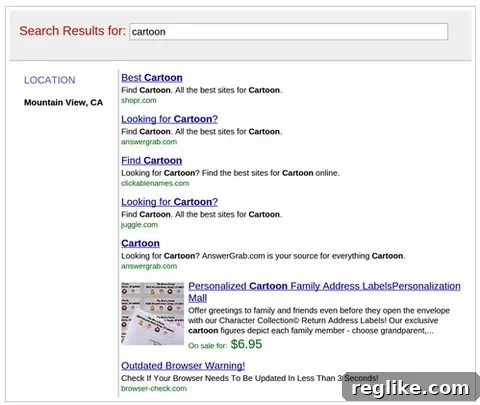
As depicted, this is not the user’s original Google SERP. It’s a fabricated page, designed to appear like a legitimate search interface but filled with advertisements. The visual cues, layout, and even the type of content (ads related to the original search term) are engineered to confuse the user, making them believe they are still within a legitimate search context. This clever yet unethical design aims to trick users into clicking on ads, directly monetizing a fraudulent navigation experience. Such practices undoubtedly constitute shady behavior, undermining the very principles of fair web browsing and genuine content delivery.
Google’s Stance and the Ramifications for Non-Compliant Sites
Google’s firm stance against back button hijacking is a clear signal to webmasters: user experience is paramount, and any attempt to manipulate it will be met with severe consequences. The search engine’s algorithms are constantly evolving to detect and penalize sites that engage in deceptive practices. When Google identifies a website using such manipulative tactics, the penalties can be substantial and crippling for online visibility.
The most significant ramification is the potential removal of the website from Google’s search index. For any business or content creator relying on organic search traffic, being de-indexed by Google is akin to digital invisibility. It means a complete loss of search engine rankings, rendering the site unreachable for the vast majority of internet users who rely on Google for discovery. This penalty not only wipes out current organic traffic but also severely damages a site’s reputation and its ability to regain trust from both users and search engines in the future.
Google views such tactics as a violation of its Webmaster Guidelines, which are designed to ensure a high-quality, relevant, and safe experience for its users. Manipulating browser history or redirecting users against their will falls squarely into the category of “black hat” SEO techniques – practices that attempt to trick search engines and users rather than providing genuine value. Google has a long history of combating such spam and continues to refine its algorithms to identify and neutralize these unethical approaches.
The Broader Impact on User Experience and Trust
Beyond the immediate financial motivations of the manipulators, the broader impact of back button hijacking on user experience (UX) is profoundly negative. When users encounter such deceptive redirects, it creates immediate frustration and confusion. Their intended navigation flow is broken, and their time is wasted. This leads to a significant degradation in trust, not just for the specific website that engaged in the deception, but potentially for the entire web browsing experience.
Users come to expect a consistent and predictable interaction with their browsers and search engines. When these expectations are violated, it erodes their confidence. A website that employs back button hijacking effectively communicates that it prioritizes short-term ad revenue over the user’s convenience and autonomy. This can lead to a negative brand perception, making users hesitant to visit the site again, even if it offers valuable content.
For Google, maintaining a high level of user trust is critical to its core business. If users consistently encounter frustrating or deceptive experiences after clicking on Google’s search results, their trust in Google itself could diminish. This is why Google invests heavily in identifying and penalizing sites that compromise UX, reinforcing its role as a reliable gateway to the internet’s vast information.
Best Practices: Ensuring Your Site Complies and Thrives
In light of Google’s persistent crackdown on manipulative behavior, webmasters must prioritize ethical practices and genuine user experience to ensure their sites remain indexed and perform well. Here are key considerations for maintaining compliance and building a sustainable online presence:
- Prioritize Legitimate Navigation: Ensure that your website’s navigation functions as expected. The back button should always take users to their immediately previous page, whether that’s another page on your site or the external search results page from which they arrived. Do not interfere with browser history or use scripts to force redirects.
- Focus on Quality Content and Value: The most effective “SEO strategy” is to provide genuinely valuable, high-quality content or services. Sites that offer real solutions, engaging information, or useful tools naturally attract and retain users, leading to organic links and positive user signals that Google rewards.
- Avoid Deceptive Tactics: Steer clear of any “black hat” SEO techniques, including cloaking, invisible text, keyword stuffing, spammy link schemes, and any form of deceptive redirects or pop-ups that hinder user experience. These tactics offer only short-term, risky gains that inevitably lead to long-term penalties.
- Responsive and Accessible Design: Ensure your website is accessible and performs well across all devices and screen sizes. A seamless user experience on mobile, tablet, and desktop is a strong positive signal to Google.
- Monitor Google Analytics and Search Console: Regularly review your website’s performance data. Look for high bounce rates on specific pages, unexpected navigation paths, or any signs of user frustration. Google Search Console provides critical insights into how Google views your site, including potential manual actions or crawl errors.
- Stay Updated with Google’s Guidelines: Google frequently updates its algorithms and guidelines. Webmasters should regularly consult the official Google Webmaster Central Blog and the Webmaster Guidelines to stay informed about best practices and avoid inadvertently falling afoul of new rules.
- Build Trust, Not Just Traffic: Focus on building a loyal audience by delivering transparency, reliability, and an excellent user experience. Trust is a crucial factor in long-term website success and brand reputation.
The Future of Web Integrity: A Google-Led Initiative
Google’s commitment to tackling deceptive practices like back button hijacking is part of a larger, ongoing initiative to maintain the integrity of the web. From its early battles against keyword stuffing to more recent updates targeting low-quality content (Panda), manipulative link schemes (Penguin), and intrusive interstitials, Google consistently strives to make the internet a better, more reliable place for information discovery. This proactive stance ensures that the search results users receive lead to genuinely helpful and user-friendly destinations, rather than digital traps.
The “back button” might seem like a small, insignificant feature, but its manipulation highlights a fundamental disregard for user autonomy and web etiquette. Google’s crackdown serves as a powerful reminder that technical prowess in web development must always be accompanied by ethical responsibility. Webmasters who embrace these principles will not only avoid penalties but will also build sustainable, successful online platforms that genuinely serve their audience.
Conclusion: User Experience as the Ultimate SEO Strategy
In essence, Google’s message is clear: user experience is no longer just a design consideration; it is a critical component of search engine optimization. Websites that attempt to deceive, frustrate, or manipulate users through tactics like back button hijacking are gambling with their online future. While the immediate allure of monetizing every click might be tempting for some, the long-term cost of being penalized or de-indexed by Google is astronomical.
For webmasters aiming for sustainable success, the path forward is straightforward: create valuable content, ensure transparent and intuitive navigation, and always put the user first. By adhering to Google’s guidelines and focusing on providing a genuinely positive experience, sites can build lasting authority, earn organic traffic, and contribute positively to the overall health and integrity of the web. The days of exploiting subtle browser behaviors for profit are numbered, as Google continues to champion a web where trust and utility reign supreme.