
Unlocking Visibility: The Strategic Use of .Travel Domains in Mainstream Advertising
The digital landscape is constantly evolving, presenting new opportunities and challenges for brands striving to capture audience attention. In an era dominated by instant information and memorable digital footprints, the choice of a domain name is more critical than ever. Traditionally, the `.com` extension has reigned supreme, synonymous with credibility and universality. However, the introduction of new generic Top-Level Domains (gTLDs) has opened up a fresh frontier, allowing businesses to align their digital identity more closely with their specific industry or brand.
One such specialized gTLD, `.travel`, is specifically designed for the vast and dynamic travel industry. While its presence in the digital sphere is growing, its emergence in traditional print media has been a less common sight – until now. This observation sparks an intriguing discussion about the recognition, marketing strategies, and future adoption of niche TLDs in broad-reaching advertising campaigns. The strategic integration of a `.travel` domain into a high-profile print ad serves as a powerful case study, highlighting both the potential and the inherent challenges of moving beyond conventional domain choices.
Egypt.Travel Takes Center Stage in American Express’ Departures Magazine
It’s not everyday one encounters a non-`.com` domain prominently featured in a major print publication, especially within the context of a glossy, high-end travel magazine. While my regular reading habits don’t typically include travel magazines, a recent flip through the latest issue of American Express’ esteemed Departures magazine revealed a striking tourism advertisement for Egypt. What immediately caught the eye, beyond the captivating imagery, was the URL presented: www.Egypt.travel. This wasn’t just a fleeting mention; it was a clear, primary call to action, directing potential travelers to a dedicated online presence. (For those interested in the full visual context, a PDF of the ad was made available here).
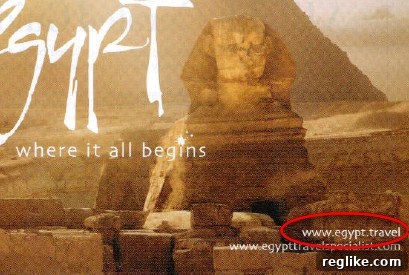
The entity behind this prominent `.travel` domain is none other than the Egyptian Tourist Authority. This immediately lends significant credibility and strategic intent to the choice of domain. For a national tourism board, having a domain that instantly communicates its purpose and industry – `Egypt.travel` – is an incredibly powerful branding statement. It clearly signifies that this is the official portal for all things related to travel and tourism in Egypt, cutting through potential ambiguity. In addition to `Egypt.travel`, the advertisement also featured a second URL: EgyptianTravelSpecialist.com. This accompanying website, also maintained by the Egyptian Tourist Authority, serves a distinct purpose, specifically targeting travel agents and tour operators to encourage them to promote Egypt as a premier travel destination to their clients. This dual-domain strategy showcases a sophisticated understanding of market segmentation, addressing both direct consumers and key intermediaries within the travel ecosystem.
The Million-Dollar Question: Domain Recognition Beyond .Com and Www.
The appearance of `Egypt.travel` in a mainstream print ad, while innovative, immediately raises a fundamental question that challenges long-held assumptions about internet literacy and consumer behavior. If the ad had presented only `Egypt.travel` without the familiar `www.` prefix and without the safety net of a second, more conventional URL like `EgyptianTravelSpecialist.com`, would the average reader instinctively recognize it as a web address? This isn’t merely a theoretical query; it cuts to the heart of how new gTLDs are perceived and understood by the general public, especially in contexts where visual cues are limited, such as a print advertisement.
Navigating the New gTLD Landscape
The internet has expanded far beyond its original structure, leading to the introduction of hundreds of new gTLDs since 2013. These extensions, ranging from industry-specific options like `.travel`, `.tech`, or `.store` to geographically focused ones like `.london` or `.nyc`, were designed to offer more choice, foster innovation, and enable businesses and individuals to craft more descriptive and relevant online identities. For the travel sector, `.travel` offers an immediate, intuitive connection, allowing organizations to clearly signal their specialization. However, the sheer volume and novelty of these new extensions mean that public awareness and recognition are still catching up to the technological advancements.
The Enduring Power of “www.” and “.com”
For decades, `www.` has served as an almost universal visual shorthand, signaling “this is a website.” Similarly, `.com` has become synonymous with a legitimate, established online presence. These conventions are deeply ingrained in the public consciousness. When confronted with `Egypt.travel`, many might initially parse “Egypt” as a destination and “.travel” as a category or perhaps even a phone number extension. Without the explicit `www.` or the widely recognized `.com`, the immediate mental leap to “website” might not occur for everyone. This highlights a crucial communication gap that marketers using new gTLDs must consciously address. The absence of these traditional markers could lead to confusion, hesitancy, or, worse, missed opportunities as potential visitors fail to convert from an offline ad to an online destination.
Challenges and Opportunities for New TLDs in Advertising
The `.travel` domain for the Egyptian Tourist Authority serves as an excellent case study for both the challenges and the immense potential of new gTLDs in advertising:
- Clarity and Recognition: The primary challenge is ensuring that the audience recognizes the domain as a web address. For `.travel`, the context of a tourism ad helps, but the inclusion of `www.` significantly bolsters this recognition.
- Branding and Memorability: A `.travel` domain can be incredibly powerful for branding. `Egypt.travel` is concise, descriptive, and highly memorable within its niche. It instantly conveys the nature of the website, which can be a distinct advantage over a less specific `.com` domain.
- SEO Advantages: While direct SEO benefits from exact-match keywords in a TLD are debated, a descriptive domain can improve click-through rates and reinforce brand identity, indirectly aiding SEO efforts. Furthermore, a relevant domain fosters trust and authority in specific industry niches.
- Educating the Consumer: Advertisers adopting new gTLDs implicitly take on the role of educating the consumer. Each time `www.Egypt.travel` appears, it subtly reinforces the understanding that `.travel` is a legitimate and functional domain extension.
- Strategic Redundancy: The inclusion of `EgyptianTravelSpecialist.com` in the ad provides a fallback, ensuring that even if one domain isn’t fully grasped, another, more conventional option is available. This multi-pronged approach mitigates risk while allowing for innovation.
Best Practices for Advertising New TLDs and the Future of Domain Recognition
For companies considering the use of newer Top-Level Domains in their advertising, especially in print, where direct clicking is not possible, a thoughtful strategy is paramount. The Egyptian Tourist Authority’s approach offers valuable lessons:
- Always Include “www.” or “https://”: While increasingly, browsers hide `www.` in the URL bar, its inclusion in advertisements, particularly for less familiar TLDs, remains a critical visual cue. It unequivocally signals that the string of characters is an internet address, not just a name.
- Context is King: Use descriptive and relevant TLDs within their appropriate industry. A `.travel` domain in a travel magazine ad is logical and enhances comprehension.
- Clear Call to Action: Ensure the ad clearly instructs the audience to “Visit our website at…” or “Learn more at…”
- Consider Dual Branding (Initially): For brands transitioning or experimenting with new gTLDs, pairing it with a more established `.com` or `.org` can help bridge the recognition gap while simultaneously building awareness for the new extension.
- Embrace Visual Clarity: Typography, color, and placement of the URL within the ad all contribute to its legibility and perceived importance.
- Integrate Digital Bridges: For print ads, consider complementing the URL with QR codes. These allow for a seamless transition from print to digital, eliminating the need for manual typing and potential misinterpretations of the domain name.
As the digital landscape continues to mature, we will likely see a resurgence in the explicit inclusion of `www.` or `https://` before web addresses in advertisements, particularly as more diverse gTLDs gain traction. This isn’t a step backward, but rather a practical acknowledgment of how human perception and digital literacy evolve. The goal is always to maximize clarity and minimize friction for the consumer. The widespread adoption and public recognition of new TLDs will ultimately depend on consistent exposure and thoughtful marketing strategies from early adopters and industry leaders. As brands become more confident in these specialized extensions, the need for redundant cues might diminish, but for now, clarity remains paramount.
Conclusion: A New Era for Domain Branding
The sighting of `www.Egypt.travel` in a prestigious publication like Departures magazine is more than just an interesting anomaly; it’s a strong indicator of the evolving domain landscape and the strategic decisions marketers are making. It underscores the potential for new gTLDs to offer powerful branding opportunities, allowing businesses to create highly relevant and memorable online identities that resonate with their target audience. However, it also highlights the persistent challenge of public recognition and the vital role of traditional cues like `www.` in signaling a web address. As more companies venture beyond the familiar `.com` and embrace the specificity of new extensions like `.travel`, the conversation around effective URL presentation in all forms of advertising will only grow in importance. The future of domain branding is not just about choosing the right name, but also about effectively communicating its digital nature to a diverse and ever-evolving global audience.