
The Landscape of Whois: A Transformative Shift is Imminent
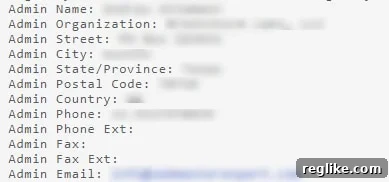
The global domain name industry stands on the precipice of an unprecedented transformation, with the venerable Whois database facing a fundamental overhaul. This profound change is being driven by the European Union’s General Data Protection Regulation (GDPR), which officially came into full effect on May 25, 2018. More than just another piece of legislation, GDPR represents a monumental shift in how personal data is collected, processed, and shared, particularly impacting industries like domain registration that inherently deal with vast amounts of individual information.
For decades, Whois has served as a cornerstone of internet transparency, providing a public directory of domain name registrants. This database, designed to facilitate contact with domain owners for various purposes including technical issues, legal disputes, and cybersecurity concerns, traditionally made registrant names, addresses, phone numbers, and email contacts publicly accessible. However, the comprehensive scope and stringent requirements of GDPR have rendered this long-standing model untenable, prompting domain name companies worldwide to frantically reassess their data handling practices. The race against the clock has been intense, characterized by a challenging environment of evolving guidelines from both the EU and the Internet Corporation for Assigned Names and Numbers (ICANN), the global governing body for domain names.
GDPR: A Comprehensive Framework for Data Privacy
At its core, GDPR is a robust regulatory framework meticulously crafted to fortify and unify data protection for all citizens and residents within the European Union. Its primary objective is to safeguard the personal data of individuals and, simultaneously, ensure the free flow of data within the EU while upholding strong privacy standards. Crucially, GDPR’s reach extends far beyond the geographical borders of the EU; it applies to any company, regardless of its location, that processes the personal data of EU residents. This extraterritorial scope means that American, Asian, or African domain registrars and registries, if they have customers residing in the EU, must adhere to these regulations.
As Thomas Rickert, a distinguished attorney and Head of the Names & Numbers Forum at eco (Association of the Internet Industry e.V.), which advocates for domain name registrars and registries, aptly explained, “The goal is to strengthen and unify data protection for all individuals of the EU…to protect personal data and ensure free flow of data within the EU.” This foundational principle underscores the regulation’s dedication to empowering individuals with greater control over their digital footprint.
The regulation is built upon several foundational tenets, with a strong emphasis on data minimization and increased transparency. Two overarching principles, “privacy by default” and “privacy by design,” mandate a proactive approach to data protection. This means that privacy settings must be the default for any service offered, rather than requiring users to actively opt-out of data sharing. Companies are expected to integrate privacy considerations into every stage of product and service development, ensuring that data protection is not an afterthought but an intrinsic element of their operations. For the domain name industry, this translates into a rigorous examination of every piece of data collected during the domain registration process, from initial submission to ongoing management, demanding a clear legal basis for its collection and retention.
Moreover, GDPR is not merely a set of recommendations; it carries substantial punitive measures for non-compliance. Companies found in violation of the regulation face potentially crippling fines, which can reach up to €20 million or 4% of their annual global turnover, whichever is higher. These staggering penalties serve as a powerful deterrent, compelling businesses to take GDPR compliance with the utmost seriousness. Furthermore, individuals and data protection authorities can pursue legal action against organizations that fail to uphold the regulation, adding another layer of accountability. This formidable enforcement mechanism has undeniably captured the full attention of domain name companies worldwide, forcing them to re-evaluate every aspect of their data processing activities.
Indeed, the gravity of the situation was highlighted by Tucows CEO Elliot Noss during a recent earnings call, where he acknowledged that “…there will be material impact. It [GDPR] will change the delivery of public WHOIS, privacy and proxy services.” This candid admission underscores the widespread recognition within the industry that GDPR will fundamentally alter the traditional Whois paradigm, affecting what data registrars are permitted to collect about their customers, how it is stored, and with whom it can be shared.
Compliance Challenges for Domain Companies: A Complex Web of Data Flows
The ripple effect of GDPR extends to all entities operating under contract with ICANN. This encompasses a broad spectrum of stakeholders, including domain registrars, registries, data escrow companies, and even ICANN itself. The intricate data flow involved in domain registration means that personal data traverses multiple organizational boundaries, making compliance a collective responsibility and a shared challenge.
“ICANN is affected by this as much as the other players,” asserted Rickert. “It’s safe to say that, since ICANN is spelling out the requirements on what needs to be collected and how data is being dealt with, ICANN is also a data controller and therefore the sanction risks are also with ICANN since they’re basically prescribing exactly what needs to be done with it.” This perspective highlights ICANN’s unique position; as the architect of many data collection requirements within the domain ecosystem, it also bears significant responsibility as a data controller under GDPR.
In response to this complex challenge, ICANN established dedicated ad hoc groups tasked with thoroughly evaluating GDPR’s implications and formulating strategies for compliance. A crucial initial step involved creating a detailed matrix mapping the exhaustive data flow throughout the domain name registration process. This matrix was subsequently opened for public comment, inviting feedback from various stakeholders. The next critical phase requires ICANN to conduct a comprehensive legal assessment to determine precisely how its contractual obligations and policies can be reconciled with GDPR’s mandates. For instance, while certain registrant information may be deemed essential for providing a domain registration service, the regulations raise fundamental questions: Is it truly necessary for this data to be passed to the registry? And perhaps more critically, should it be publicly published in Whois?
The abstract nature of legal frameworks often leaves room for interpretation, as Rickert noted: “The beauty and the curse of laws is that they are not individual and concrete, but they are abstract and general. We need to apply the ideas of the law to this technical scenario that we find in the DNS.” This abstractness necessitates a careful, principled application of GDPR to the specific technical realities of the Domain Name System (DNS).
Under GDPR, the default position is that personal data should neither be collected nor processed unless there is a clear, legitimate legal basis for doing so. This principle imposes a significant burden of proof on ICANN and its contracted parties. They must articulate compelling justifications for collecting any personal data, and an even more robust and transparent rationale for publicly publishing it. This marks a profound departure from the historical assumption of public Whois data and demands a complete re-evaluation of data transparency in the domain space.
The Ticking Clock and Conflicting Interests
The pace of policy development and implementation within ICANN’s multi-stakeholder model is notoriously slow. Given the May 2018 deadline, the industry faced an immense challenge to implement necessary changes. For contracted parties to have sufficient time to adapt their systems and processes, any proposed changes would ideally have needed to be debated and approved at the Abu Dhabi meeting in October of the preceding year. This tight timeline highlighted the urgent need for swift decision-making, which often clashes with ICANN’s consensus-driven approach.
Adding to the complexity are the deeply entrenched, often conflicting interests of various stakeholder groups. While privacy advocates champion the reduction of publicly available personal data, law enforcement agencies and intellectual property rights holders vehemently argue for continued access to Whois data, deeming it indispensable for combating cybercrime, intellectual property infringement, and online fraud. These groups have consistently pushed back against any proposals that would significantly diminish the transparency of Whois, creating a contentious debate that ICANN must navigate. The challenge lies in finding a balanced solution that respects individual privacy while still serving legitimate public interests.
In the face of potential legal and financial repercussions from the EU, some registrars went on record threatening a drastic measure: to simply cease providing Whois services for EU registrants if clear, compliant guidelines were not established by the deadline. This extraordinary threat underscored the depth of their concern, indicating a preference to incur the wrath of ICANN for non-compliance with its contractual obligations rather than face the potentially devastating penalties levied by EU authorities. This demonstrates the immense pressure the industry found itself under, caught between two powerful regulatory and governing bodies.
Regardless of the specific changes that ultimately materialized, it was clear that registrars and registries would have an immense amount of work ahead of them. Implementing new data handling protocols, reconfiguring systems, training staff, and updating contractual agreements would all represent significant operational and financial undertakings. “We can expect with a high degree of certainty that Whois will not look like it does today,” affirmed Rickert, signaling an irreversible shift. He also predicted that ICANN would need to amend some of its existing contracts to align with the new data protection landscape.
Shaping the Future of Whois: Key Takeaways and Implications
The transformative impact of GDPR on Whois is multifaceted, influencing various aspects of the domain name ecosystem. Here are some critical implications and predictions for the future:
- Tiered Access to Whois Data: One of the most likely outcomes is the implementation of a tiered access model for Whois data. Under this system, different categories of users would have varying levels of access to registrant information. For instance, law enforcement agencies, cybersecurity researchers, and intellectual property rights holders might be granted access to certain non-public data elements through an accredited access system, while the general public would see significantly redacted information. The concept of a Registration Directory Service (RDS), which has been discussed within ICANN circles for years, could become a viable framework for managing this differentiated access. Such a system would require robust authentication mechanisms, strict data access policies, and clear accountability to ensure that data is accessed only for legitimate purposes.
- Significant Cost Burden for Registrars: The transition to a GDPR-compliant Whois model imposes a substantial financial and operational burden on domain name registrars, particularly smaller entities with limited resources. These costs include redesigning IT systems, updating databases, implementing new data processing agreements, training personnel on GDPR compliance, and potentially engaging legal counsel. For registrars managing “thin Whois” domains (where only minimal registrant data is held by the registrar, with the rest at the registry), the complexity of ensuring compliance across different registry models adds another layer of challenge. Many smaller registrars might find it economically sensible to contract with third-party providers specializing in GDPR-compliant data management and Whois services, rather than building the infrastructure in-house. This could lead to consolidation in the market or new service offerings.
- Impact on Thin vs. Thick Whois Models: Historically, .com and .net domains have operated under a “thin Whois” model, meaning that registrars hold certain registrant information while the corresponding registry (Verisign, in this case) holds additional data, with Whois publication often handled by the registrar. These legacy domains were slated to transition to a “thick Whois” model, where the registry maintains all registrant data, mirroring the setup of most new generic top-level domains (gTLDs). However, the complexities introduced by GDPR could easily delay this transition. Furthermore, if Verisign, as the registry for .com, is required to undertake significant investments to implement a GDPR-compliant thick Whois system, it wouldn’t be surprising if they sought to justify a price increase for .com domains to offset these new operational costs. This would have broad implications across the entire domain name market.
- New TLDs and Registry Service Providers: The landscape for new top-level domain name companies (new gTLDs) is slightly different. Most new TLDs already operate on a “thick Whois” model, meaning that registrant data is primarily managed and published at the registry level rather than the registrar. Consequently, these new TLD companies are heavily reliant on their registry service providers (RSPs) to ensure GDPR compliance for their Whois operations. The RSPs, which often manage the technical backend for multiple new gTLDs, will need to develop robust, centralized solutions to handle data protection requirements across their client base, becoming critical partners in the compliance efforts.
- Re-evaluation of Whois Privacy Services: Whois privacy services have long been a significant revenue stream (a “cash cow”) for many registrars. These services allow registrants to mask their personal information in the public Whois record, replacing it with the contact details of a privacy service provider. If GDPR leads to a default state where personal data is significantly redacted or inaccessible to the general public, the fundamental value proposition of these privacy services could be dramatically altered. Registrars might need to pivot their offerings, perhaps focusing on enhanced data management services, identity protection, or compliance assistance rather than simply masking publicly available data. The evolution of Whois will undoubtedly reshape this segment of the domain market, potentially leading to new business models or a reduction in the demand for traditional privacy services.
In conclusion, the advent of GDPR has initiated a profound and irreversible transformation of the Whois system. This monumental shift challenges decades of internet governance philosophy, moving from an era of default transparency to one prioritizing individual data privacy. The path forward remains complex, requiring continuous dialogue, technological innovation, and a delicate balancing act between competing interests. The internet’s critical infrastructure, and how we interact with it, will undoubtedly emerge from this process fundamentally changed, setting a new standard for online data protection globally.