
Unlocking User Intent: The Strategic Power of Site Search Data for Website Optimization
In the vast digital landscape, a website’s navigation is often a carefully crafted path laid out by its designers. Visitors land on a homepage, presented with a curated selection of links, each intended to guide them deeper into the site’s offerings. This designer-centric approach, while structured, often falls short of truly understanding the dynamic and diverse intentions of every incoming user. What if there was a direct, unfiltered channel to hear exactly what your visitors are seeking, even when your meticulously planned navigation doesn’t immediately provide it?
Enter site search data. The queries users type into your website’s search box are perhaps the most potent and authentic insights into their needs, desires, and frustrations. Unlike click paths, heatmaps, or analytics of page views that infer user behavior, site search queries are explicit declarations of intent. They represent a direct conversation between your user and your website, revealing exactly why they arrived and what specific information, product, or service they hope to find. Ignoring this rich source of data is akin to having a customer speak directly to you and choosing not to listen.
By effectively analyzing this data, businesses can transform their understanding of user experience, refine content strategies, optimize website architecture, and ultimately drive significant improvements in conversion rates and customer satisfaction. It’s a proactive approach to website management, shifting from an assumption-based design to one driven by genuine user demand.
Beyond Navigation: Listening to Your Visitors’ True Needs
The traditional model of website navigation assumes a linear journey, where users follow pre-defined paths. However, real-world user behavior is rarely so neat. Visitors arrive with diverse backgrounds, varied levels of familiarity with your site, and specific, often urgent, queries. When they can’t immediately spot what they’re looking for within the primary navigation or content, their next logical step is frequently the search bar.
This action is a critical signal. It indicates that your existing navigation might be insufficient, the content isn’t prominent enough, or the user’s mental model of your site differs from its actual structure. The terms they type into that search box are their unadulterated explanation of purpose, a candid glimpse into their thought process. For marketers, product managers, and website owners, this data provides an unparalleled opportunity to bridge the gap between perceived user needs and actual user behavior, ensuring the website truly serves its audience effectively.
Leveraging Google Analytics for Site Search Insights
One of the most accessible and powerful tools for harnessing site search data is Google Analytics. Regardless of the specific search technology underpinning your website, Google Analytics can be configured to capture and report on every search query made by your visitors. This capability transforms raw data into actionable intelligence, allowing you to dig deep into the collective mind of your audience.
Once enabled, Google Analytics provides comprehensive reports detailing the most frequently searched terms, the pages users landed on after searching, and crucially, what they did next. This includes valuable metrics like “search refinements” (how many users searched again) and “time after search” (how long they spent on the results page or subsequent pages). These insights are fundamental to understanding user satisfaction with your search results and the efficacy of your content.
Decoding User Queries: The Lakeway.com Example
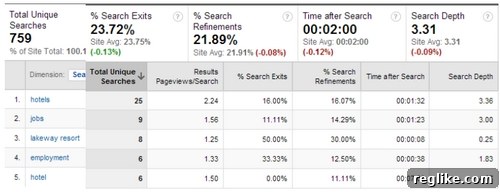
Consider the data from a site like Lakeway.com. Over several months, the site search data revealed a clear pattern: a significant number of visitors were explicitly searching for terms like “hotel” and “hotels.” This immediately signals a critical content gap or an accessibility issue within the existing site structure. While these terms are similar, analyzing them collectively (e.g., parsing “hotel” and “hotels” together) confirms a strong, consistent demand for information related to accommodations in Lakeway.
The fact that users resort to the search box for such a fundamental query suggests that the relevant information is likely buried too deep within the site’s hierarchy, not prominently featured in the main navigation, or simply not labeled intuitively enough. An actionable insight here would be to elevate a “Lakeway Hotels” section, perhaps as a top-level navigation item or a prominent feature on the homepage, directly addressing this clear user need and significantly improving the user journey for a large segment of visitors.
Understanding Search Refinements: A Window into User Frustration
Beyond identifying what users are searching for, understanding “search refinements” is equally vital. This metric indicates how many visitors initiated a second search after viewing the initial results. A high number of refinements for a particular keyword or category is a stark warning sign. It suggests that users are not finding what they’re looking for with their first attempt, indicating a problem with the search results themselves, the quality of the content presented, or the relevance of the information to their original query.
High refinement rates demand immediate attention. They might point to an underdeveloped internal search algorithm that struggles with synonyms or natural language, a lack of comprehensive content covering popular topics, or even poor categorization of existing content. Addressing these issues can dramatically reduce user frustration, improve the efficiency of your site search, and enhance the overall user experience.
Unearthing Unexpected Opportunities and Content Gaps
Site search data isn’t just about validating existing assumptions; it’s also a powerful tool for discovery. Occasionally, queries surface that challenge initial perceptions of your audience’s interests or reveal entirely new avenues for content and business development.
Returning to the Lakeway.com example, imagine the surprise of finding users searching for “employment” on a site primarily focused on a residential community. This seemingly out-of-place query is a powerful indicator of latent demand. While Lakeway might be known for its residential appeal, this data suggests there’s an underlying community interest in job opportunities within the area. This insight could prompt the creation of a dedicated “Jobs” or “Community Employment” section on the site, potentially linking residents to local businesses, offering job boards, or providing resources for local job seekers. Such an addition could significantly enhance the site’s value proposition, transforming it into a more comprehensive community hub and attracting a new segment of users.
This illustrates how unexpected search terms can transcend direct business objectives, revealing broader community interests or untapped market opportunities that might otherwise remain unseen. It transforms your website from a mere information repository into a dynamic platform that genuinely responds to the evolving needs of its audience.
Advanced Applications: Learning from Real-World Case Studies
The power of site search data becomes even more apparent when examining specialized websites with unique user bases. Consider Domain Name Wire (DNW.com), a prominent news source in the domain name industry. Over a period, DNW.com recorded an impressive 3,388 site searches, with a surprising top term: “Parava,” searched for 275 times.
This surge in “Parava” searches was directly linked to a specific, critical event: Parava’s de-accreditation and the subsequent mass transfer of its domains to Hover.com. DNW.com had published several articles covering the unfolding story, detailing the transfers and their implications. The high search volume indicated that many visitors, likely arriving at one article, were actively seeking comprehensive, updated coverage on the issue.
The actionable insight for DNW.com was clear: for critical, trending topics, a more prominent notification or consolidated resource would have significantly enhanced the user experience. A simple notice like, “Looking for updated info about Parava transfers? Click here for our complete coverage,” placed strategically at the top of relevant articles or the homepage, could guide users directly to the comprehensive information they sought, preventing unnecessary searches and improving content discoverability.
Other top terms on DNW.com – “VeriSign,” “GoDaddy,” and “.tel” – predictably aligned with the site’s core focus, indicating consistent interest in major players and key aspects of the domain industry. However, one term stood out as an enigma: “global warming.” This seemingly unrelated query on a domain name news site presented a fascinating puzzle. While it might be an anomaly, a misdirected search, or even a long-tail query linking environmental issues to digital infrastructure (e.g., data center energy consumption, green domain practices), it prompts curiosity and highlights the unpredictable nature of user searches. Such oddities can even be leveraged for engagement, as shown by the original article’s challenge, sparking discussion and drawing attention to the site.
Practical Strategies for Actioning Site Search Data
The true value of site search data lies in its actionable insights. Here are practical ways to leverage this intelligence:
- Content Strategy Enhancement: Identify topics for new blog posts, articles, FAQs, or dedicated landing pages where existing content is sparse or non-existent. Update and expand existing content based on popular search terms to ensure it comprehensively addresses user queries.
- Website Navigation and Information Architecture Optimization: If users frequently search for terms that are already present on your site, consider moving relevant links to a more prominent position in your main navigation, creating new categories, or designing dedicated sections for frequently sought-after information.
- Internal Search Engine Improvement: Analyze search refinement data to identify keywords where your internal search struggles to deliver relevant results. Use this to refine your search algorithm, add synonyms, improve indexing, and potentially implement advanced features like auto-suggest or spell-check.
- Product and Service Development: Unexpected search terms, especially those indicating a need for a specific solution, can inspire new product features, service offerings, or even entirely new business lines that directly address unmet customer demands.
- External SEO Opportunities: Site search data reveals the exact language your audience uses, including long-tail keywords. This can be invaluable for optimizing your external SEO efforts, tailoring your meta descriptions, page titles, and content to match real user queries, thereby attracting more organic traffic.
- User Experience (UX) Enhancements: Improve the visibility and functionality of your search bar. Implement dynamic search suggestions, filtered search results, and clear calls to action on search results pages to guide users more effectively.
The Transformative Impact of Proactive Analysis
Adopting a proactive approach to analyzing site search data transforms your website from a static brochure into a dynamic, responsive entity that continuously evolves to meet user needs. It creates a continuous feedback loop where user queries directly inform content creation, navigation decisions, and feature development.
The benefits are multi-faceted: increased user satisfaction stemming from a more intuitive and helpful experience, longer dwell times as users find what they’re looking for more quickly, higher conversion rates driven by direct alignment with user intent, and a stronger, more engaged audience. Ultimately, site search data empowers you to build a truly user-centric digital presence that not only attracts visitors but also effectively serves and delights them.
Conclusion: Empowering Your Digital Strategy with Site Search Insights
In the competitive digital arena, understanding your audience is paramount. While various analytics tools provide valuable insights, site search data offers a unique, unfiltered window into the minds of your visitors. It’s a direct conduit to their true needs and expectations, revealing both the strengths and weaknesses of your website’s ability to deliver.
By diligently tracking and analyzing these unadulterated queries through tools like Google Analytics, businesses can transcend designer-driven assumptions and embrace a truly data-informed approach. From refining content and optimizing navigation to discovering new opportunities and enhancing user experience, the strategic power of site search data is undeniable. It’s an indispensable tool for any modern website owner, marketer, or product manager committed to building an effective, user-centric, and highly converting online presence. Don’t just design for your users; listen to them, learn from their searches, and empower your digital strategy with their invaluable insights.