
The Ascent of China: Navigating Global Economic Shifts and Domain Investing Opportunities
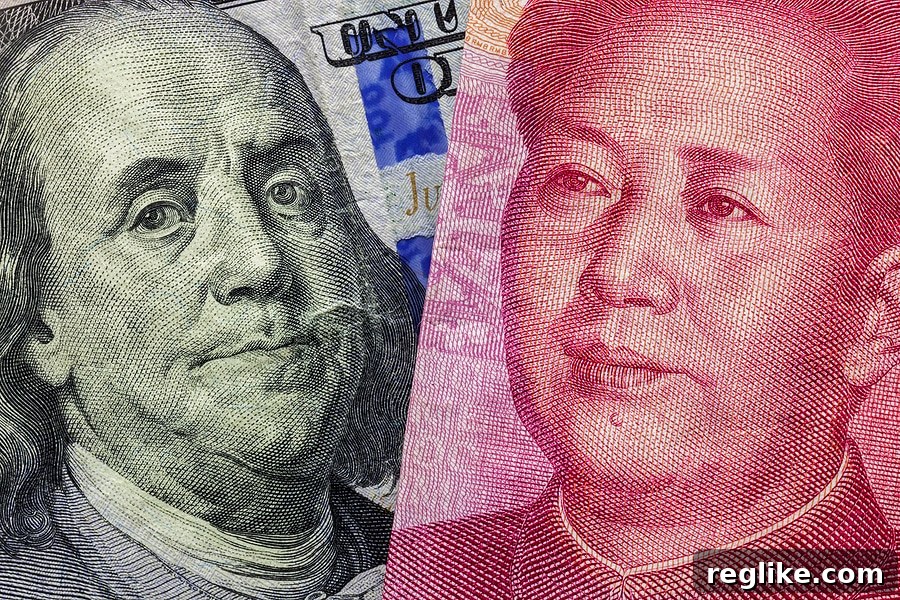
In the dynamic landscape of global economics, few narratives command as much attention as China’s remarkable rise. As seasoned domain investor Kassey Lee keenly observes, understanding this monumental shift is not merely an academic exercise but a critical imperative for those operating in the domain investing space. The trajectory of a nation’s economic power often dictates the future of its industries, its global brands, and consequently, the strategic value of its online identities. This article delves into the insights offered by influential figures like billionaire hedge fund manager Ray Dalio, exploring the historical patterns of economic dominance and translating them into tangible opportunities for savvy domain investors.
Our journey begins with the profound observations of Ray Dalio, a financial titan whose involvement with China dates back to the late 1980s, when he played a pivotal role in establishing the nation’s nascent stock markets. Dalio’s unique vantage point, shaped by decades of direct engagement and meticulous study of economic history, offers an unparalleled perspective on China’s unfolding story. His work, particularly his “Big Cycles” framework, illuminates the long-term patterns that govern the rise and fall of empires, currencies, and financial centers. By listening to his detailed interviews, such as the compelling Ray Dalio: CHINA Town Hall 2020, one quickly grasps the gravity of China’s current position and its potential to reshape the global order. For Dalio, these are not just abstract economic theories; they are real-world forces dictating capital flows, innovation, and ultimately, the success of nations and businesses.
The Historical Arc of Global Economic Dominance
Dalio frequently emphasizes a recurring historical pattern, a powerful blueprint that has defined global economic leadership over the past five centuries. He posits that every leading trading empire has, without exception, eventually held two crucial pillars of global influence: the world’s reserve currency and the world’s primary financial center. This symbiotic relationship between economic might, currency stability, and financial infrastructure forms the bedrock of global power. Understanding this historical precedent is key to anticipating future shifts and identifying emerging opportunities.
The Dutch Empire: A 17th Century Precedent
Consider the 17th and early 18th centuries. As Holland emerged as the preeminent global trading nation, its currency, the Dutch Guilder, naturally became the world’s reserve currency. Amsterdam, the bustling hub of international commerce and finance, transformed into the undisputed global financial center. This era saw Dutch merchants and innovators dominate trade routes, establishing a robust economic ecosystem that drew capital and talent from across the globe. The strength of their trade underpinned the reliability of their currency, making it the preferred medium for international transactions and savings.
The British Empire: Industrial Revolution and Global Reach
The baton then passed to the British Empire during the 18th and 19th centuries. Fueled by the Industrial Revolution and an unparalleled naval presence, Britain ascended to become the world’s largest trading power. Concurrently, the British Pound sterling solidified its position as the global reserve currency, and London blossomed into the world’s financial capital. British industry, innovation, and vast colonial networks created an economic gravity well, ensuring that the Pound was trusted and utilized in transactions spanning continents, further cementing London’s role as the nexus of international finance.
The United States: Post-War Hegemony and the Dollar
From the early 20th century to the present day, the United States has largely mirrored this pattern. Following its rise as the world’s largest trading country, particularly after World War II and the establishment of the Bretton Woods system, the US Dollar became the unchallenged global reserve currency. New York City, with Wall Street at its heart, emerged as the world’s leading financial center. The dollar’s stability, backed by the immense productivity and innovation of the American economy, has made it the primary currency for international trade, investment, and central bank reserves, with New York serving as the indispensable capital market for global capital.
China’s Ascent to Global Trading Hegemony
Now, as Dalio meticulously points out, China has officially surpassed all predecessors to become the world’s largest trading country. This isn’t merely a statistic; it signifies a profound shift in global economic gravity. China’s manufacturing prowess, its vast consumer market, its ambitious Belt and Road Initiative, and its rapid technological advancements have propelled it to this unparalleled position. This dominance in global trade means that an ever-increasing number of Chinese companies are venturing beyond their domestic borders, seeking to establish global footprints and engage with international markets. This expansion is not a fleeting trend but a sustained strategic imperative that will continue for the foreseeable future. This global ambition directly translates into a critical need for strong, internationally recognizable brand identities, which in turn places immense value on strategic domain name acquisition. As Chinese startups and established giants alike set their sights on global consumers and partners, their choice of name and corresponding domain will be a pivotal factor in their international success.
Strategic Domain Choices for Chinese Global Brands
Given China’s surging economic influence and the globalization efforts of its enterprises, what types of domain names will prove most desirable for these companies as they expand their reach? The answer lies in a nuanced understanding of both global internet culture and unique Chinese market characteristics. Domain investors who can anticipate these trends will find themselves uniquely positioned to capitalize on this historic economic transformation.
English .com Domains: The Global Standard
The internet, by its very architecture and usage, is inherently global. And within this global digital ecosystem, English reigns as the lingua franca, while the .com extension remains the undisputed gold standard for trust, recognition, and reach. For any Chinese startup or corporation aiming for genuine international success, an English-based name coupled with a premium .com domain is often the most straightforward and effective strategy. These domains instantly convey a global outlook, professionalism, and accessibility to a worldwide audience. They minimize friction for non-Chinese speakers, simplify marketing efforts, and are generally perceived as more credible and established. Companies like NetEase.com (网易) and ByteDance.com (字节跳动) perfectly exemplify this strategy, leveraging English .coms to build formidable international brands that resonate far beyond China’s borders.
Pronounceable Pinyin Domains: Bridging Cultures
While English .coms offer broad appeal, some Chinese companies find value in Pinyin domains that are also easily pronounceable by non-Chinese speakers. Pinyin is the official romanization system for Standard Chinese, and certain Pinyin words or combinations possess an inherent phonetic simplicity that transcends linguistic barriers. When a Pinyin name is both memorable and easy to vocalize for international audiences, it can serve as a unique cultural bridge, offering a distinctive brand identity that hints at its origins while remaining globally accessible. The legendary Alibaba.com (阿里巴巴) stands as the quintessential example of a Pinyin domain that has achieved global iconic status, largely due to its memorable sound and easy pronunciation. Similarly, Baidu.com (百度) has successfully established itself worldwide. Domain investors should look for short, catchy, and phonetically simple Pinyin terms that have the potential for international appeal.
Acronym Domains: Brevity and Modernity
For longer or less pronounceable Pinyin names, or simply as a strategic branding choice for brevity and modern appeal, acronym domains offer a powerful alternative. These compact domain names are inherently global, as they often consist of three or four letters that are universally recognized regardless of language. They convey efficiency, modernity, and a streamlined approach to branding. The transition from a long, potentially complex Pinyin domain to a short, impactful acronym can significantly enhance a company’s international branding efforts. A compelling illustration of this strategy is found in the story of “How a 3 letter domain helped this business go global,” detailing ZhuBaJie.com’s strategic upgrade to the much more concise and globally marketable ZBJ.com. Acronyms minimize typing errors, are easy to remember, and project a sleek, professional image vital for global competitiveness.
Numeric Domains: Universal Recognition with Cultural Nuance
Numeric domains hold a distinct and significant cultural appeal within China, where numbers often carry auspicious meanings and are widely used in brand names and marketing. What’s particularly interesting for global expansion is their universal visual recognition. Regardless of language, numbers are understood across cultures. This makes short, memorable numeric domains, particularly 2-digit, 3-digit, or even certain 4-digit sequences, highly desirable. Even domains like 17.com, which might not have an obvious meaning outside China, benefit from their brevity and ease of recall. More strategically, domains such as 360.com, which culturally suggests “complete” or “comprehensive,” translate effectively into a universally positive brand association. Numeric domains bypass linguistic barriers, are simple to type, and can effectively communicate brand values or simply offer a highly distinctive online identifier. Domain investors should focus on numerically strong patterns, particularly those with cultural resonance in China that can also translate well to a global audience for their memorability and simplicity.
Unlocking Opportunities for Domain Investors
In conclusion, the economic ascendancy of China represents a seismic shift with profound implications for domain investing. As China solidifies its position as the world’s largest trading country and its companies increasingly pursue global expansion, the demand for premium domain names that facilitate this international reach will only intensify. Domain investors who meticulously track these macroeconomic trends, understand the cultural nuances of Chinese branding, and anticipate the strategic domain choices of Chinese enterprises will uncover significant investment opportunities. Focusing on high-quality English .coms, pronounceable Pinyin, concise acronyms, and universally recognizable numeric domains offers a robust strategy to capitalize on this unprecedented era of global economic transformation. The smart domain investor recognizes that the digital real estate accompanying China’s global ambition is a lucrative frontier waiting to be explored.